
Mantala: Croatia's Grape-Must Sweet Explained
Mantala is a firm, sugar-free sweet of reduced grape must and coarse wheat flour, traditional to Konavle, Pelješac, Mljet and Korčula in Croatia.
On this page
Mantala is a firm, dark, deeply grapey sweet made from reduced unfermented grape must and coarse wheat flour, with no added sugar. It is the southern Dalmatian version of a family of harvest sweets found around the Mediterranean, and it is made in Konavle, the Dubrovnik area, Pelješac, Mljet, Korčula and Lastovo.
This guide explains what goes into mantala, how the must is boiled down, why the mixture is dried and cut rather than baked, and when it is actually eaten. It also unpicks the other names the same sweet travels under, so a menu or a market stall offering ćupter or kumpet is not a mystery.
What mantala is
The base is varenik, grape must cooked down over a fire before fermentation starts, until it thickens into a sweet syrup that is essentially pure grape sugar. The Konavle account describes boiling it to at least a quarter of its volume, while other recipes reduce the juice to a half or a third, always before the must begins to ferment.
Coarsely milled wheat flour is stirred into the hot syrup and cooked until the two bind into a stiff paste. The mixture is pressed into moulds, dried, then cut into slabs or cubes, so mantala is chewy and grainy rather than crumbly, and the cut face shows whole nuts and flecks of spice.
It is not a baked cake and not a fruit paste. Think of it as a dense confection somewhere between a firm nougat and a very thick fruit cheese, with the grape must doing the work that sugar would do elsewhere.
Where mantala comes from
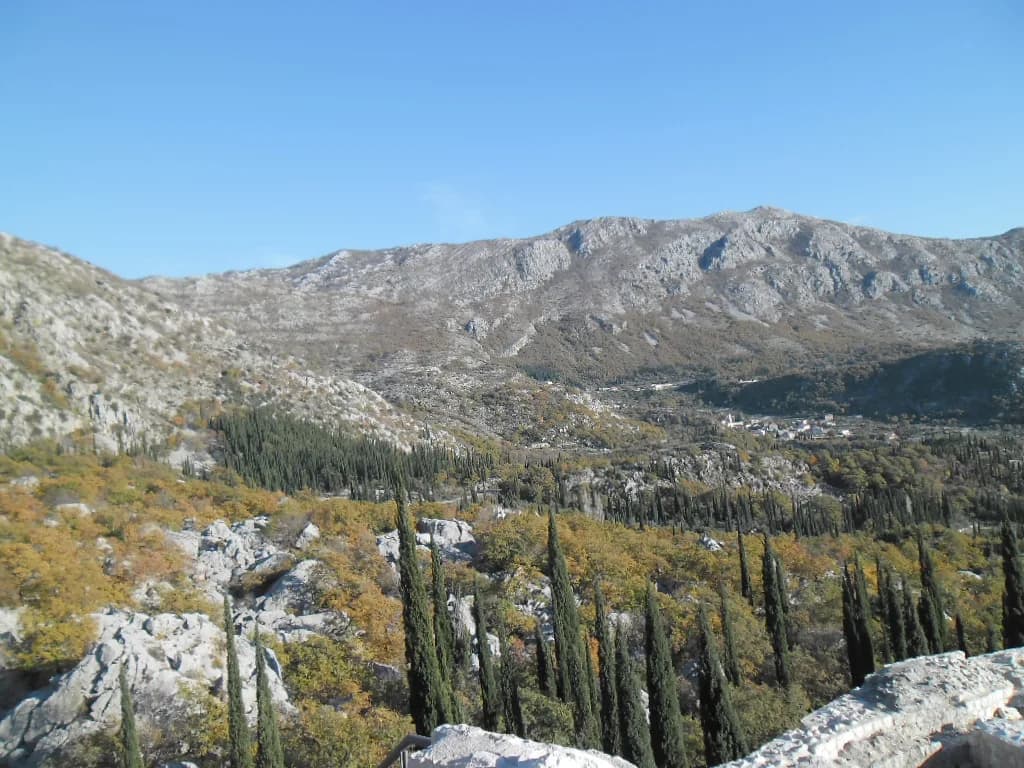
In southern Croatia the sweet is tied to the wine-growing belt: the Dubrovnik surroundings and Konavle, the Pelješac peninsula, Mljet, Korčula and Lastovo. It is described as a delicacy of Mediterranean wine country since ancient times, kept for holidays and festive tables rather than everyday eating.
Can you buy mantala in shops? It is a homemade sweet rather than a commercial product, and the usual recipe is made at home during the grape harvest and dried for the winter. If you want to try it, ask at small local producers and market stalls in the Dubrovnik region, Pelješac and the southern islands rather than expecting to find it on a supermarket shelf.
Is mantala the same as kotonjata? No. Mantala is based on reduced grape must thickened with coarse wheat flour and nuts.
Why is mantala made at grape harvest if it is eaten at Christmas? The must is only available while grapes are being pressed for wine, so the sweet has to be made in early autumn. It then needs weeks to dry and firm, which is why it reaches the table around Christmas and keeps through the winter.
In Konavle the boiled-down must itself has a name, varenik, and it is essentially pure grape sugar. Mantala was so valued that it was brought out for special occasions, above all the Christmas festivities that follow soon after the drying period.
One sweet, several names
The same confection appears under different names along the Dalmatian coast and its hinterland. It is ćupter in Imotska and Vrgorska krajina, kumpet in the Makarska area, and kunfet on Hvar, while Dubrovnik, Konavle, Pelješac and the southern islands call it mantala.
Recipes shift with the place as well as the name. Pelješac works mainly with the juice of red grapes, most often Mali plavac, while the Vrgorac area blends red and white varieties for its varenik; the spice mix and the nuts follow the household rather than a single master recipe.
How varenik is made
Varenik is made at the grape harvest, when the first pressed juice is still sweet and has not begun to ferment. The juice is simmered for hours until it concentrates, and the Konavle account names Dalmatinka or, better still, Mali plavac as the grapes with the highest sugar for the job.
The reduction is the whole point: driving off water leaves a syrup dense enough to set with flour and keep through the winter. One detailed Vrgorac recipe reduces roughly five litres of juice to about two and a half, which shows how much liquid has to go before the syrup is ready.
What else goes in
The second essential is coarse flour from home-grown wheat, known as predrta pšenica, milled on a stone mill to an uneven texture running from fine meal to whole grains. That grit is what gives proper mantala its bite; fine flour makes a smoother, less interesting slab.
Nuts and aromatics follow the household: almonds, walnuts, sometimes pine nuts on Mljet, raisins, grated lemon and orange peel, and spices such as clove, cinnamon and nutmeg. In Konavle the spices were pounded together in a mortar and dusted over a damp cloth and over the top of the sweet before it dried.
Because the ingredients are grape juice, wheat, nuts, dried fruit and spice, the sweet is plant-based throughout and suits vegetarian and vegan eaters. The grape must supplies all the sweetness, which is why old recipes list no sugar at all.
Setting, drying and cutting
Once the syrup and flour have cooked into a stiff mass, it is poured into moulds and left to dry in open air. Konavle cooks used a wooden tray called a škrabica lined with a damp cloth and dusted with cinnamon, and wooden moulds are still preferred because the sweet releases from them more cleanly than from metal tins.
After a couple of days the block is turned out and cut into slabs or cubes, then stored. In the Vrgorac version the cut pieces were rolled in flour to keep flies off and kept in a wooden box with mesh sides, which let air circulate while protecting the sweet.
Modern kitchens often use metal baking trays and children's semolina in place of the coarse stone-milled wheat, which speeds up the work but gives a softer, less grainy result. It is a fair trade-off: easier to make, less distinctive to eat.
When it is eaten
Mantala is made at the grape harvest but eaten later, because the cut sweet needs weeks to dry and firm up. It comes into its own around Christmas, and one Vrgorac household account describes the sweet as starting to be eaten around Christmas and not lasting as far as Easter, since households began on it over the holidays.
That timing explains why the sweet belongs to the winter table rather than the September one: by December the must has settled into something chewy, spicy and long-keeping. Offer it in thin slices with coffee or a small glass of something local, since a little goes a long way.
How it tastes and how to eat it
Expect a dense, slightly sticky chew, a strong flavour of cooked grapes, warm spice from clove and cinnamon, and whole nuts in the cut. Because there is no added sugar, the sweetness is rounded rather than sharp, closer to dried fruit than to confectionery.
Cut it into thin fingers rather than thick cubes, and take it with black coffee or a small measure of rakija to balance the density. It also travels well wrapped in greaseproof paper, which makes it a sensible edible souvenir from the Dubrovnik region when you find it.
If you see the same idea in a different guise, look out for other nut-and-pastry sweets on the Dalmatian coast, such as the almond-based Rafioli of Trogir or a slice of Makarska torta, both of which share mantala's habit of leaning on nuts rather than cream.
Is mantala worth seeking out?
Yes, if you want to taste a sweet that exists mainly in home kitchens and family tradition rather than on restaurant dessert menus. Its appeal is the flavour of the grape itself, concentrated and spiced, backed by a firm, nutty chew that is unlike anything sold in a normal bakery case.
If you are in Dubrovnik or on Pelješac around Christmas, ask at a local market or a small producer whether any is about; outside that window, look instead to the sweets that keep the same spirit of nuts, honey and pastry, such as kremšnita or fritule on a festive table.
For the wider picture of what Croatia puts on the sweet end of a meal, our guide to Croatian desserts covers the custards, pastries and nut rolls that sit alongside mantala, including the walnut roll orahnjača and the cheese pastry sirnica.
Explore more Croatia guides
Frequently Asked Questions
Can you buy mantala in shops?
It is a homemade sweet rather than a commercial product, and the usual recipe is made at home during the grape harvest and dried for the winter. If you want to try it, ask at small local producers and market stalls in the Dubrovnik region, Pelješac and the southern islands rather than expecting to find it on a supermarket shelf.
Is mantala the same as kotonjata?
No. Mantala is based on reduced grape must thickened with coarse wheat flour and nuts. Kotonjata is a different sweet made from quince, so the two look alike as firm slabs but taste of grape and quince respectively.
Why is mantala made at grape harvest if it is eaten at Christmas?
The must is only available while grapes are being pressed for wine, so the sweet has to be made in early autumn. It then needs weeks to dry and firm, which is why it reaches the table around Christmas and keeps through the winter.
Sources
Notes on eating well in Croatia
Optional updates to our food guides.
You might also like



Continue reading
More guides you'll find useful





