
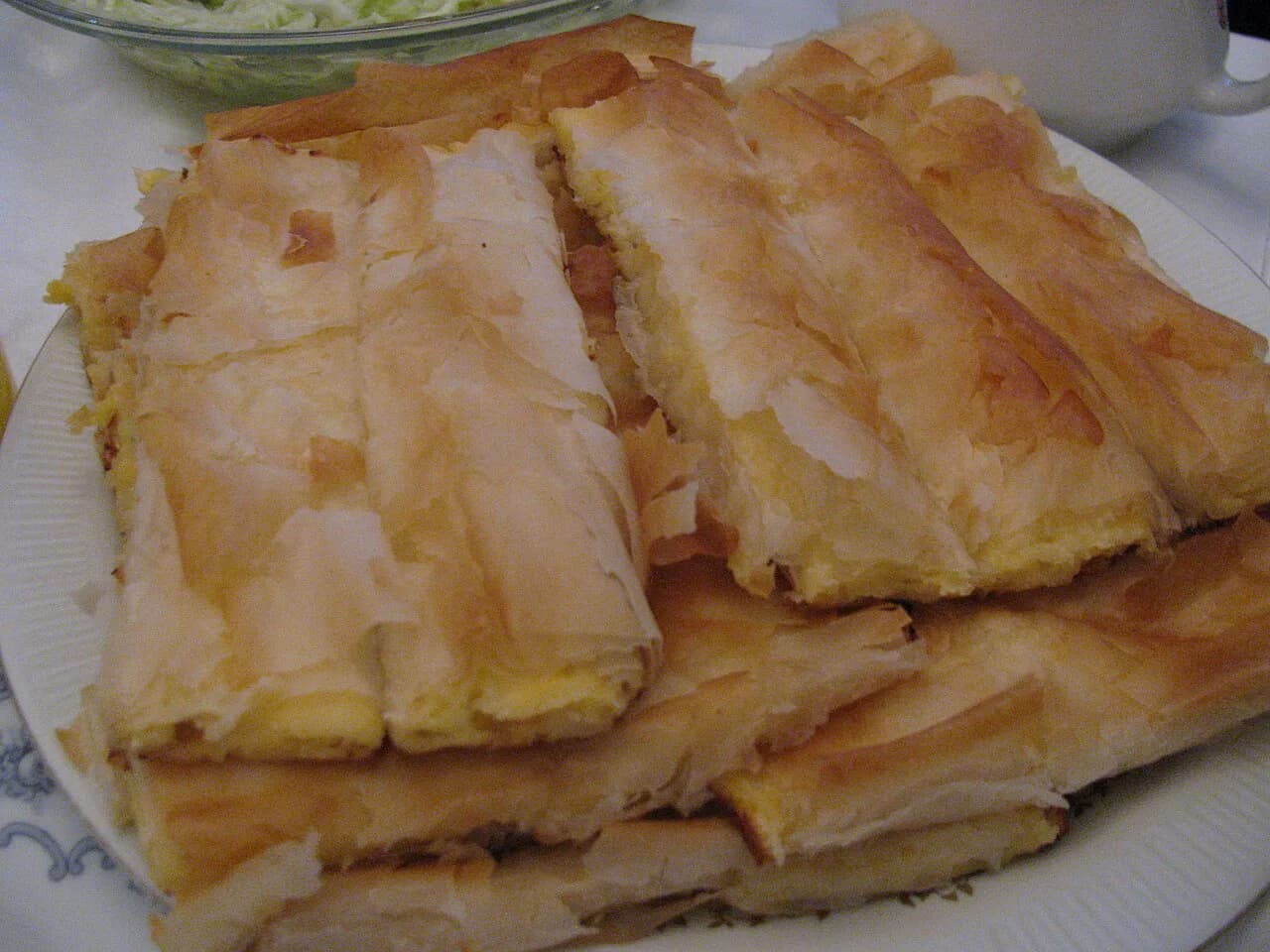
Sirnica: The Cheese Pastry and How It's Eaten
Sirnica is a rolled cheese pastry of paper-thin dough, baked golden and served warm. Here is what it is, how it is made and how it fits Croatian baking.
On this page
Sirnica is a savoury cheese pastry, not a dessert: paper-thin dough wrapped around a fresh-cheese filling and baked until crisp and golden. If you are scanning a bakery counter for something sweet, this is not it, and the rolled spiral shape is the giveaway. This guide covers what the pastry is, where the name comes from, how the dough is stretched and rolled, and how to eat it warm.
It sits in a family of Balkan cheese pastries, and the naming gets tangled quickly. Ordering well comes down to recognising the spiral shape, the pale cheese filling and the glossy top, then asking for it warm.
What sirnica is: a cheese pita rolled from paper-thin dough
Sirnica is a pita, the Balkan term for a pastry built from thinly stretched dough, filled with cheese and baked. The dough is rolled extremely thin, the cheese filling is spread across it, and the whole sheet is rolled up and coiled into a round baking tin. The result slices into spiralled wedges with layers of dough and soft cheese rather than a single dense filling.
That coiled construction is what separates a good sirnica from a flat cheese pie. The layers trap steam and fat, so the pastry stays tender inside while the top browns, and each slice shows the spiral running through it. When you cut in, you should see distinct sheets rather than a solid block.
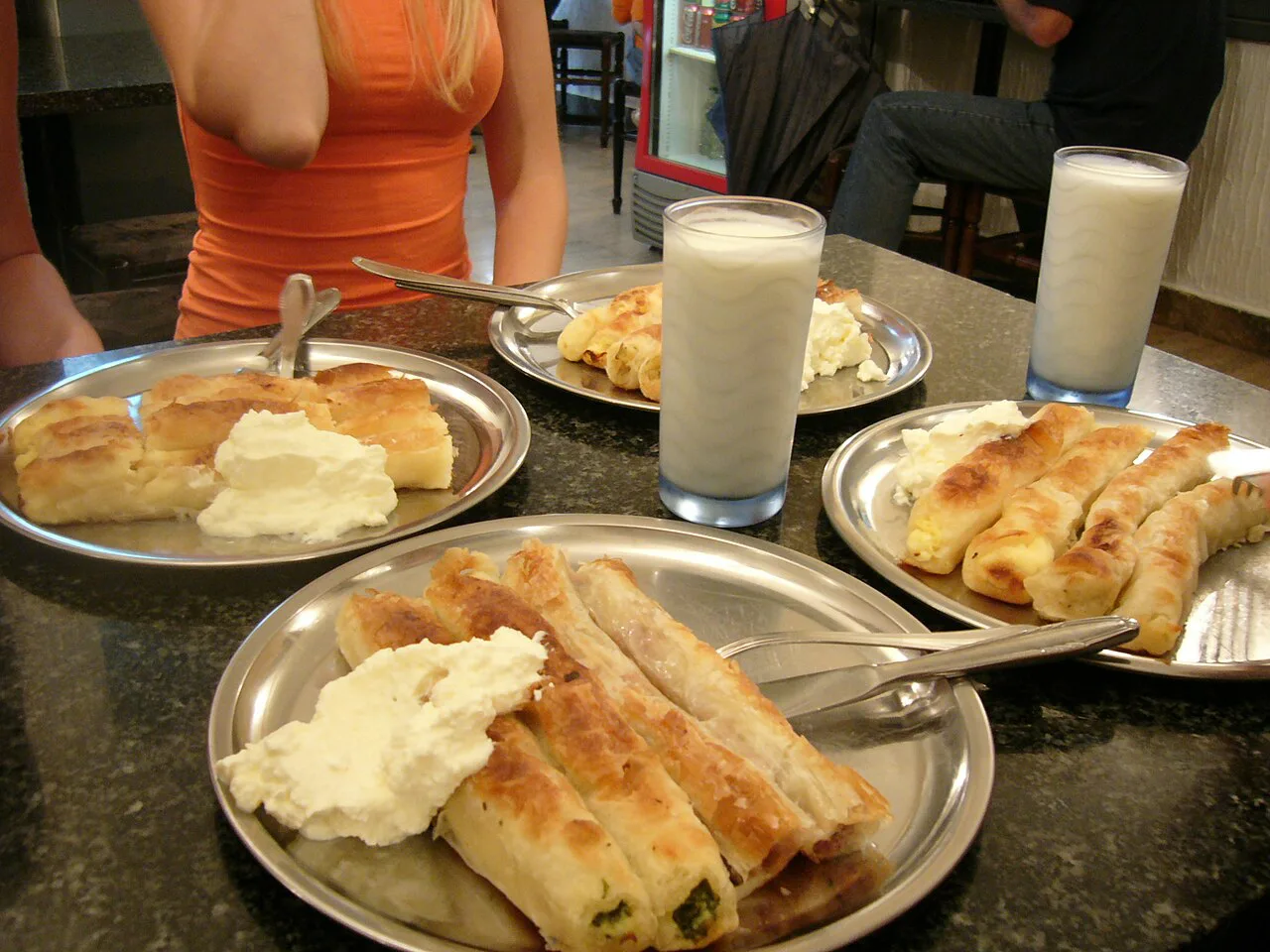
Sirnica, pita sa sirom or štrukle: what the names mean
The same pastry travels under several names. Sirnica comes from sir, the Croatian and Bosnian word for cheese, so the name simply means the cheese one. Pita sa sirom is the plain descriptive version, cheese pita, and appears on menus and in home kitchens across the region.
Is sirnica sweet or savoury? Savoury. The filling is fresh cheese bound with eggs and salted, and the finished pastry is brushed with melted butter and soured cream rather than sugar.
What is the difference between sirnica and burek? Both are built from thinly stretched dough, but the fillings and the shaping differ. Sirnica is a cheese pita rolled and coiled into a spiral round, while burek is generally rolled into a long cylinder and cut into pieces.
Can you eat sirnica cold? Yes, though the pastry firms and the layers lose some softness once cooled. It is at its best warm, straight from the bakery or briefly reheated, and a wedge eaten with a salad makes a light lunch.
Štrukle is a related but distinct term: it usually refers to rolls of stretched dough with a soft cheese filling, and in northern Croatia the baked version is often served in slices with cream. A source describes sirnica as a Bosnian speciality taken from Turkish cuisine, so it is best treated as a regional pastry rather than a uniquely Croatian invention. Croatian bakeries and home kitchens sell it widely, often alongside their own sweets.
If you want the sweet side of Croatian baking for contrast, the wider picture of cakes, rolls and Easter breads is covered in Croatian desserts, including Stonska torta and Međimurska gibanica.
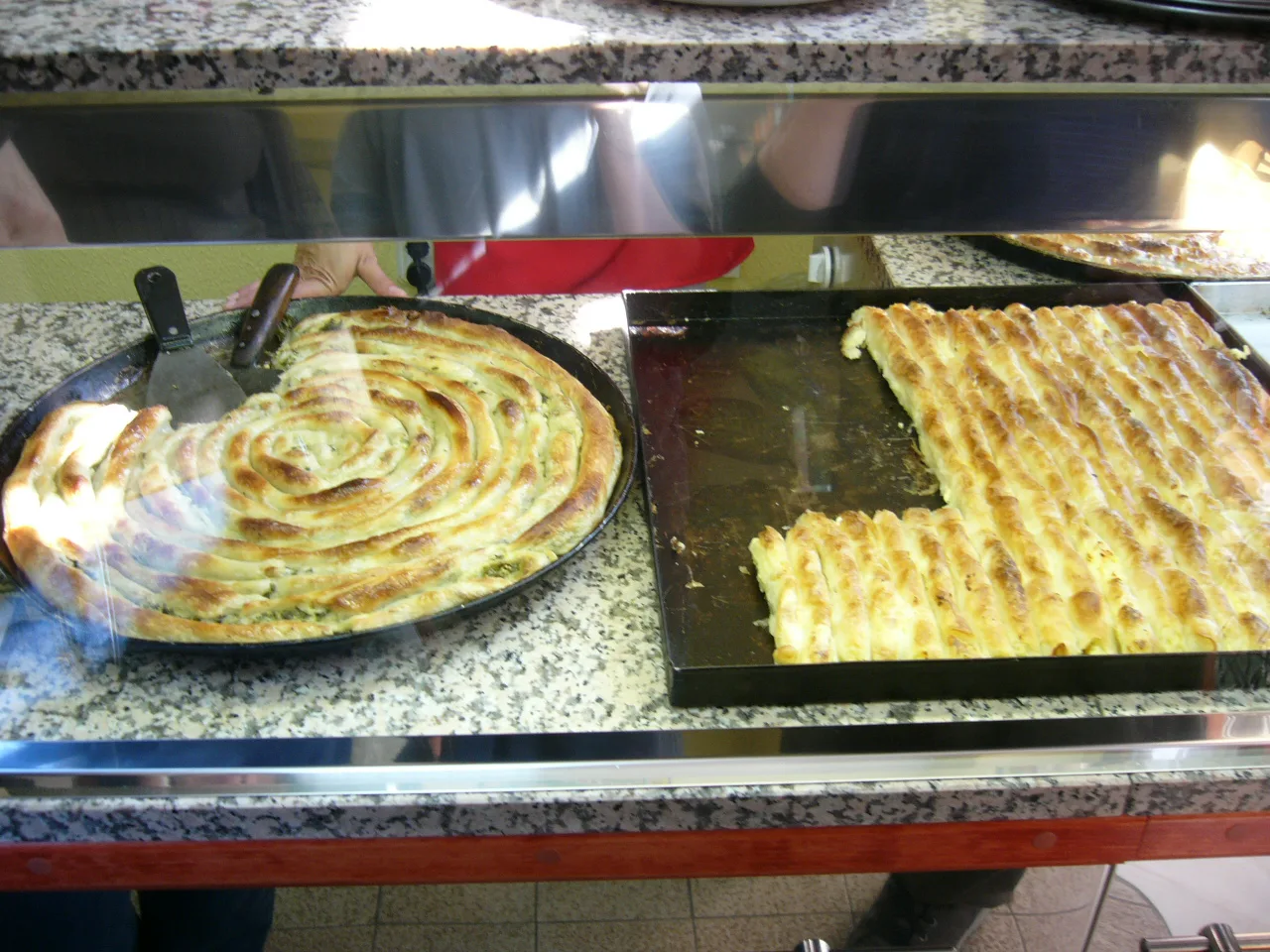
What goes into it: flour, water, salt, fresh cheese and eggs
The ingredient list is short. A typical dough is plain flour, salt and warm water, with oil used to coat the dough as it rests so it stays supple enough to stretch. The filling is fresh cheese, usually a soft white cheese, bound with eggs and seasoned with salt.
Home cooks vary the cheese. Some use ricotta and cottage cheese together for a milder, looser filling, which gives a softer interior than a firm fresh cheese would. Either way, the filling is savoury and lightly salted, never sweetened, and the pastry is finished with melted butter and soured cream rather than sugar.
How the dough is stretched and rolled into a spiral
Making sirnica is mostly about the dough. The flour, salt and warm water are kneaded to a smooth, soft dough, divided into balls and left covered to relax, then rolled and oiled and rested again. The dough is then worked on a cotton cloth, which stops it sticking, and stretched by hand from the centre outwards until it is thin enough to see through.
The filling goes along the edges of the stretched sheet, which is then rolled in from both sides towards the middle. The rolls are cut into lengths and coiled into an oiled round tin, starting at the centre and working outwards so the pastry forms a continuous spiral. A little vinegar in the dough can make the stretching easier, a common home trick.
How it is baked and finished with butter or soured cream
Before baking, the coiled pastry is brushed with oil so the surface colours evenly. It goes into a hot oven until the top turns golden and the layers are cooked through, which takes roughly forty minutes at around 200°C in one home recipe. Treat those as the cook's own numbers, not a rule for every kitchen.
The finish is what sets the baked version apart. Once golden, the sirnica is brushed with melted butter and soured cream and returned to the oven briefly so the topping sets into a glossy, faintly tangy glaze. That cream layer softens the crust and adds richness, which is why a bakery sirnica often looks shinier than a plain cheese pie.
How sirnica is served and when Croatians eat it
Sirnica is served warm, cut into wedges, and eaten at any time of day. It works as a breakfast pastry with coffee, a mid-morning snack from a bakery, or part of a spread alongside other savoury pies. Because the filling is cheese and egg rather than sugar, it suits a savoury table rather than the dessert course.
Cold sirnica is fine, but the pastry firms up and the layers lose their softness, so it is best reheated briefly or eaten the day it is bought. With a salad it makes a light lunch; on its own it is a snack rather than a full meal.
If you are building a sweet table, the fried doughnuts known as fritule and the vanilla-scented Croatian cookies are the usual companions. A slice of kremšnita, the custard cream slice also known as Bled cream cake or Kremna rezina, covers the chilled end of the range.
Buying sirnica: what to look for in a pekara or slastičarnica
In a pekara, the bakery counter, sirnica usually sits with the savoury pies rather than the cakes. Look for a whole round or a tray of wedges with a browned, slightly glossy top, visible spiral layers at the cut edge, and a filling that looks soft rather than dry. Ask whether it is warm; a bakery that bakes in batches through the morning will have fresher slices than one selling yesterday's tray.
The spiral is your quality check. A slice with tight, even coils and distinct sheets was stretched properly, while a dense, bready wedge suggests thick dough. Sizes and fillings vary by bakery, so buy a single wedge first rather than a whole round, and expect the cheese to be mild and lightly salted rather than sharp.
Sweet pastries sit alongside it, and the rolled walnut bread known as Orahnjača and the apple pita od jabuka show the same stretched-dough tradition in sweet form, with vanilin šećer, vanilla sugar, in the apple filling.
For a sweet finish from the same counters, Croatian ice cream and the sugared fried pastry strips called kroštule are worth knowing. The honey-and-spice licitar heart from northern Croatia belongs to a different craft entirely, the gingerbread tradition of that region.
Ordering sirnica without the guesswork
Sirnica is a savoury cheese pita, rolled into a spiral and baked until golden, then finished with butter and soured cream for a glossy, faintly tangy top. Eat it warm from a pekara counter, expect a mild fresh-cheese filling, and use the spiral as your sign of properly stretched dough. It sits among the savoury pies, not the cakes, so it will not satisfy a sugar craving.
If you want the sweet version of the same baking tradition, look to the chilled slices and nut rolls instead. Either way, the pastry is best judged by the look of the layers: visible sheets mean care, a dense block does not.
Explore more Croatia guides
Frequently Asked Questions
Is sirnica sweet or savoury?
Savoury. The filling is fresh cheese bound with eggs and salted, and the finished pastry is brushed with melted butter and soured cream rather than sugar. Expect a mild, lightly salty cheese flavour inside crisp golden layers. Sweet pastries sit beside it on the bakery counter, so check which tray you are pointing at.
What is the difference between sirnica and burek?
Both are built from thinly stretched dough, but the fillings and the shaping differ. Sirnica is a cheese pita rolled and coiled into a spiral round, while burek is generally rolled into a long cylinder and cut into pieces. If you want the coiled, wedge-sliced cheese pastry, ask for sirnica or pita sa sirom.
Can you eat sirnica cold?
Yes, though the pastry firms and the layers lose some softness once cooled. It is at its best warm, straight from the bakery or briefly reheated, and a wedge eaten with a salad makes a light lunch. Cold slices are a practical snack rather than the ideal way to eat it.
Sources
Notes on eating well in Croatia
Optional updates to our food guides.
You might also like



Continue reading
More guides you'll find useful





