
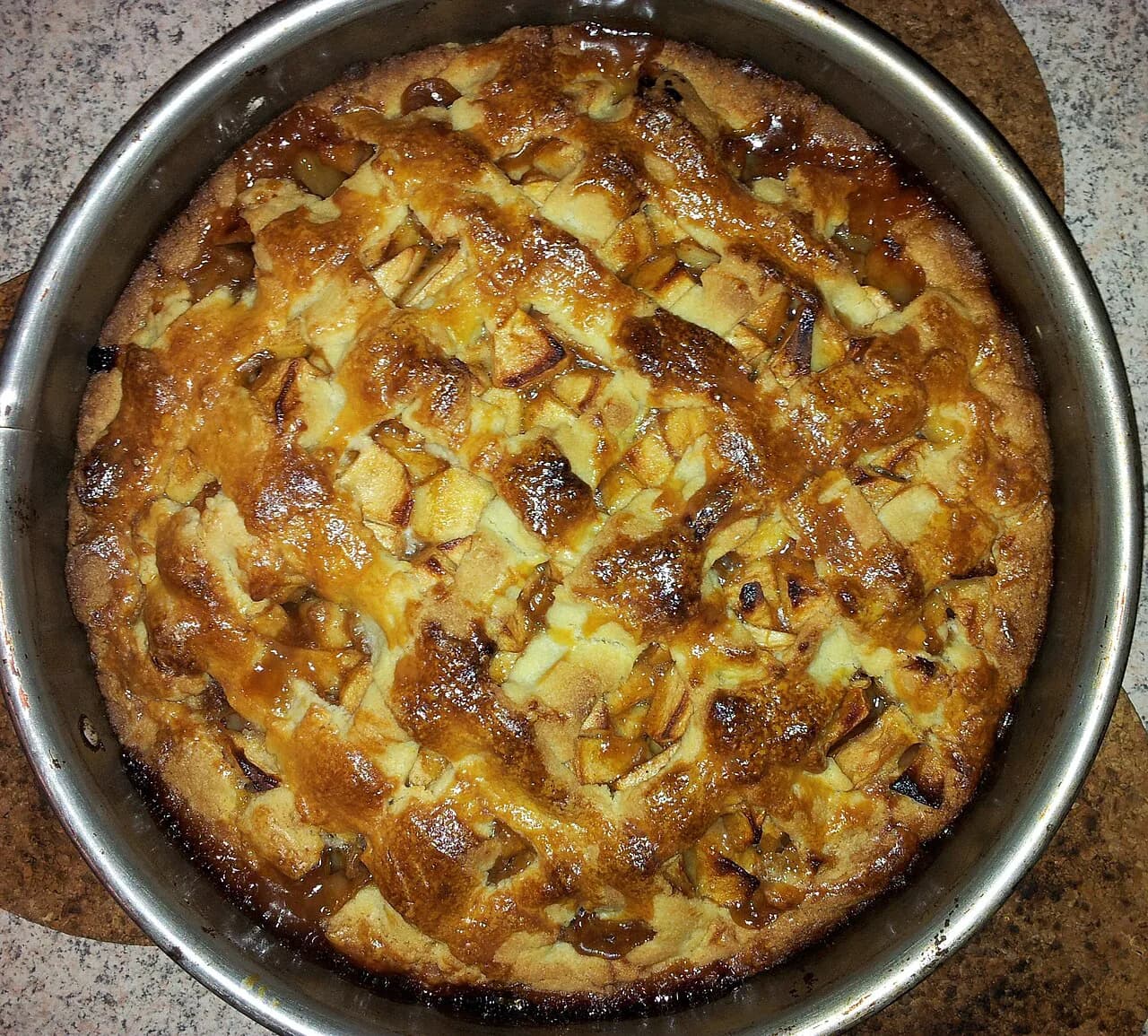
Pita od jabuka: Croatia's Apple Pie and How It's Made
Pita od jabuka is Croatia's apple pie: shortcrust or stretched dough, grated apple, sugar and cinnamon, cut into squares and dusted with icing sugar.
On this page
Pita od jabuka is Croatia's apple pie: a thin pastry base packed with grated apple, sugar and often cinnamon, baked flat in a tray, cut into squares and dusted with icing sugar. It comes in two distinct builds, a shortcrust version called starinska pita od jabuka and a rolled strudel known as štrudla od jabuka. This guide covers what goes into each, how the pastry is handled, and what to expect when you order a slice.
The short answer for anyone deciding what to bake or order: pita od jabuka is a tray-baked apple pie, not a deep-dish American one, and it is noticeably less sweet. The filling is mostly fruit, the pastry is thin, and the finish is a dusting of icing sugar rather than a glaze or a scoop of cream.
What pita od jabuka is, translated plainly
Pita in Croatian baking means a flat tray pie or tart, and od jabuka means of apples, so pita od jabuka translates simply as apple pie. It is a home dessert first, the kind that appears on family tables and in ordinary bakeries rather than on restaurant menus. The shape is a slab, baked in a rectangular tin and cut into neat squares or long slices once cooled.
Starinska means old-fashioned or traditional, and a starinska pita od jabuka is the version made with prhko tijesto, shortcrust pastry. That is the style most Croatians mean when they use the name without further qualification. If you see štrudla od jabuka instead, you are looking at the rolled, stretched-dough relative rather than the tray pie.
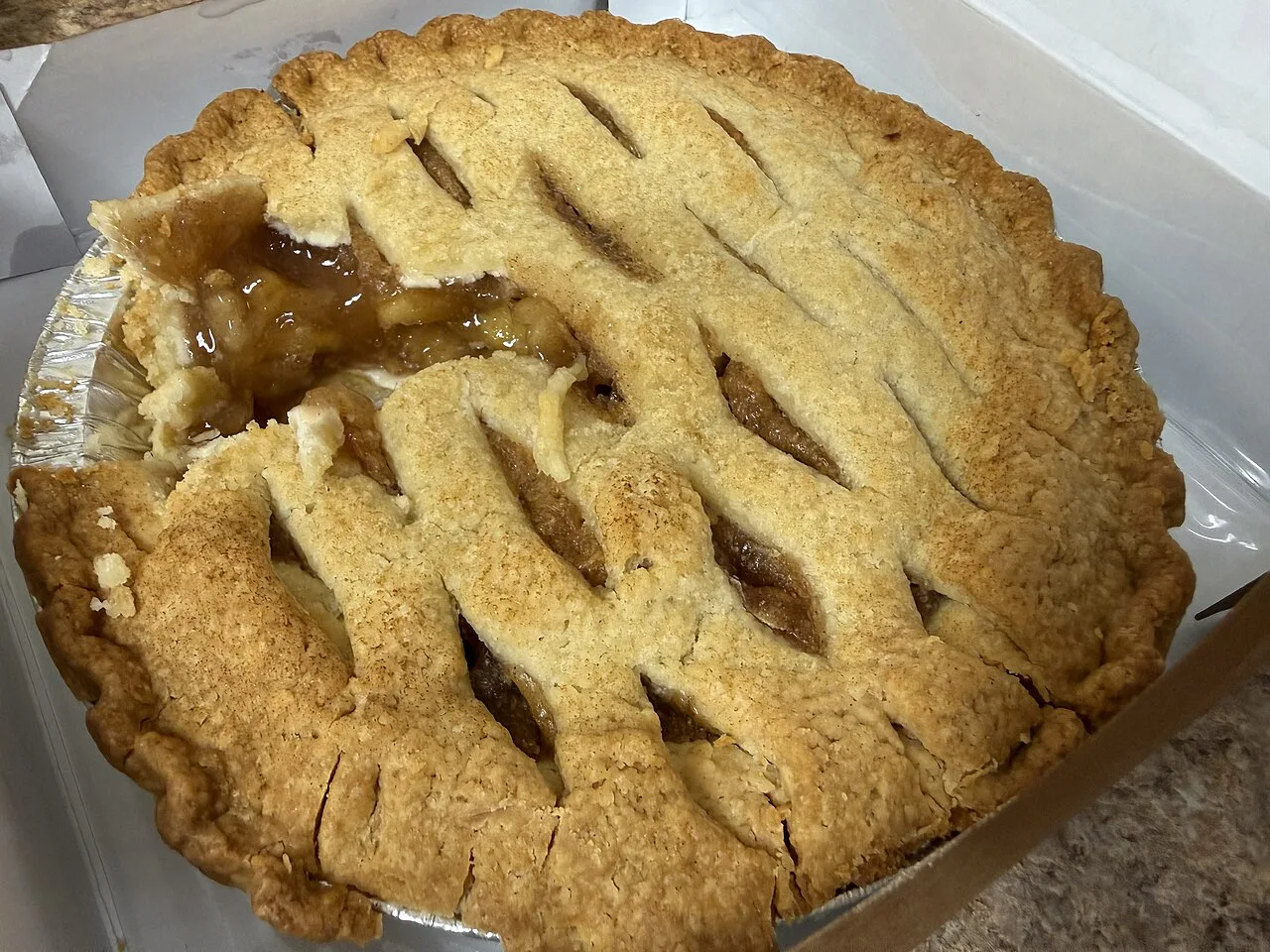
Two bases, two textures
The shortcrust version is a two-layer sandwich: a base of prhko tijesto, a thick layer of grated apple, and a second sheet of pastry over the top, pricked with a fork so steam escapes. The pastry is crisp and crumbly, closer to a British shortcrust tart than to a raised pie. It holds its shape when cut, which is why it travels well to a table or a lunchbox.
Can you make pita od jabuka with ready-made pastry sheets? Yes, ready-made pastry sheets work as a shortcut, but the result is different: shop-bought shortcrust bakes firmer, flatter and less crumbly than cold-butter pastry made by hand. The filling stays the same — grated apple, sugar and cinnamon, drained before use.
Do you peel the apples for pita od jabuka? Yes, the apples are peeled before grating in standard recipes. The skin would stay tough in the soft filling and doesn't grate evenly.
Why is Croatian apple pie less sweet than American apple pie? Croatian recipes lean on the fruit and use modest sugar, with icing sugar on top rather than a heavy glaze or a sugary crumb layer. The result is noticeably less sweet than the American version.
The strudel version uses a stretched dough rolled out paper-thin and then wrapped around the filling. The result is a coiled or folded roll with layers rather than a flat slab, and the pastry stays softer and more pliable. Both are apple desserts in the same family, but they eat quite differently: one is crumbly and sharp-edged, the other soft and layered.
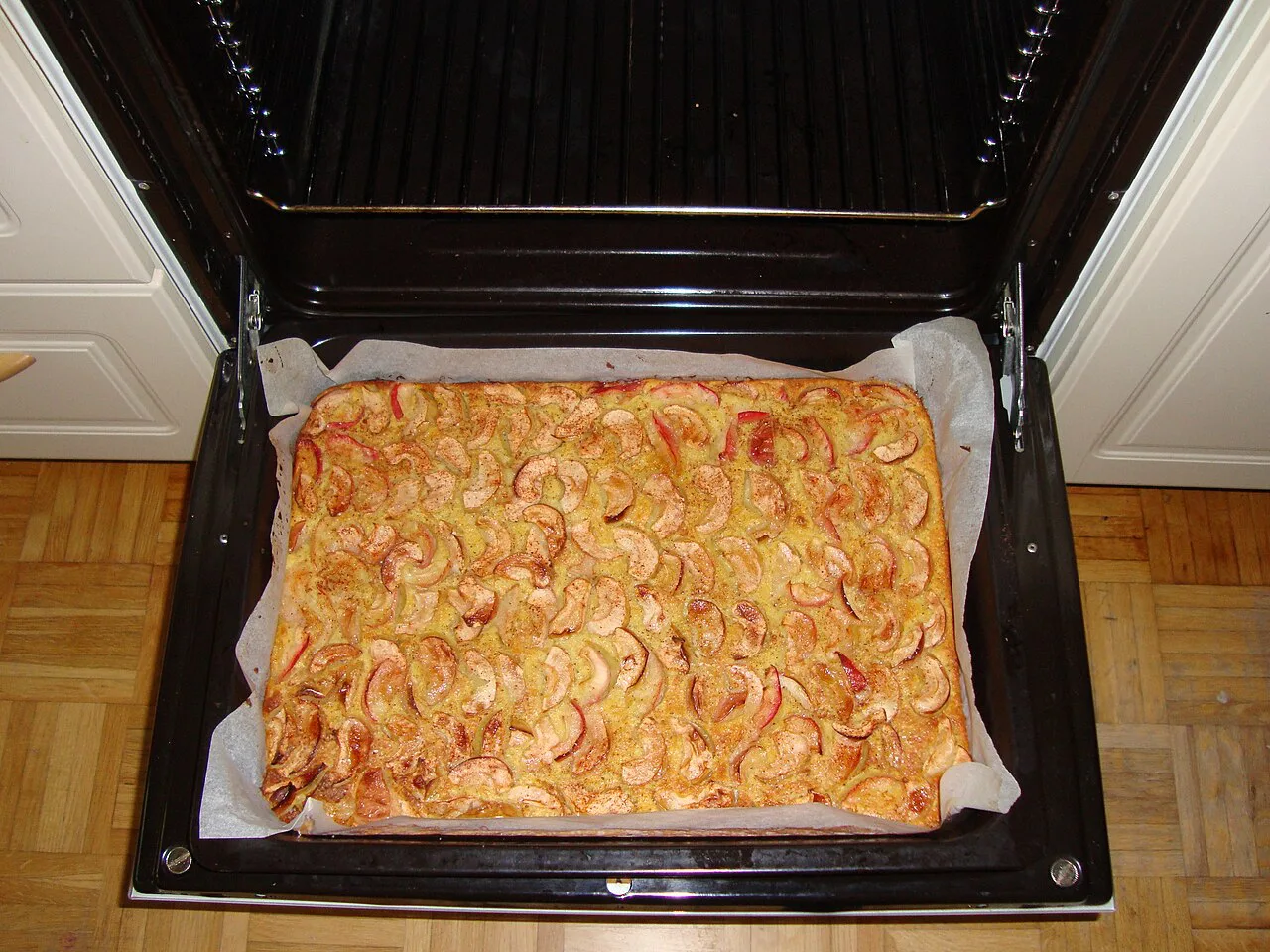
What goes into the filling
The core is grated apple, sugar and cinnamon. A traditional shortcrust recipe uses roughly 800 g of grated apples for one tray, with a teaspoon of cinnamon and sugar to taste, plus a little icing sugar for the top. Some versions add lemon zest to the pastry itself, which lifts the whole thing without making it sweeter.
Vanilla sugar is a common addition in Croatian home baking, and it is exactly what it sounds like: caster sugar infused with vanilla, sold in small sachets. Walnuts turn up in some strudel fillings, where chopped nuts are scattered over the apples before rolling. Neither is compulsory, so a plain apple and cinnamon filling is a perfectly legitimate version.
Older recipes often leave the cinnamon out altogether, relying on the apples themselves and perhaps a little lemon. Cinnamon became standard later, as imported spice reached ordinary kitchens more easily. If you want the older flavour, halve the cinnamon or skip it and taste the fruit first.
Why the apples are grated and drained
Grated apple releases a lot of liquid, and that liquid is the enemy of a thin pastry base. Recipes deal with this by sugaring the grated fruit and letting it stand, then squeezing or draining the excess juice before it goes anywhere near the dough. Skip that step and you get a soggy bottom and a filling that steams rather than bakes.
Grating rather than slicing also changes the texture: the apple collapses into a soft, even layer instead of leaving gaps between chunks, so the filling slices cleanly. In the strudel method the fruit is laid along a narrow band roughly three inches wide rather than across the full width of the dough. Prepare the apples last, once the pastry is rolled and waiting, because grated apple browns quickly.
How shortcrust pita od jabuka is assembled and baked
Start with cold ingredients: flour, a pinch of salt, baking powder, icing sugar and cold butter cut into cubes, rubbed into the flour until it looks like breadcrumbs. Add egg yolks and a spoonful of sour cream to bring it together, then split the dough in two, wrap each piece and chill it for about half an hour. Cold butter and cold dough are what give shortcrust its crumbly snap.
Roll the first half into a buttered, floured tin roughly 20 by 30 cm, press it flat, spread the drained apple over it and cover with the second sheet. Prick the top with a fork and bake at around 180°C until it is golden, which takes roughly forty minutes in a standard recipe. Cool it in the tin before cutting, or the filling will slide out of the slices.
How štrudla od jabuka differs
The strudel takes the same fruit but a very different pastry: the dough is stretched until it is thin enough to see through, brushed with melted butter, then loaded along one narrow band. The apples sit in a dense line roughly three inches wide rather than being spread across the whole sheet, which keeps the roll tight and stops the filling bursting out. Roll it up, place it on an oiled tray, brush the top and bake.
Timing is the main practical difference: the strudel bakes for about an hour to an hour and a half, longer than the shortcrust tray pie, until the pastry is properly crisp. It is sliced rather than cut into squares and dusted with icing sugar just before serving. If you are choosing between the two for a first attempt, the tray version is more forgiving.
How it is served
Pita od jabuka is served at room temperature or slightly warm, cut into squares or slices and finished with a veil of icing sugar. It is a dessert, but a restrained one: the Croatian version is significantly less sweet than the North American apple strudel most visitors know, so the fruit dominates. That matters if you are baking for a British or American table, because you may want to add a little more sugar than a Croatian recipe suggests.
It pairs well with coffee rather than cream, and it keeps for a day or two in a tin, which is part of its appeal as an everyday cake. A scoop of vanilla ice cream or a spoon of sour cream on the side is a modern addition rather than the traditional serve. Either way, let it cool before slicing so the layers hold together.
Shortcut versions with ready-made pastry
If you use ready-made pastry sheets, treat them as a convenience, not a like-for-like swap. Shop-bought shortcrust tends to bake flatter and less crumbly than cold-butter pastry made by hand, so the texture of the finished pie will be firmer and more uniform. The trade-off is time saved on a recipe that is otherwise quick to assemble.
What stays the same is the apple handling. Drain the fruit, season it and Don't overfill, whatever pastry you use. If you are working with thin ready-made sheets, layer them with melted butter or oil so they crisp rather than turning leathery.
Where pita od jabuka sits among Croatian desserts
Croatian Desserts divide broadly into baked tray cakes and cold set desserts. Pita od jabuka belongs with the baked home cakes, alongside the walnut roll known as orehnjača and the cheese pastry sirnica, which share the same stretched or rolled dough tradition. The contrast is with the chilled, custard-based puddings that dominate restaurant dessert menus.
On the Dalmatian coast the best-known cold dessert is rožata, a caramel custard, while the north is associated with the cream slice called kremšnita. Those are the ones you order after a restaurant meal; pita od jabuka is more likely to appear at a bakery counter or a family table. Knowing which is which helps you order the thing you actually wanted.
Which version should you bake first?
Start with the shortcrust tray version. It takes less time than the strudel and tolerates a rough hand, and the draining step is the only real technique you need to learn; once the pastry is chilled and the apples are dry, the rest is assembly. Bake the strudel once you are comfortable handling dough, because a torn sheet is the most common failure.
Whichever you make, taste the apple mixture before it goes into the pastry. Croatian recipes assume a sweet, ripe fruit and a restrained hand with sugar, so adjust to what you actually have in the bowl.
Explore more Croatia guides
Frequently Asked Questions
Can you make pita od jabuka with ready-made pastry sheets?
Yes, ready-made pastry sheets work as a shortcut, but the result is different: shop-bought shortcrust bakes firmer, flatter and less crumbly than cold-butter pastry made by hand. The filling stays the same — grated apple, sugar and cinnamon, drained before use.
Do you peel the apples for pita od jabuka?
Yes, the apples are peeled before grating in standard recipes. The skin would stay tough in the soft filling and doesn't grate evenly. Peel, grate, then drain the excess juice before the fruit meets the pastry.
Why is Croatian apple pie less sweet than American apple pie?
Croatian recipes lean on the fruit and use modest sugar, with icing sugar on top rather than a heavy glaze or a sugary crumb layer. The result is noticeably less sweet than the American version. If you prefer a sweeter pie, add sugar to the filling to taste.
What is the difference between pita od jabuka and štrudla od jabuka?
Pita od jabuka is baked flat in a tray with a shortcrust base and lid, then cut into squares. Štrudla od jabuka uses stretched dough rolled around a dense line of apple and bakes for about an hour or more. The first is crumbly and sharp-edged, the second soft and layered.
Do you serve pita od jabuka warm or cold?
Room temperature or slightly warm, cut into squares and dusted with icing sugar. Let it cool in the tin first so the filling sets and the slices hold together. Cream or ice cream is an optional modern addition.
Sources
Notes on eating well in Croatia
Optional updates to our food guides.
You might also like



Continue reading
More guides you'll find useful





