
Orahnjača: Croatia's Walnut Roll and How It's Made
Orahnjača is Croatia's rolled walnut cake, a sweet yeast dough wrapped around ground walnuts and baked for Christmas, Easter and weddings.
On this page
Orahnjača is Croatia's walnut roll, a sweet yeast dough spread with a cooked ground walnut filling, rolled into a log and baked until golden. Croatians make it most often for Christmas and Easter, and it turns up at weddings and christenings too. This guide explains what goes into it, how the dough is handled, how the filling is cooked, and how it differs from the poppy seed rolls built on the same dough.
The recipe is patient rather than complicated. Most of the time goes into letting the dough rise twice, so it suits a day when you are already in the kitchen. The steps below follow the quantities and method published in Croatian baking sources, with the temperatures given as the recipes state them.
What orahnjača actually is
Orahnjača is a nut roll, a pastry made from a sweet yeast dough and finished with a walnut filling. It is one of the most recognisable homemade cakes in Croatia, and the walnut version is the one most closely tied to Christmas. Recipes often make two rolls at once from a single batch of dough.
The dough: a soft yeast base risen twice. The base is a simple enriched yeast dough: plain flour, warm milk, sugar, egg yolks plus a whole egg, melted butter, grated lemon peel and a pinch of salt.
The filling: a cooked walnut paste, not a crumble. The filling is where home bakers go wrong.
Baking: 180°C and a watchful eye. Both rolls bake at 180°C. Timing ranges from about 40 to 55 minutes depending on the size of the rolls and the oven, so judge by colour rather than the clock alone: the crust should be a deep, even gold. The egg wash is.
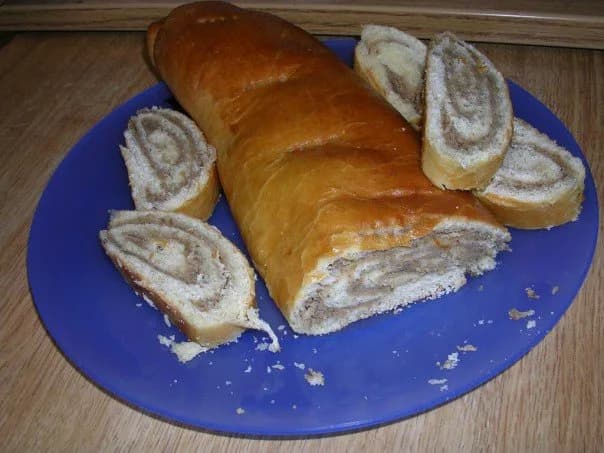
The shape matters as much as the flavour. Once cooled, the log is cut across into thin rounds, so each slice shows a spiral of dough and dark walnut paste. Slices are usually somewhere between one and two centimetres thick, which keeps the filling generous without the roll collapsing. Serve it in thin rounds rather than thick slabs, and it sits comfortably alongside the other sweet things on a Croatian festive table, from fritule to the cakes in this collection of Croatian desserts.
The dough: a soft yeast base risen twice
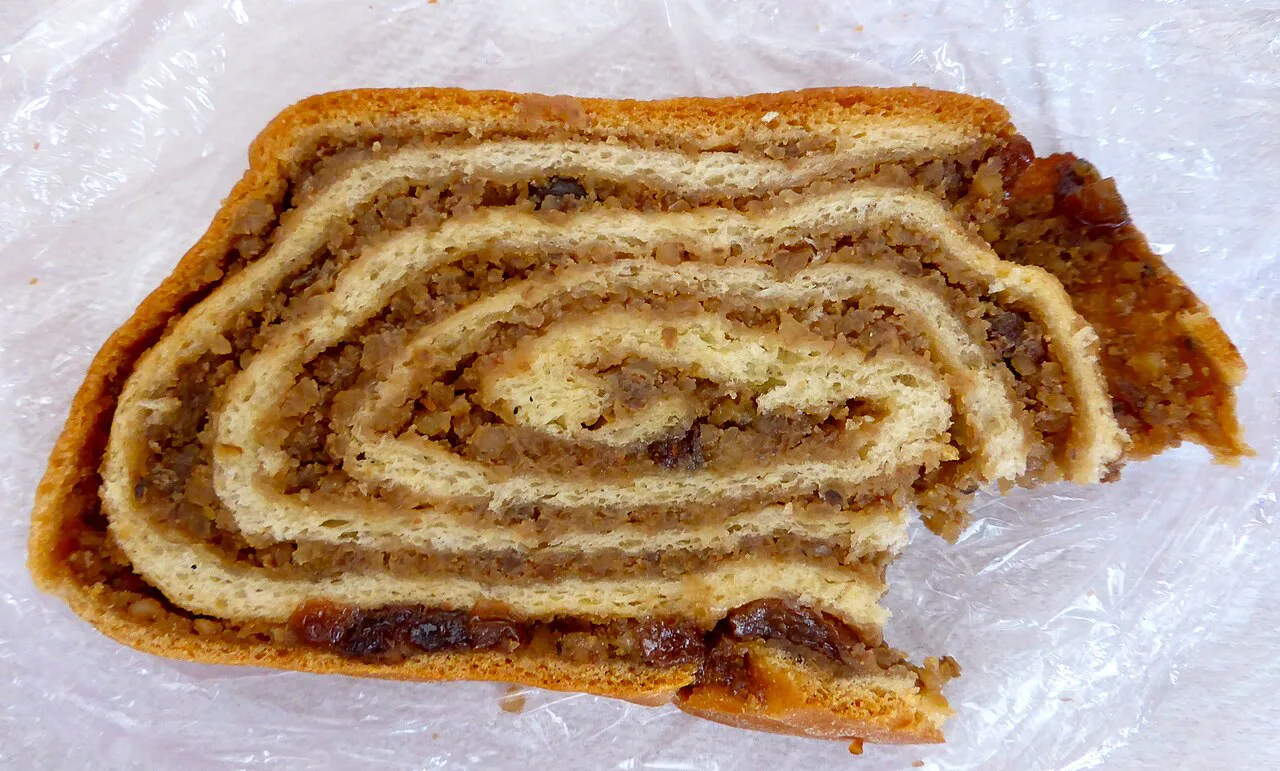
The base is a simple enriched yeast dough: plain flour, warm milk, sugar, egg yolks plus a whole egg, melted butter, grated lemon peel and a pinch of salt. The yeast is proofed first with a little sugar and warm milk until it bubbles, which takes about fifteen minutes in a warm spot. One published version uses 700 g of flour, 40 g of yeast, 600 ml of milk, two eggs, 310 g of sugar and 50 g of butter.
The dough is then kneaded until it comes together, shaped into a ball and left, covered with a tea towel, for roughly forty minutes. After that it is divided, rolled out to about a centimetre thick, spread with filling and rolled up. A second short rise of fifteen to thirty minutes follows before baking, which is what gives the crumb its light, tender structure.
Egg wash goes on near the end of baking rather than at the start, so the surface takes on a deep golden colour without over-browning. If you are making two rolls, leave space between them on the tray because they expand in the oven.
The filling: a cooked walnut paste, not a crumble
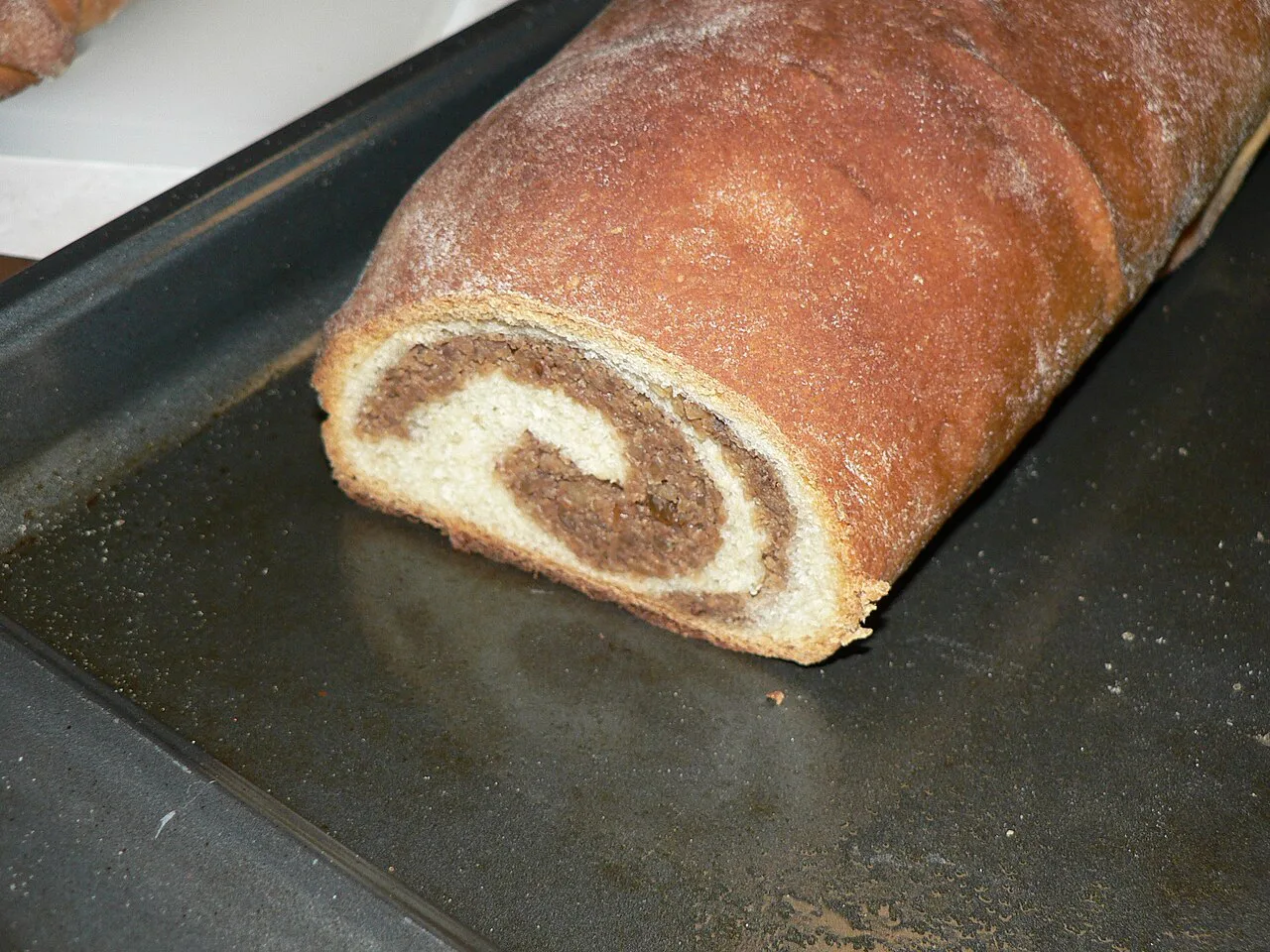
The filling is where home bakers go wrong. It is not dry ground walnuts scattered over the dough but a cooked paste: sugar, milk, lemon peel and raisins are brought to the boil in a pan, then ground walnuts and cinnamon go in and the mixture cooks gently until it thickens like porridge. Cool it slightly before spreading, or it will tear the dough.
Raisins are usually soaked first, sometimes in rum and sometimes in Prošek, the Dalmatian dessert wine, which plumps them and carries a little sweetness into the nuts. Here Prošek is an ingredient in the filling, not a drink to serve with it. Quantities vary between families: one widely shared version uses 500 g of walnuts, 100 g of raisins and a grated half-lemon, while another goes heavier on the walnuts.
Baking: 180°C and a watchful eye
Both rolls bake at 180°C. Timing ranges from about 40 to 55 minutes depending on the size of the rolls and the oven, so judge by colour rather than the clock alone: the crust should be a deep, even gold. The egg wash is brushed on for the last few minutes of baking, then the rolls come out and cool before being lifted onto a rack.
Let the roll cool properly before slicing. Cutting while hot squashes the spiral and smears the filling; a fully cooled roll gives clean rounds with a visible swirl. A light dusting of icing sugar over the top is traditional and makes the dark filling stand out when the roll is cut.
Regional and family variations
The dough is a template, and the filling changes with the household and the region. The same base takes poppy seeds, fresh cheese, jam or even a chocolate spread, and families guard their own versions closely. Some add a splash of dessert wine to the raisins, others leave them out entirely and lean on cinnamon and lemon peel for the aroma.
Texture varies as well. A wetter filling gives a softer, more pudding-like slice, while a thicker paste slices more cleanly and travels better if you are taking the cake to someone else's table. If you want a cheese-based festive bake instead, sirnica is the Croatian cheese pastry made from a related enriched dough, and it works on the same kind of occasion table.
When Croatians eat orahnjača
Orahnjača is above all a Christmas cake, but it is not only for December. Croatian baking sources describe it as a fixture at Easter, weddings and christenings, and it appears at other family celebrations through the year. Because it keeps well and slices neatly, it suits a table where people come and go over several hours.
On a Croatian sweet table it usually sits with other rolled and cut cakes rather than as the single centrepiece. The same occasion might bring out a kremšnita, the custard slice known elsewhere as the Bled cream cake or Kremna rezina, and a plate of small biscuits.
Makovnjača and the wider roll family
Makovnjača is the poppy seed roll, made from the same sweet yeast dough and rolled and baked in the same way as orahnjača, with a ground poppy seed filling instead of walnuts. The two are often made side by side from one batch of dough, and a slice of each on the same plate is a common sight at Christmas. Both belong to the broader central European nut roll tradition, which explains why similar rolls appear from Poland to the Balkans under different names.
Other festive sweets follow the same logic of a simple base and a generous filling. Fritule, the small fried doughnuts dusted with sugar, are quick and eaten warm, while richer layered cakes such as Stonska torta or Međimurska gibanica take longer and are kept for bigger occasions. If you are building a Croatian dessert table, pick one roll and one contrast rather than several similar bakes.
How it is served and stored
Serve orahnjača at room temperature, cut into thin rounds and piled on a plate or board. It needs nothing alongside it except coffee or tea, and the slice should hold together when picked up. Wrapped well, the roll keeps for several days.
For a festive spread, treat it as one element among several rather than the whole dessert course. A plate of Croatian cookies, a bowl of fritule made earlier, and a slice of orahnjača cover sweet, crisp and rich in one go.
Which Croatian sweet should you bake first?
Start with orahnjača if you want a bake that rewards patience and gives a striking sliced result: two rises, a cooked walnut filling and 180°C are the whole method. It is forgiving enough for a first attempt and generous enough to feed a table.
If you want something quicker, make fritule; if you want a showpiece, try a layered cake instead. Either way, the walnut roll is the one to learn first because the dough can be reused for makovnjača and other fillings once you know how it behaves.
Explore more Croatia guides
Sources
Notes on eating well in Croatia
Optional updates to our food guides.
You might also like



Continue reading
More guides you'll find useful





