
Fritule: Croatia's Little Fried Doughnuts Explained
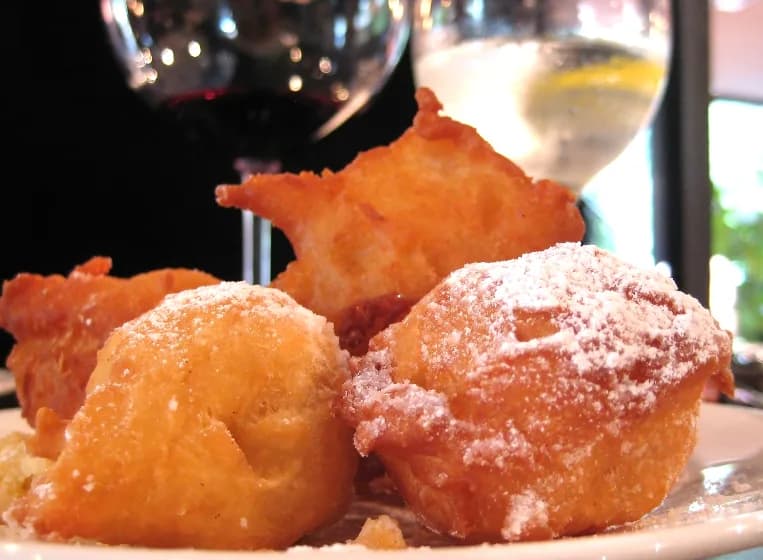
Fritule are small Croatian fried dough balls, flavoured with lemon zest, raisins and a splash of rum or brandy, then dusted with icing sugar and eaten warm.
On this page
Fritule are small, round balls of fried dough, dusted with icing sugar and eaten warm, and they are the easiest Croatian dessert to recognise on a festive table. A thick batter is dropped by the spoonful into hot oil, puffed until golden, drained and then finished with sugar or a cinnamon-sugar roll. This guide explains what fritule taste like, what goes into the batter, why raisins and a splash of spirits appear in some versions but not others, and how to fry a batch at home that is cooked all the way through.
What fritule are and what they taste like
Fritule are a Croatian sweet built on a soft, spoonable batter rather than a shaped dough, so each one comes out as an irregular little sphere with a crisp shell and a light, airy middle. The flavour is gentle: sweet batter lifted by vanilla and lemon zest, with the sugar coating doing most of the work on the outside. Because they are small and contain no filling, they eat more like doughnut holes than like a slice of cake, and they are at their best within minutes of leaving the oil, while the crust still cracks under the sugar.
What goes into the batter
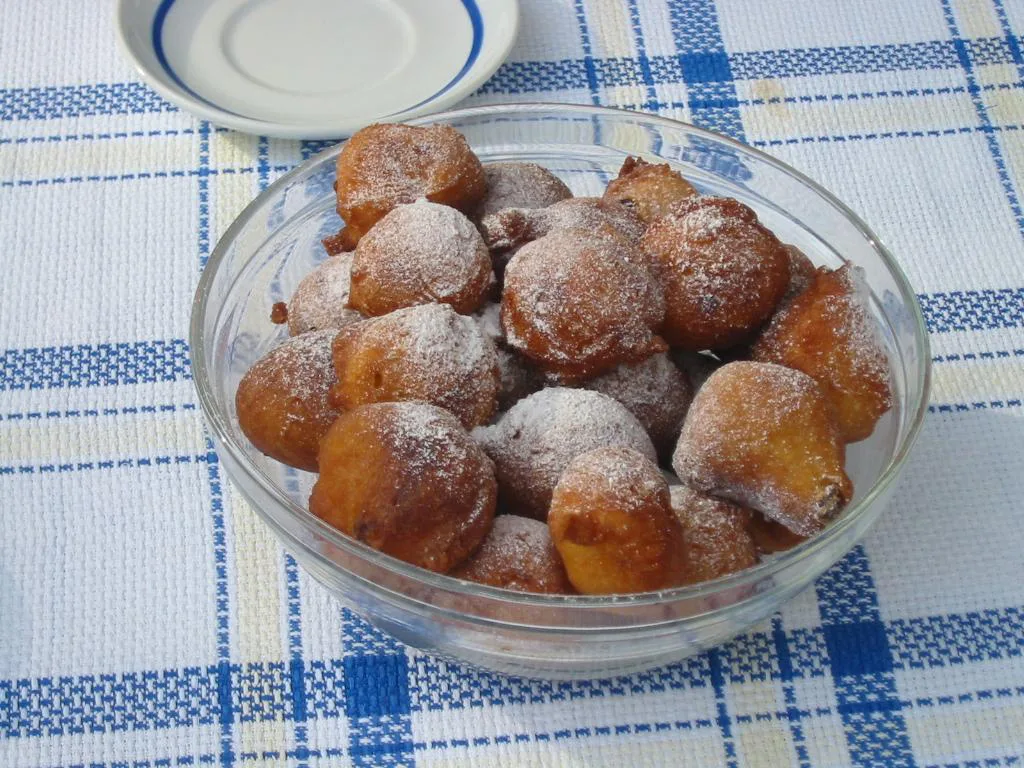
The core ingredients are ordinary store-cupboard ones: flour, eggs, sugar, vanilla, baking powder and a little salt, with lemon zest folded through for aroma. The liquid is where recipes divide, and yogurt gives a thicker, tangier batter that holds its shape on the spoon, while milk produces a looser mix. One home recipe combines egg, yogurt, flour, vanilla, baking powder and sugar into a thick batter before frying, so the dough is stiff enough to drop in spoonfuls rather than poured.
What is a frittella? A frittella is the Italian fried dough sweet that shares its name root with fritule. Italian versions range from yeasted Carnival fritters to small raisin-studded balls, but the principle is the same: a thick batter dropped into hot oil and finished with sugar.
Can you make fritule without alcohol? Yes. The rum, brandy or grappa is optional and used for aroma, so leaving it out changes the flavour only slightly.
How do you stop fritule from being raw in the middle? Fry a single test fritula first, cut it open, and adjust the heat before doing a full batch. Oil at around 170°C, small spoonfuls and batches of three or four keep the temperature steady so the centre sets before the outside overcolours.
A Dalmatian version works the other way, starting from flour, sugar, vanilla sugar, baking powder, salt and lemon zest, then beating in eggs and milk with an optional spoonful of rum or grappa. If that batter turns out too thick, the fix is a splash more milk rather than more flour, which keeps the fritule light instead of bready. Either route works; the choice is really about whether you want a denser, yogurt-based bite or a softer, milk-based one.
Raisins and spirits: optional, not mandatory
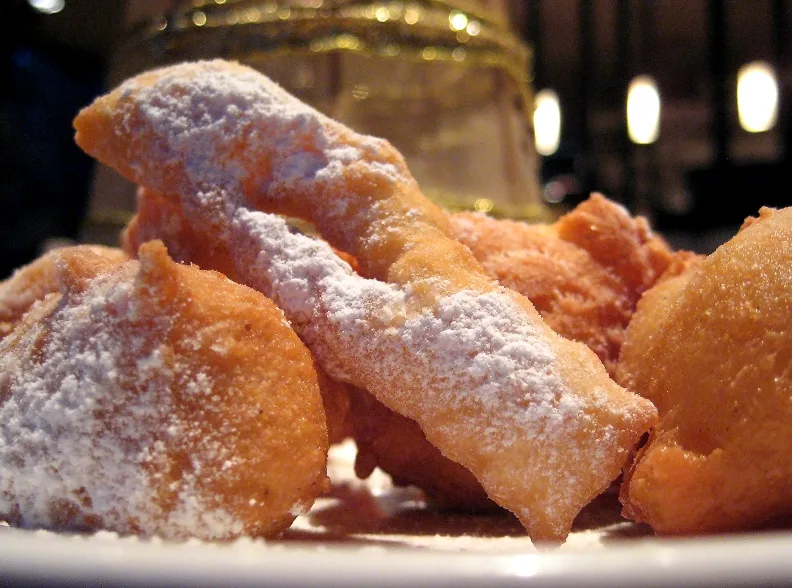
Raisins are a texture decision. Some cooks stir them into the batter so each fritula carries a soft, sweet burst, while others leave them out because the plain version dusts more evenly and pleases more people at a shared table. If you use them, pick soft raisins and fold them in last so they do not sink to the bottom of the bowl.
Spirits work the same way. A tablespoon of brandy or rum, or a couple of tablespoons of schnapps, adds warmth and aroma without making the fritule taste of alcohol, since most of it cooks off in the oil. One version made with yogurt, lemon zest, vanilla seeds and a splash of schnapps or rum shows how the spirit is treated as a seasoning rather than a main ingredient. Leave it out entirely and the fritule still work; add it and the flavour deepens slightly.
How fritule are fried so the centre cooks through
Heat enough oil in a deep pan to cover the fritule as they float, and aim for around 170°C. Too hot and the outside darkens before the middle sets; too cool and the batter drinks oil and turns heavy. The reliable test is a single spoonful: fry it, cut it open, and if the shell is deep golden but the inside is raw, lower the heat before starting the real batch.
Drop the batter in small portions, one at a time, and fry in batches of three or four so the oil temperature does not crash. Roughly three to four minutes a batch, turning as needed, gives a golden shell and a cooked centre. Lift them straight onto paper towel to drain, then move them into icing sugar or a cinnamon-sugar mix while still hot so the coating clings.
Fritule in Dalmatia and on the festive table
On the Dalmatian coast, fritule belong to celebration cooking: holiday gatherings, family tables and the festive season, when frying a batch is part of the routine. They are served warm, often piled in a bowl with the sugar drifting onto the tablecloth, and eaten with coffee rather than as a plated dessert. That is also why they suit home cooks: the batter comes together in under half an hour, and the whole batch is best eaten the same day.
Think of them alongside the wider family of Croatian sweets rather than as a dessert in isolation. Where a kremšnita is a set, layered custard slice eaten cold with a fork, fritule are finger food straight from the fryer, and the two sit at opposite ends of the same tradition. Other regional sweets such as the almond pastries of Trogir or the dark grape-must sweets of the coast show the same local instinct for turning simple ingredients into something festive.
Fritule and frittelle: the Italian cousin
The name echoes the Italian frittelle, and the idea is the same: a spoonful of batter, hot oil, a sugar finish. Italian versions vary by region, some with yeast and a longer rise, some studded with raisins or pine nuts, and Croatian fritule sit comfortably in that wider family of fried Carnival sweets. The Croatian recipes here lean on everyday simplicity: baking powder rather than yeast, yogurt or milk, lemon zest, and a finish of icing sugar rather than a glaze.
What to look for when buying fritule
Freshness is the whole point, so buy from a batch that is still warm and visibly turning over rather than one sitting in a cold display. A good fritula is uneven and craggy, not perfectly spherical, with sugar clinging to the cracks and no dark, oily sheen from oil that has been used too long. Squeeze one gently: it should give easily and feel light for its size, which tells you the centre is airy rather than dense.
Plain and raisin versions are both common, and some batches get a roll in cinnamon sugar instead of icing sugar. Buy a small bag first rather than a large one, since fritule go stale quickly and are far better eaten on the spot than carried around.
Easy fritule at home: quantities and variations
For a yogurt-based batch, whisk one egg with a cup of yogurt, then fold in a cup of flour, two teaspoons of baking powder, a teaspoon of vanilla and two tablespoons of sugar, with a tablespoon of brandy if you want it. Fry spoonfuls in hot oil in batches of three or four, turning, then dust with icing sugar and serve immediately. The whole process takes well under half an hour, which makes it a realistic last-minute dessert.
For a milk-based Dalmatian batch, combine 250g flour with 50g sugar, a packet of vanilla sugar, a teaspoon of baking powder, a pinch of salt and the zest of a lemon, then beat in two eggs and 100ml milk with a tablespoon of rum or grappa if using. Stir in 50g raisins only if you want them, and adjust with a little more milk if the batter fights the spoon. Fry at about 170°C until golden, drain, and dust generously with icing sugar.
Which version should you make first?
Start with the yogurt version if you want a thicker batter that is forgiving to spoon and holds a round shape, and try the milk version next if you prefer a lighter, softer centre. Add raisins to one half of the batch so you can taste the difference, and keep the spirits optional. Eat them warm, within an hour of frying, with coffee alongside. Serve them with the wider spread of Croatian Desserts if you are planning a festive table.
Explore more Croatia guides
Frequently Asked Questions
What is a frittella?
A frittella is the Italian fried dough sweet that shares its name root with fritule. Italian versions range from yeasted Carnival fritters to small raisin-studded balls, but the principle is the same: a thick batter dropped into hot oil and finished with sugar.
Can you make fritule without alcohol?
Yes. The rum, brandy or grappa is optional and used for aroma, so leaving it out changes the flavour only slightly. Replace it with a little extra milk or a spoonful of lemon juice if the batter needs loosening.
How do you stop fritule from being raw in the middle?
Fry a single test fritula first, cut it open, and adjust the heat before doing a full batch. Oil at around 170°C, small spoonfuls and batches of three or four keep the temperature steady so the centre sets before the outside overcolours.
Sources
Notes on eating well in Croatia
Optional updates to our food guides.
You might also like



Continue reading
More guides you'll find useful





