
Komiška Pogača: Vis Island's Filled Bread Pie Explained
Komiška pogača is a baked bread pie from Komiža on Vis, filled with salted anchovies, onion and tomato. Here is what it is and how it differs from viška pogača.
On this page
Komiška pogača is a baked bread pie from Komiža, the fishing settlement on the western side of the island of Vis, filled with salted anchovies, onion and tomato. It is the island's answer to a savoury pie: two thin rounds of bread dough sealed around a Mediterranean filling and baked until golden. This guide explains what the dish is, how it relates to viška pogača from the other side of Vis, what goes into the filling and how the pie is assembled.
What komiška pogača is
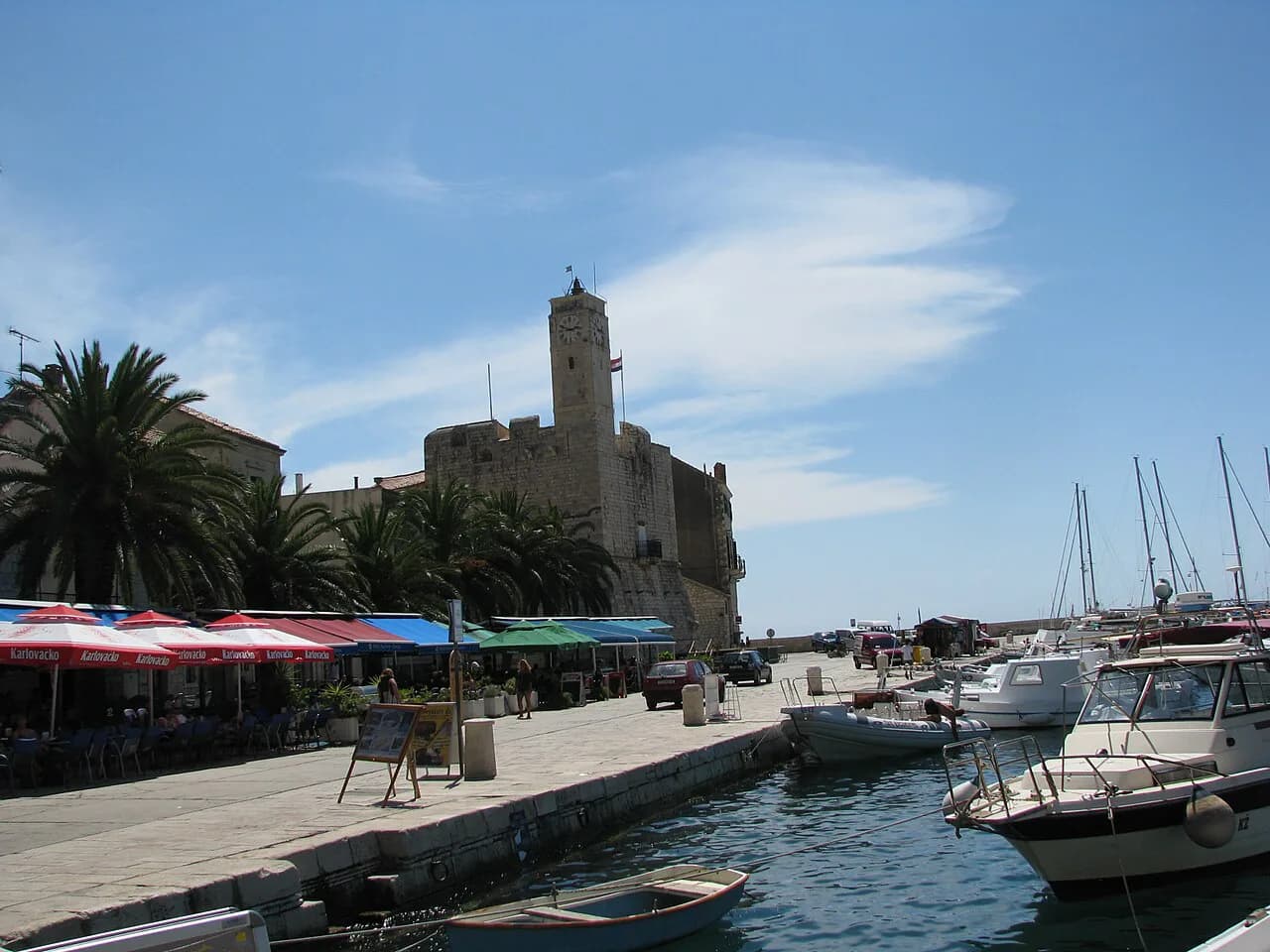
Komiška pogača is a type of baked bread pie, often described as similar to focaccia, filled with anchovies or other salty fish, onions and tomatoes. The name translates as the pie from Komiža, the small fishing settlement at the foot of Hum hill on the western coast of Vis. It is a savoury bake rather than a pastry: the casing is a simple bread dough, and the filling is the kind of thing a fishing family would have assembled from store-cupboard ingredients.
For a visitor to Vis, the practical way to think about it is as an island staple that turns up in bakeries and on menus in Komiža. It is not a delicate first course: a slice is substantial, and the flavour is driven by salted fish and olive oil rather than by heavy spicing. It belongs in the same family as other Croatian baked and pastry dishes, such as burek, though the comparison stops at the dough.
Komiška versus viška pogača
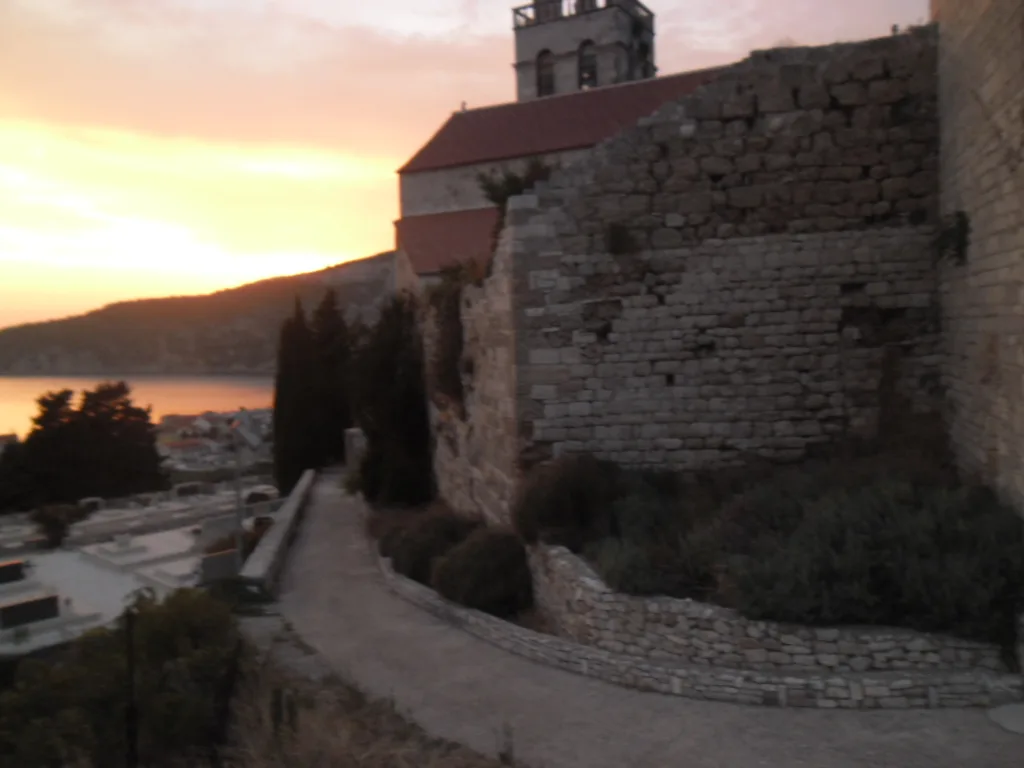
The island of Vis has two similar recipes for this dish, and the names are easy to muddle. The town of Vis, on the north-east side of the island, has viška pogača, while Komiža, on the west, has komiška pogača. The two are closely related, and the tomato is the dividing line: komiška pogača includes a tomato element, while viška pogača does not.
Is komiška pogača the same as viška pogača? No. They are two closely related versions from the same island.
What fish goes into komiška pogača? Salted anchovies are the usual fish, though other salted fish can be used. They are spread over the dough with onion and tomato and baked between two rounds of bread dough.
Do you eat komiška pogača hot or cold? It is best eaten warm from the oven, when the bread is crisp and the filling is hot, but it also works at room temperature as a snack or packed lunch.
Tomatoes were once a summer-only ingredient on the island, so the tomato version was made in the warmer months and the plainer version the rest of the year. Once canned and preserved tomatoes became common, both versions could be made year-round. The point for a visitor is that the two names refer to two local variants, not two unrelated dishes, and the tomato sauce is the clearest way to tell them apart.
What goes inside
The backbone of the filling is salted anchovies, with onion, tomato and olive oil. The dough is a simple bread dough of flour, yeast, warm water, olive oil and salt, sometimes with a little rosemary worked in. The anchovies are the point of the dish: they carry the salt and the savoury depth, and the onion and tomato round them out.
Beyond those core ingredients, versions vary. Some fillings add olives, capers, oregano, thyme and dried tomatoes, and some include a little cheese. A recipe from David Skoko, the chef behind Batelina in Istria and from a family that has fished for four generations, lists olives, capers, fresh oregano, thyme, rosemary and dried tomatoes alongside the anchovies. That is a good illustration of how flexible the dish is: the fish and the bread are fixed, the rest is a matter of what is in the kitchen.
How it is baked
The structure is simple: make a bread dough and let it prove, then divide it into two balls and roll each one thin. The filling goes onto the bottom round, is spread out, and the second round is laid over the top. The edges are pressed together and sealed, the top is pierced so steam can escape, and the whole thing is baked.
A recipe published by Croatia Week rolls the dough to about a centimetre thick, seals the two rounds around the filling, brushes the top with olive oil and bakes at 180°C for around 45 minutes. The 24Kitchen version bakes hotter, at 220°C for 20 to 25 minutes, and crimps the edges with a fork before piercing the top and decorating with rosemary. The exact time and temperature are less important than the principle: a thin double crust, a sealed edge, a pierced top and a hot oven until the bread is cooked through and golden.
What to drink with it
On Vis, the local white grape is Vugava, and it is the natural partner for a salty, olive-oil-rich bake like this. The wine's freshness and weight stand up to the anchovies without overwhelming them. It is served as an accompaniment, not as an occasion in itself, so a glass alongside a slice in Komiža is the straightforward way to try the pairing.
Where to find it on Vis
Komiža is on the western coast of the island, at the foot of Hum hill, and it is the place to look for komiška pogača. The dish is a local bake, so the most likely places to find it are the bakeries and the menus of the town itself, where it is made as an everyday food rather than a special-occasion dish. A slice is a good introduction to the island's cooking; see our Croatian Dishes guide for the wider picture of what to eat across the country, or move on to other seafood dishes such as black risotto, the squid-ink risotto that appears along the Dalmatian coast.
If you are eating your way around the island, komiška pogača works as a lunch or a snack rather than a full dinner. Pair it with a simple salad or a glass of Vugava and you have a meal that is entirely of the place. It is also worth trying viška pogača in the town of Vis if you want to compare the two versions side by side.
Making it at home
The home version is within reach of any reasonably confident baker. Make a soft bread dough with flour, yeast, warm water, olive oil and salt, and let it prove until doubled. While it proves, soften sliced onion in olive oil, add chopped tomatoes and cook them down, then season with pepper and take the pan off the heat.
Roll the dough into two thin rounds, lay the first on an oiled tray, and spread the onion and tomato over it. Scatter salted anchovies, olives and any herbs or capers you are using, then cover with the second round and seal the edges. Pierce the top, brush with olive oil and bake until the crust is golden and the filling is hot. Serve it warm, cut into squares, and expect the anchovies to be the loudest flavour on the plate.
Komiška or viška pogača?
If you only try one, make it the komiška pogača in Komiža: the tomato gives the filling a sweetness that balances the anchovies, and the setting is the fishing town the dish is named after. Try the viška pogača too if you are in the town of Vis, because the difference is small enough that tasting both is the only way to decide which you prefer.
Explore more Croatia guides
Frequently Asked Questions
Is komiška pogača the same as viška pogača?
No. They are two closely related versions from the same island. Komiška pogača comes from Komiža and includes a tomato element, while viška pogača comes from the town of Vis and does not.
What fish goes into komiška pogača?
Salted anchovies are the usual fish, though other salted fish can be used. They are spread over the dough with onion and tomato and baked between two rounds of bread dough.
Do you eat komiška pogača hot or cold?
It is best eaten warm from the oven, when the bread is crisp and the filling is hot, but it also works at room temperature as a snack or packed lunch.
Sources
Notes on eating well in Croatia
Optional updates to our food guides.
You might also like



Continue reading
More guides you'll find useful





