
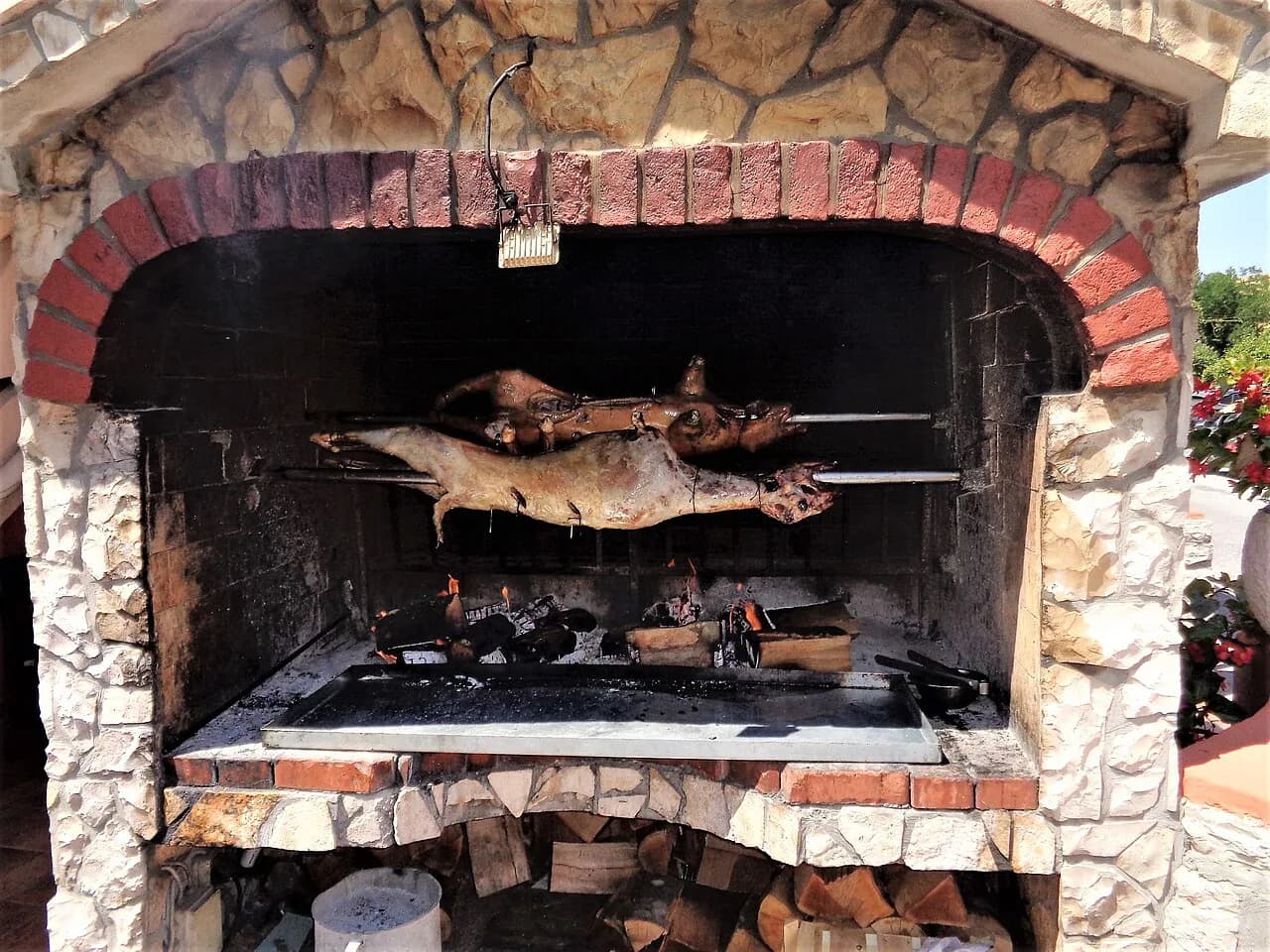
Janjetina: Croatian Lamb, Spit-Roast and What to Order
Janjetina is Croatian lamb, roasted on the spit or under the peka. Here is what the meat is, where it comes from and what to order in a konoba.
On this page
Janjetina is Croatian lamb, and the version worth travelling for is roasted whole on a spit or slowly under a peka, a domed lid covered with hot embers. Order it in a konoba as a shared centrepiece rather than a quick single plate, because it is a celebration dish first and a restaurant dish second. This guide walks through the three main cooking methods, the pasture that flavours island and mountain lamb, the cuts a butcher works with, and what lands on the table beside the meat.
Expect the cooking method to decide your experience more than the breed or the region named on the menu. Spit-roast lamb is crisp-skinned and carved in front of you, peka lamb is steamed and braised into something softer, and oven lamb sits between the two. Knowing which one a kitchen actually does tells you what you are ordering before the plate arrives.
What janjetina means and how it differs from older lamb and mutton
The word covers young sheep meat taken from animals roughly between three weeks and nine months old, in the weight range of about 5 to 20 kilograms depending on age, which is a wide span for one menu word. Younger lamb is prized for tenderness and milder flavour, while an older animal carries a stronger taste and more fat. That difference explains why two konobas can serve the same dish name and produce very different plates.
Croatian lamb is not everyday home cooking. It is tied to restaurants and to festivities, from village celebrations to family gatherings where a whole animal is ordered in advance. If you are travelling as a couple, ask whether a half or quarter portion is possible before you commit, because whole-animal roasting is designed for groups.
The meat sits easily alongside other Croatian meat cooking, from Croatian meat dishes such as Slavonian čobanac, a slow-cooked pork and game stew, to wild boar braises and the grilled minced rolls of ćevapi, which are usually beef or a beef-and-lamb mix. A lamb-only menu is unusual, so treat janjetina as one option inside a broader grill and stew tradition.
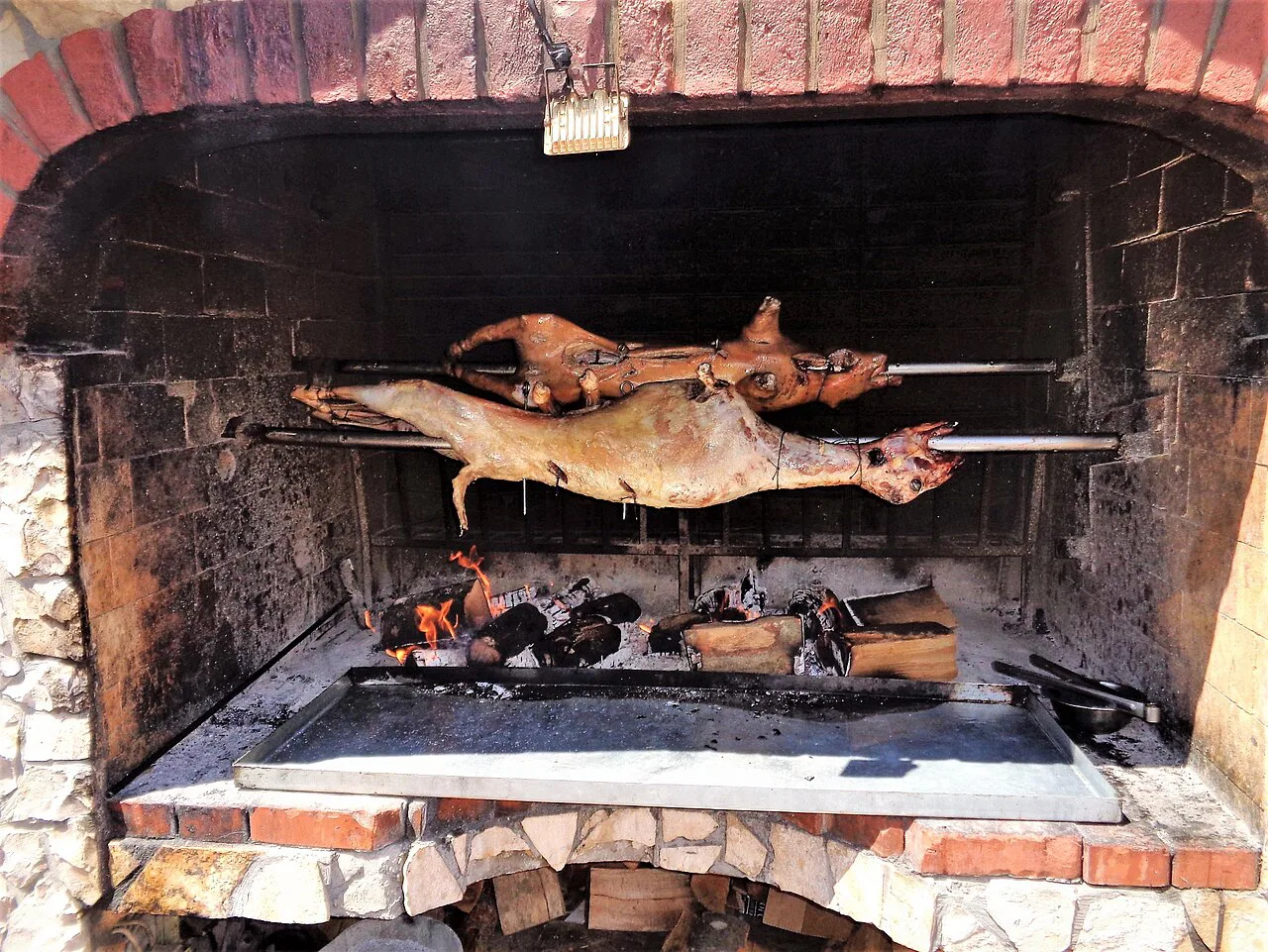
Spit-roast lamb (janjetina s ražnja): how it is cooked and what to expect on the plate
A whole lamb is fixed on a long spit and turned slowly over a fire for hours, with the fat basting the meat as it rotates. The result is a browned exterior and juicy meat underneath, usually carved into rough chunks with the rib bones attached. It is a dish you order by weight or by portion, and the kitchen often brings the carved meat on a board to the table.
Is janjetina the same as lamb? Yes. Janjetina means lamb in Croatian, covering young sheep meat from roughly three weeks to nine months old.
What is the difference between janjetina s ražnja and lamb peka? Janjetina s ražnja is roasted whole on a turning spit over a fire, giving crisp skin and juicy carved meat. Lamb peka is cooked covered under a metal dome with coals on top, which steams and braises the meat with potatoes until it is very soft.
Which Croatian lamb regions should I look for on a menu? Lička janjetina comes from the Lika highlands, while Paška, Bračka and Creska janjetina come from the islands of Pag, Brač and Cres. The island lambs graze on aromatic coastal herbs, which gives the meat a slightly savoury, saline character.
The spit is the version most associated with roadside roasting and large gatherings, and it is the one to choose if you want the contrast of crisp skin against soft meat. Because the animal is roasted whole, availability depends on whether a kitchen has one on the fire that day, so a phone call ahead of a long drive is sensible in summer.
Portions are generous and the meat is rich, so a shared half-kilo and a couple of sides will usually satisfy two hungry people. Ask for the meat to be cut from the rib section if you want the most flavour, and expect the carved pieces to include bone rather than neat fillets.
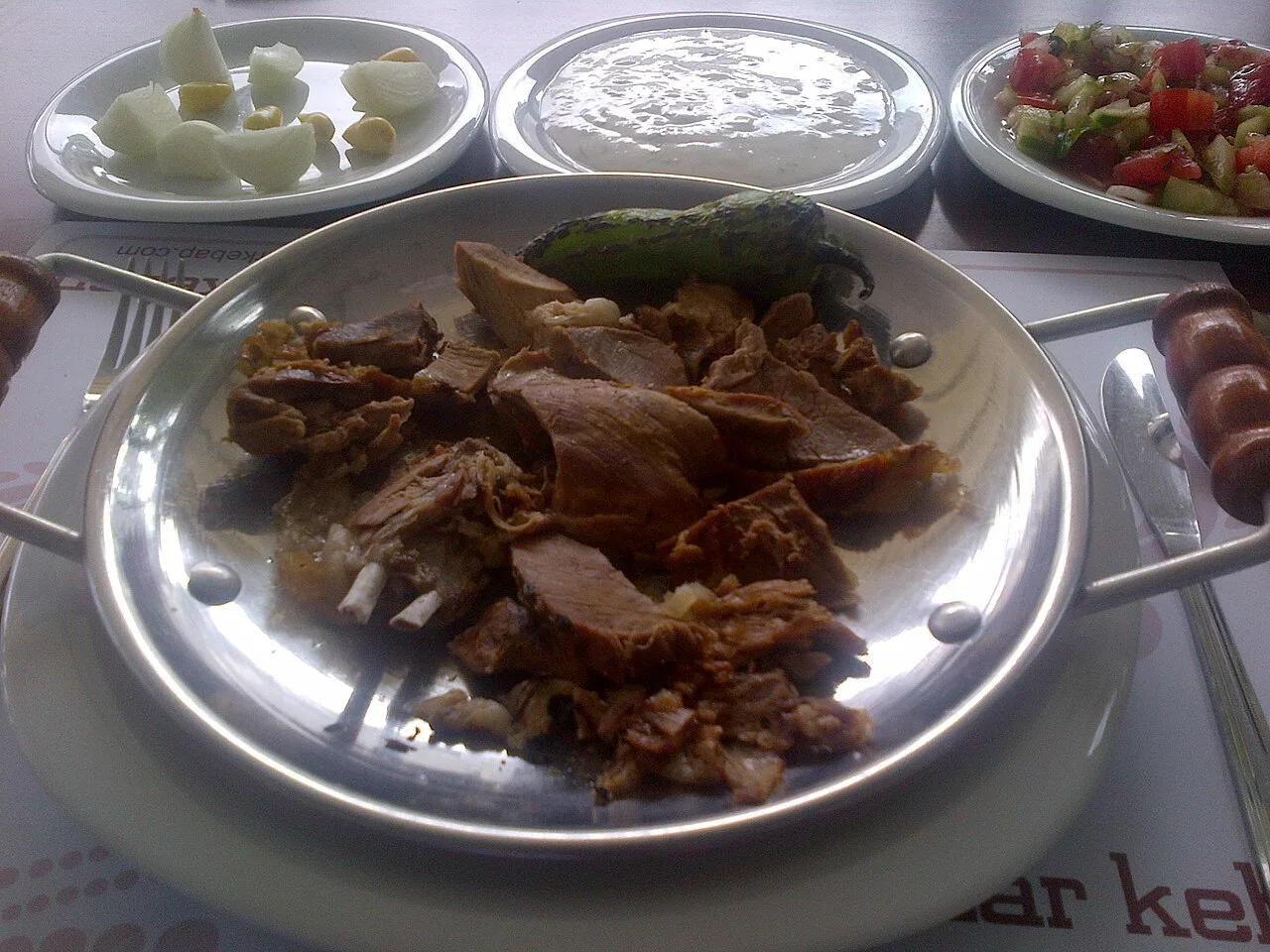
Lamb under the peka and oven-roast lamb: what changes in texture and flavour
Under a peka the lamb is sealed in a shallow tray with potatoes and seasonings, then covered with a metal dome and buried in hot coals. The trapped steam cooks the meat slowly until it falls from the bone, and the potatoes soak up the fat and juices beneath it. This is the softest of the three methods and the one to order when you want something closer to a braise than a roast.
Oven-roasted lamb is the home and konoba fallback, usually a leg or shoulder marinated with olive oil, rosemary, thyme and a little wine before roasting. A Croatian home recipe for oven lamb suggests marinating for around 12 to 16 hours and roasting for roughly 40 minutes for smaller rib pieces, with potatoes added partway through so they brown alongside the meat. That is a domestic method rather than restaurant practice, but it explains the herby, winey profile you meet in a kitchen-roasted plate.
Peka and oven lamb are usually ordered as a portion of leg or shoulder rather than by weight at the table, and they arrive with the vegetables cooked underneath. If you are choosing between methods for a single meal, pick the spit for texture and the peka for tenderness.
Island and mountain lamb: Paška, Bračka, Creska and Lička janjetina
Four names come up again and again on Croatian menus: Lička janjetina from the Lika highlands inland from the Velebit range, and Paška, Bračka and Creska janjetina from the islands of Pag, Brač and Cres. Young island and coastal lamb is especially valued, and the pasture is what separates these from lamb raised on lowland feed.
Treat these as regional pasture descriptions rather than protected brands. Lika lamb comes from mountain grazing, while Pag, Brač and Cres lamb grazes island ground where the animals pick at aromatic herbs close to the sea. Pag is known for its sheep's cheese as well as its lamb, both coming from the same island sheep culture.
A menu that names the region is making a claim about where the animal was raised, and the flavour should be a little more savoury and herbal than generic lamb. If the region matters to you, ask the server which farm or island the meat came from and whether it is fresh or frozen, since frozen lamb is sold portioned rather than whole.
Why coastal and island pasture gives the meat its herby, saline character
Island lamb grazes on Mediterranean herbs growing in salty coastal ground, and that diet carries through to a distinctive taste and aroma in the meat. The same pasture is credited with giving the meat a higher iodine content than lowland lamb. It is a real difference, but it is subtle enough that cooking method still dominates what you taste.
Some people find the aroma of lamb too strong. In a home kitchen the usual fix is to blanch the meat with hot water, or rinse it and leave it briefly in wine vinegar with rosemary, bay and thyme before roasting. A konoba serving island lamb is unlikely to strip the flavour that way, so if you dislike a gamey note, order a smaller portion first.
How lamb is sold and cut: whole animal, ribs with kidney, leg and shoulder
A lamb carcass is divided into neck, breast with spine, neck cutlets, ribs, shoulder, loin saddle, loin chops and leg. In a butcher's case you will usually see fresh lamb whole or portioned, while frozen lamb arrives ready cut. For roasting at home or judging a menu, the leg and shoulder are the large roasting joints, and the ribs and loin chops are the quick-cooking cuts.
The front section with the kidney attached is a particular favourite for roasting, because the kidney adds richness as it cooks. A home recipe for oven lamb uses 1.5 to 2 kilograms of the front with the kidney, or a leg of about 1.5 kilograms for the marinated version. If you see ribs with kidney on a menu or at a butcher's counter, that is the cut to take.
Buying a whole or half lamb is impractical for a short self-catering stay, and frozen lamb is sold portioned rather than whole. Ask the butcher to portion a larger joint for you rather than buying a whole leg for two people, and buy from a counter with a steady turnover so the meat is as fresh as it looks.
What to order with lamb: potatoes, seasonal vegetables and simple sides
Potatoes are the default partner, roasted in the tray under the meat so they take on the fat and juices. A home recipe adds them to the oven about 20 minutes into roasting, and suggests serving with a paprika-spiced potato dish, potato salad, or a salad of greens and carrot. In a konoba you will often get something similar without asking.
A sharp, vinegary relish cuts through the fat well, and ajvar, the roasted red pepper relish, is a natural match for grilled and roasted meat. Something fresh and acidic, whether a simple green salad or a spoonful of ajvar, does more for the plate than another starch.
If the lamb is served as part of a larger grilled spread, expect bread to arrive too, and lepinja, the soft flatbread served with ćevapi, is the usual vehicle for mopping up juices. Sarma, Croatia's stuffed cabbage rolls, and punjene paprike, peppers filled with minced meat and rice, are the other slow-cooked dishes you may see on the same menu.
Ordering janjetina in a konoba: what to ask and how it is usually served
Ask which cooking method is on that day before you order, because spit, peka and oven lamb are not interchangeable and a kitchen may only do one. If you want spit-roast, check whether a whole animal is on the fire and whether they will sell a smaller portion. For peka, ask how long it needs, since it is often ordered in advance for a group.
Lamb is usually served as a shared platter carved into pieces, with potatoes and salad on the side, and it is priced by weight or by portion rather than as a single fixed plate. Ask the server to confirm how the portion is measured and what the day's price is before the meat is carved, since whole-animal roasting makes costs variable.
If you are building a meal around grilled meat, lamb sits comfortably next to pljeskavica, the large grilled minced-meat patty, and a Zagrebački odrezak, the veal cutlet stuffed with cheese and ham that echoes Wiener schnitzel. Order one lamb portion to share and fill the rest of the table with a mixed grill, bread and a fresh salad.
Which lamb to order, spit or peka?
Choose spit-roast if you want crisp skin and carved meat with bone, and peka if you want something so soft it comes away with a spoon. For a first taste of island lamb, a smaller spit portion shared between two lets you judge the pasture flavour without committing to a whole tray.
Wherever you eat it, ask about the cooking method and the cut before ordering, and treat a named region as a guide to flavour rather than a guarantee. Lamb is a group dish in Croatia, so the best meal comes from ordering one centrepiece and building the table around it.
Explore more Croatia guides
Frequently Asked Questions
Is janjetina the same as lamb?
Yes. Janjetina means lamb in Croatian, covering young sheep meat from roughly three weeks to nine months old. The older the animal, the stronger the flavour and the more fat in the meat.
What is the difference between janjetina s ražnja and lamb peka?
Janjetina s ražnja is roasted whole on a turning spit over a fire, giving crisp skin and juicy carved meat. Lamb peka is cooked covered under a metal dome with coals on top, which steams and braises the meat with potatoes until it is very soft.
Which Croatian lamb regions should I look for on a menu?
Lička janjetina comes from the Lika highlands, while Paška, Bračka and Creska janjetina come from the islands of Pag, Brač and Cres. The island lambs graze on aromatic coastal herbs, which gives the meat a slightly savoury, saline character.
Sources
Notes on eating well in Croatia
Optional updates to our food guides.
You might also like



Continue reading
More guides you'll find useful





