
Ajvar: What It Is and How to Eat It in Croatia
Ajvar is a thick relish of roasted red peppers and aubergine, sweet and smoky rather than hot. Here is what it tastes like and what to eat it with.
On this page
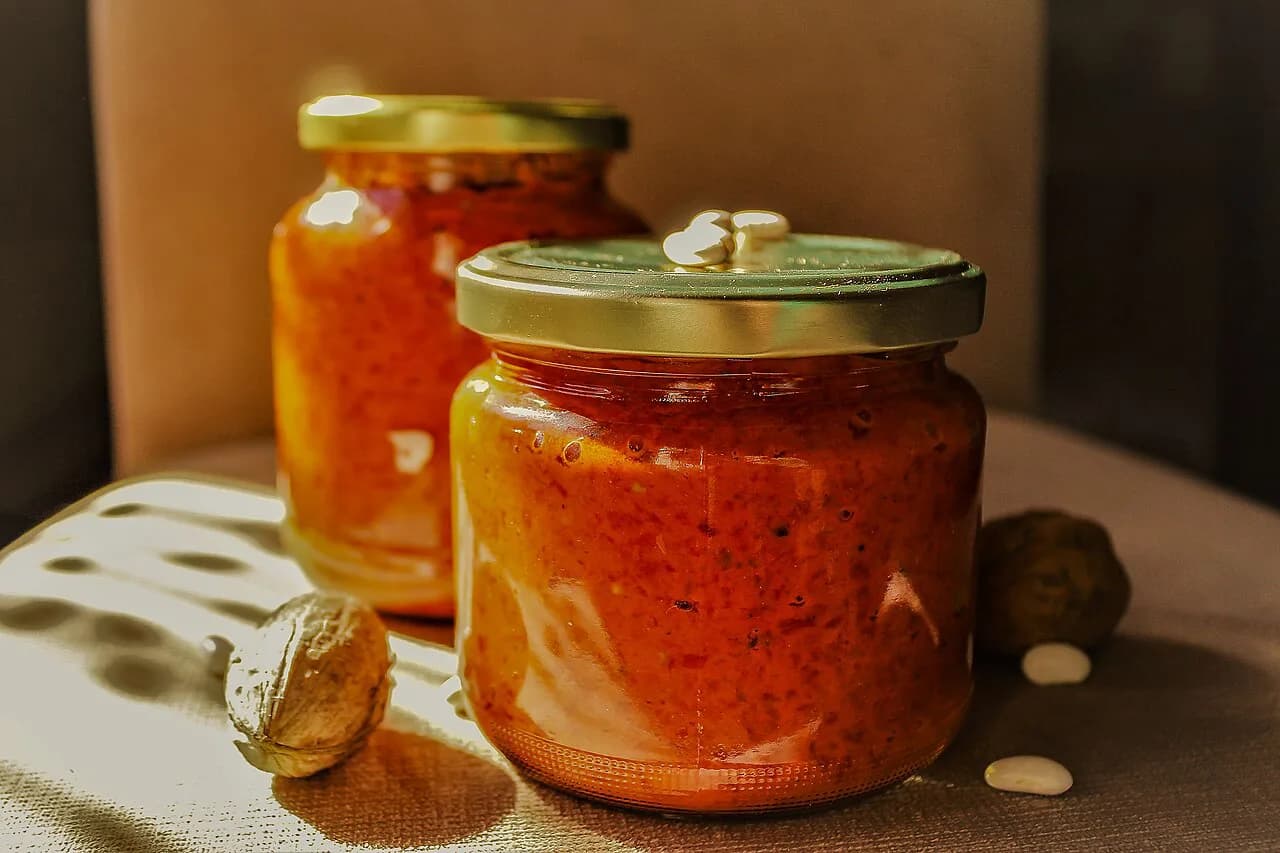
Ajvar is a thick relish made mainly from sweet red peppers and aubergine, slow-cooked until it is spoon-stiff and sweet, often with a light smokiness. It is a Balkan staple that became popular across Yugoslavia after the Second World War, and in Croatia it appears alongside grilled meat, bread and cheeses, not as a hot sauce.
This guide covers what ajvar tastes like, what to order it with, how the relish is made and where you meet it on a Croatian table. It is not a recipe, so you will not find jar sizes or gram weights here.
What ajvar is: a pepper relish, not a sauce
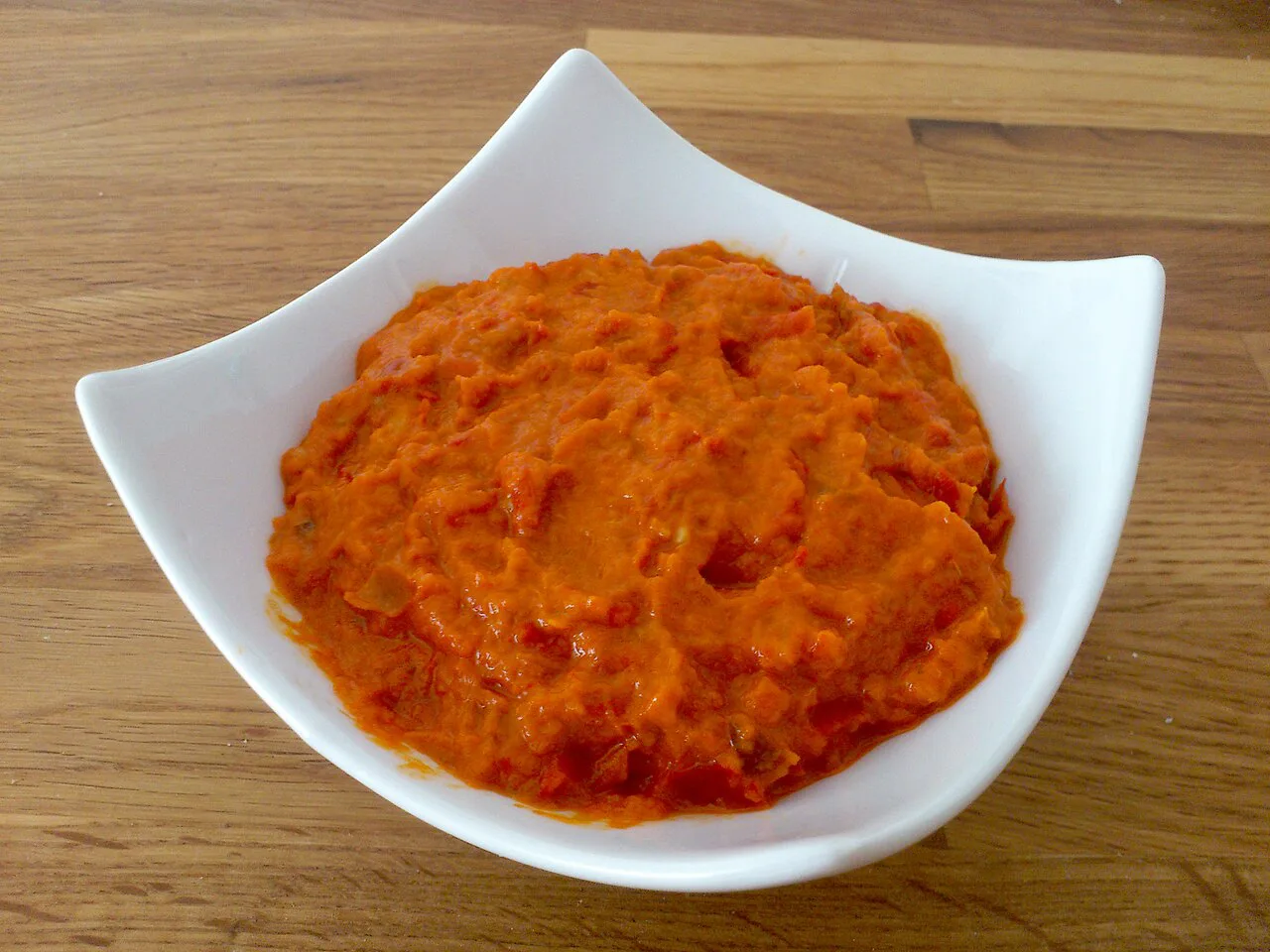
Ajvar sits between a sauce and a paste: thick enough to pile onto bread, loose enough to spoon over grilled meat. The base is sweet bell peppers, and many versions add aubergine for body and a softer, more vegetal edge; it is principally a condiment of sweet peppers and aubergine.
The closest British cupboard comparison is a thick chutney rather than tomato ketchup: sweet, chunky and savoury, not sharp or vinegary. That makes ajvar a useful thing to order alongside a plain grilled chop, where a chutney-like relish cuts through the fat.
What ajvar tastes like: sweet, smoky and only mildly tangy
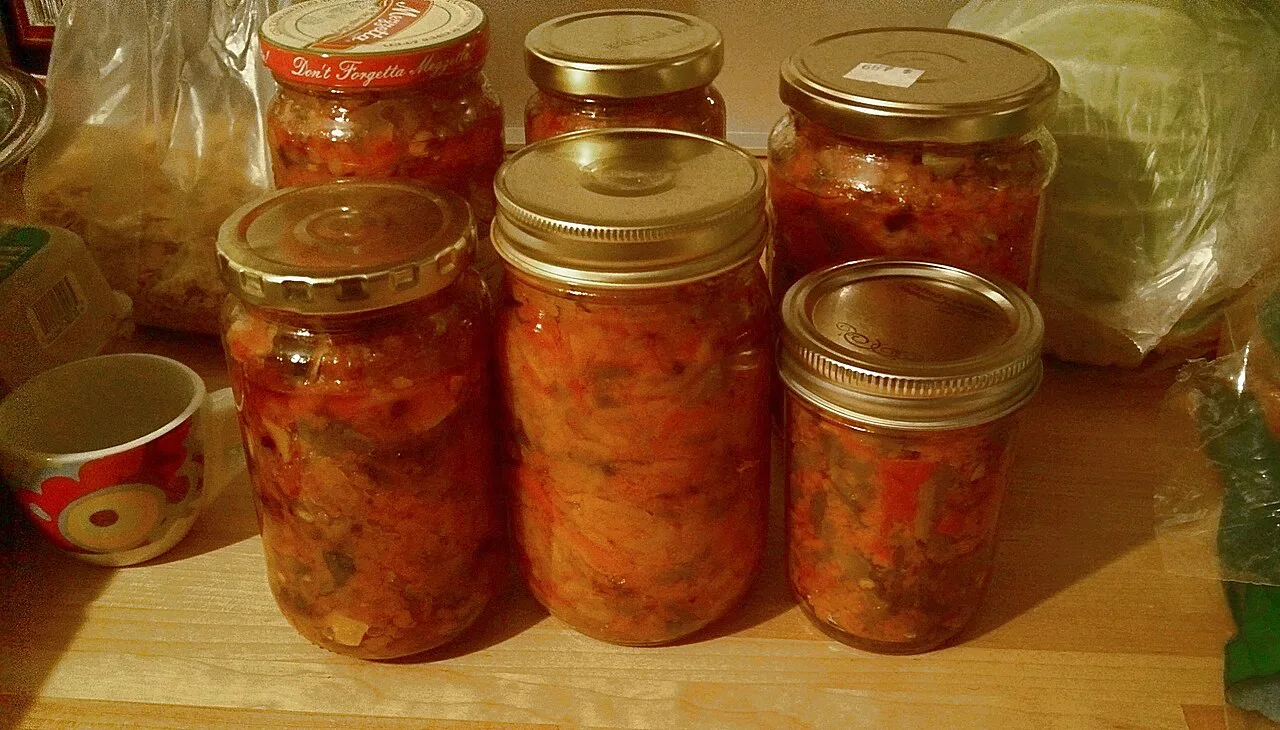
Expect sweetness from the peppers first, with smoke from roasting and a gentle tang at the finish. The aubergine, where it is used, dulls the sharpness and gives a rounder, slightly earthy flavour, so two jars can taste quite different.
Is ajvar spicy? No, ajvar is not a chilli relish. It is made from sweet red peppers, often with aubergine, and the heat level is mild; the dominant flavours are sweetness and a light smokiness from roasting.
What is ajvar called in English? There is no standard English name. It is usually described as a roasted red pepper relish or spread, and sometimes compared to a thick chutney, which captures its texture and sweet-savoury flavour better than calling it a sauce.
What do you eat ajvar with? In Croatia it is served beside grilled meat, ćevapi and bread, and it works on a meze-style plate with cured ham such as pršut and firm cheese. At home, treat it like a chutney with a roast or grilled chop.
Ajvar is not a chilli relish. Recipes for ajvar describe a sweet and tangy spread with a pleasing smokiness from peppers roasted over a wood fire, which is why it works as a cooling partner to grilled food rather than as a heat blast.
If you want the pepper-forward end of the spectrum, look for a jar that names only red peppers; if you prefer a softer, more vegetal relish, choose one that lists aubergine alongside them. That single line on the label tells you more about the taste than the brand does.
Ajvar on a Croatian table: grilled meat, ćevapi and bread
In Croatia ajvar is an accompaniment, and it is most often put beside grilled meat and minced-meat dishes. Order it with ćevapi, the small grilled minced-meat sausages served with flatbread and raw onion, and use it in place of, or alongside, the usual mild pepper condiment.
It also suits the wider family of Croatian meat dishes: a spoonful next to a slow-cooked stew or a grilled chop adds sweetness where a dish is rich and salty. Use it as you would a chutney with a roast, rather than treating it as a dip on its own.
At home, the same logic holds. Put a dish of ajvar on the table with bread and grilled meat, or stir a spoonful into a plain sauce for a sweet, smoky edge.
How ajvar is made: roasted, peeled and cooked down
Peppers are roasted until the skins blister, then peeled, and the flesh is cooked down slowly until the mixture thickens and the sweetness concentrates. Some cooks roast over a wood fire, which is where the smokiness comes from, and aubergine is added in many versions.
The slow cooking is what separates ajvar from a fresh pepper sauce: the water cooks off, the colour deepens to a dark red, and the texture becomes spoonable. That also explains why a good jar tastes sweeter and more concentrated than the raw peppers suggest.
Ajvar with bread, cheese and pršut
On a meze-style plate, ajvar works as the sweet element against salty cured ham and firm cheese. In Croatia that means Istrian pršut, the dry-cured ham dried in the bura wind under salt, pepper, garlic and natural aromas before maturing in a dark room, and served with local cheese and olives; it is the natural companion to a spoonful of ajvar.
Bread is the other essential: a plain white loaf or flatbread carries the relish without competing with it. Build the plate as bread, pršut, cheese and a spoonful of ajvar, and let people help themselves.
Where travellers meet ajvar in Croatia: grilled dishes and jars at markets
On restaurant menus ajvar usually appears as a side or a garnish with grilled dishes rather than as a named course, so ask what comes with the meat rather than hunting for it on the menu. In inland and mountain regions it appears alongside roast and grilled dishes; at Plitvice Lakes, for example, the park's restaurant Lička kuća builds its menu from Lika produce, and plates there lean on the region's traditional larder.
For bringing a jar home, market stalls and delis in the bigger cities are the practical stop: ajvar sits with the jars of peppers, pickles and honey rather than in the fresh-produce aisle. If you are flying with hand luggage only, remember that a jar counts as a liquid for security, so buy it for the hold or leave it for the last day.
Should you order ajvar or just buy a jar?
Order it first when it comes with a grilled dish: that is where ajvar makes sense, sweet and smoky against salty meat, and it costs nothing to try as a side.
If you like it, buy a jar from a market or deli rather than a supermarket souvenir stand, and check the label for red peppers and aubergine before you commit. A jar with both will taste rounder; one with peppers alone will taste sharper and sweeter.
Explore more Croatia guides
Frequently Asked Questions
Is ajvar spicy?
No, ajvar is not a chilli relish. It is made from sweet red peppers, often with aubergine, and the heat level is mild; the dominant flavours are sweetness and a light smokiness from roasting.
What is ajvar called in English?
There is no standard English name. It is usually described as a roasted red pepper relish or spread, and sometimes compared to a thick chutney, which captures its texture and sweet-savoury flavour better than calling it a sauce.
What do you eat ajvar with?
In Croatia it is served beside grilled meat, ćevapi and bread, and it works on a meze-style plate with cured ham such as pršut and firm cheese. At home, treat it like a chutney with a roast or grilled chop.
Sources
Notes on eating well in Croatia
Optional updates to our food guides.
You might also like



Continue reading
More guides you'll find useful





