
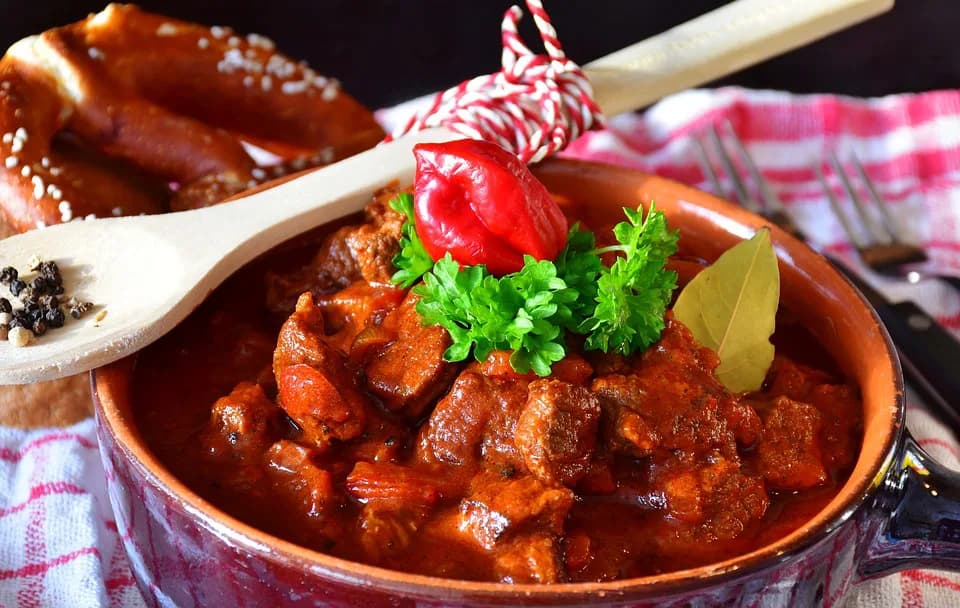
Croatian Goulash (Gulaš): What It Is and How It's Made
Croatian goulash (gulaš) is a slow-cooked beef stew with onion and paprika. Here is what goes into it, which cuts of beef to use and how it is served.
On this page
Croatian goulash, or gulaš, is a thick beef stew in which cubed beef, plenty of onion and paprika cook slowly until the meat falls apart and the sauce turns glossy. It is a popular comfort food across the Balkans, and Croatia is no exception. This guide covers what goes into a gulaš, which cuts of beef work, how it is served and how to cook a pot at home.
What Croatian gulaš is
Gulaš is a one-pot stew rather than a quick fry-up: beef, onion and paprika go into a heavy pot with liquid and are left to simmer for hours until everything softens into a rich sauce. Croatians treat it as everyday comfort food, the kind of dish that is even better on the second day. Long-cooked meat dishes such as sarma sit in the same tradition, while Slavonian čobanac is a mixed-meat cauldron stew rather than the beef-and-onion gulaš described here.
What is in a Croatian gulaš
A typical home version uses beef chuck or shoulder, a large quantity of onion, sweet paprika, bay leaves, mustard and red wine, with lard or vegetable oil to start. One recipe simmers the meat with onion, carrot, garlic and bay, adds mustard-coated beef and finishes in a couple of hours; it also mentions dried prunes as an optional extra.
What goes into a Croatian gulaš? At its core it is cubed beef chuck or shoulder, a large amount of onion and sweet paprika, simmered slowly with stock or water and bay leaves. Home versions vary: some add grated carrot, garlic, mustard and red wine, others use tomato purée and finish with sour cream.
Is gulaš Croatia's national dish? Gulaš is a popular comfort food across the Balkans, but it is not accurate to call it Croatia's single national dish. Croatian cooking has many regional staples, and gulaš sits alongside dishes such as sarma and čobanac rather than above them.
Another family version keeps things simpler: cubed beef chuck, four diced onions, stock, sweet paprika, bay leaves and tomato purée, with a spoon of sour cream stirred in at the end if you like. That recipe calls for at least an hour of simmering before the tomatoes go in, and says the result only improves with longer cooking.
Quantities vary from kitchen to kitchen, so treat any single recipe as one household's take rather than a fixed standard. Sweet paprika is a given in these recipes and carries much of the colour and aroma.
Why cheap cuts win
Chuck and shoulder are the right cuts for gulaš because they are not tender. Slow cooking makes them soft, and the Chasing the Donkey recipe explicitly says cheaper cuts give a better stew than a tender one.
Browning the meat in batches first gives the sauce a deeper flavour, though some cooks skip it and add everything at once. Either way, the pot needs time rather than attention: at least an hour of gentle simmering before tomatoes or the final liquid goes in, and longer if you can spare it.
Lard, Vegeta and paprika: the pantry behind the flavour
Two ingredients surprise cooks from outside the region. The first is lard, which is used much as olive oil or duck fat is elsewhere and gives a savoury base; vegetable oil is a fair substitute if you do not have good lard to hand. The second is Vegeta, a salty all-purpose seasoning that many Croatian kitchens keep by the stove and use in soups, stews and roasted vegetables.
If you cannot find Vegeta, the recipe suggests extra salt. Sweet paprika gives gulaš much of its colour and aroma.
How gulaš is served in Croatia
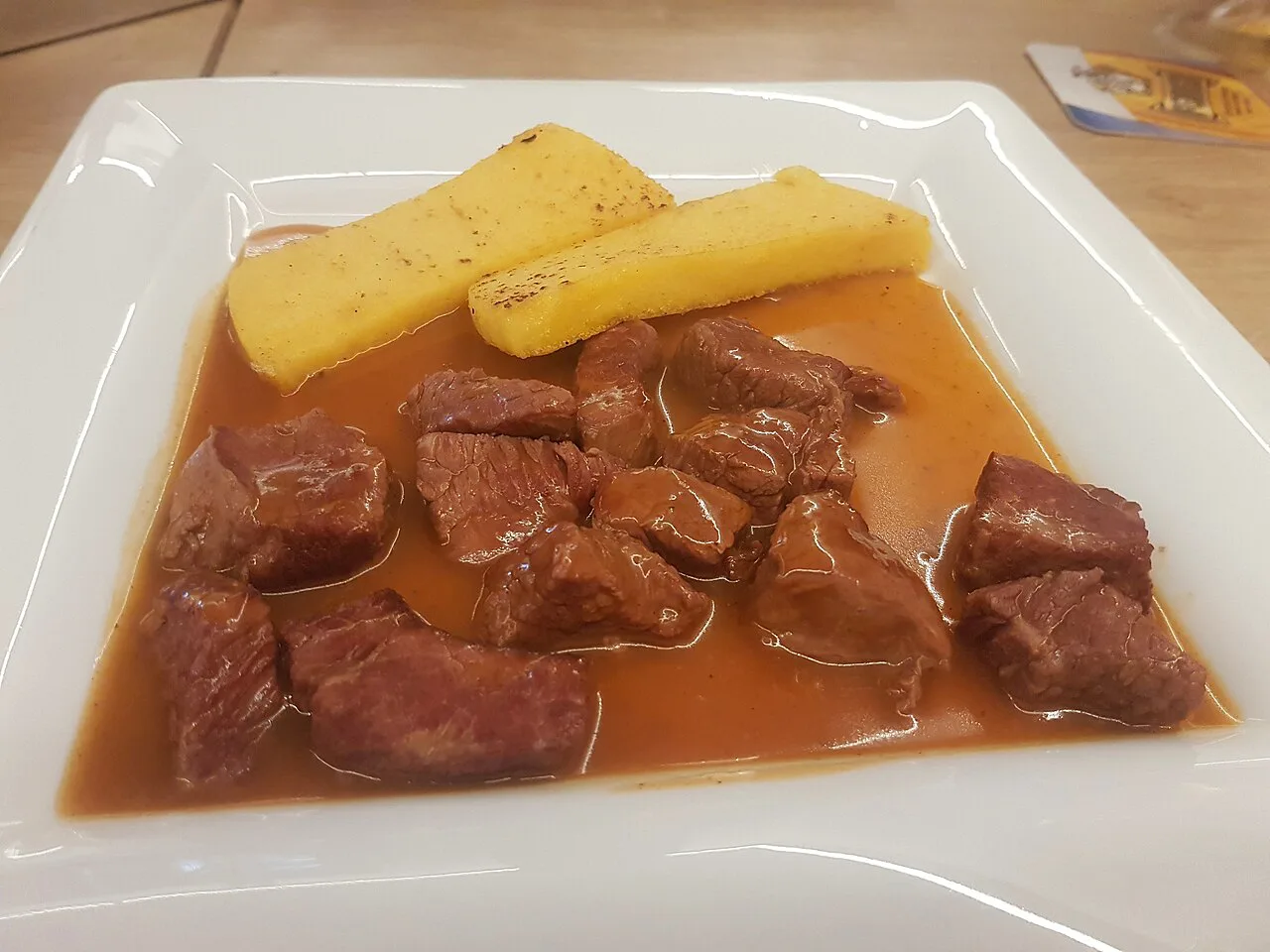
Fresh bread is a common accompaniment, useful for mopping up the sauce. Cooks also serve gulaš with pasta, gnocchi or a side of potatoes, depending on the household. Slices of fresh hot pepper are an optional garnish for those who want heat.
Portions are generous: the Chasing the Donkey recipe serves four and makes more than enough for dinner, and the writer notes it keeps for several days. If you are cooking for a group, plan on a pot that looks bigger than you think you need, since the stew reduces as it simmers.
Gulaš, čobanac and Hungarian goulash
Hungarian goulash is the dish most travellers have in mind, and Croatian gulaš shares its core of beef, onion and paprika. Croatian versions often lean on mustard, red wine and carrot, and one recipe calls for a long, slow braise, which gives a darker, more concentrated sauce.
Čobanac is a separate Slavonian stew, traditionally cooked outdoors in a cauldron with mixed meats and plenty of paprika, although the sources here mention it only by name. If you want to compare Croatian meat cooking more widely, the range runs from čobanac to grilled favourites such as ćevapi, which are cooked very differently from a slow-simmered gulaš.
Making it ahead
Gulaš is one of those dishes that tastes better the next day, once the flavours have had time to settle. Cook it in full a day ahead, cool it quickly, refrigerate it and reheat gently before serving. That makes it a practical choice for feeding a group without last-minute stress.
The same logic applies to freezing: portion it once cool and reheat what you need. If the sauce looks thin after reheating, simmer it uncovered for a few minutes to reduce it.
Croatian goulash recipe in brief
For a pot serving four to six, brown about a kilogram of cubed beef chuck in lard or oil, then soften four diced onions in the same pot. Add sweet paprika, two bay leaves and stock or water, and simmer gently for at least an hour before adding tomato purée. Add the rest of the liquid and cook until the meat is tender.
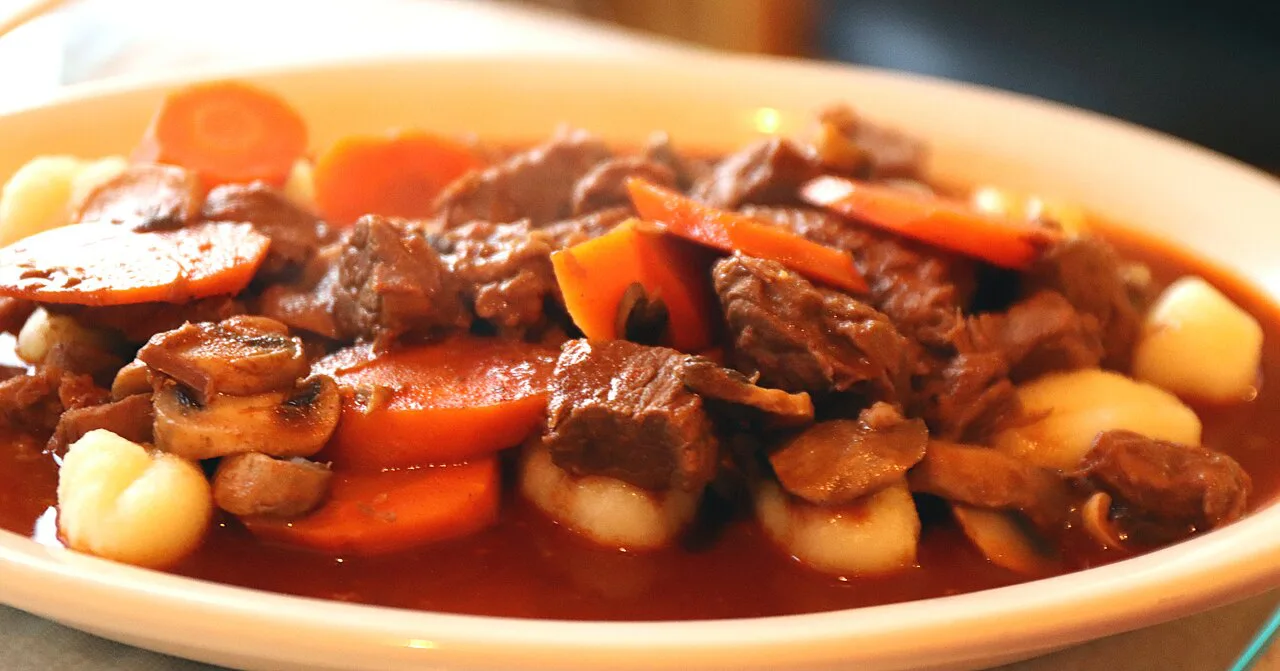
A wine-based version browns the meat, cooks finely cut onion and grated carrot until soft, adds garlic, bay leaves and mustard-coated beef, then simmers with red wine and stock, covered over low heat, for around two hours. Finish with salt, pepper and chopped parsley, and serve with bread, pasta, gnocchi or potatoes.
Should you cook gulaš or order it?
Gulaš rewards the home cook because the cheap cuts that make it best are also the easiest to find. Buy chuck or shoulder, give it a long, low simmer with plenty of onion and sweet paprika, and serve it with bread or potatoes.
If you would rather eat it out, look for it in the kind of konoba where long-cooked stews are standard fare. For the wider picture of Croatian meat cooking, the Croatian Meat Dishes guide covers the dishes worth ordering alongside it.
Explore more Croatia guides
Frequently Asked Questions
What goes into a Croatian gulaš?
At its core it is cubed beef chuck or shoulder, a large amount of onion and sweet paprika, simmered slowly with stock or water and bay leaves. Home versions vary: some add grated carrot, garlic, mustard and red wine, others use tomato purée and finish with sour cream.
Is gulaš Croatia's national dish?
Gulaš is a popular comfort food across the Balkans, but it is not accurate to call it Croatia's single national dish. Croatian cooking has many regional staples, and gulaš sits alongside dishes such as sarma and čobanac rather than above them.
Sources
Notes on eating well in Croatia
Optional updates to our food guides.
You might also like



Continue reading
More guides you'll find useful





