
Punjene paprike: Croatian Stuffed Peppers and How They're Made
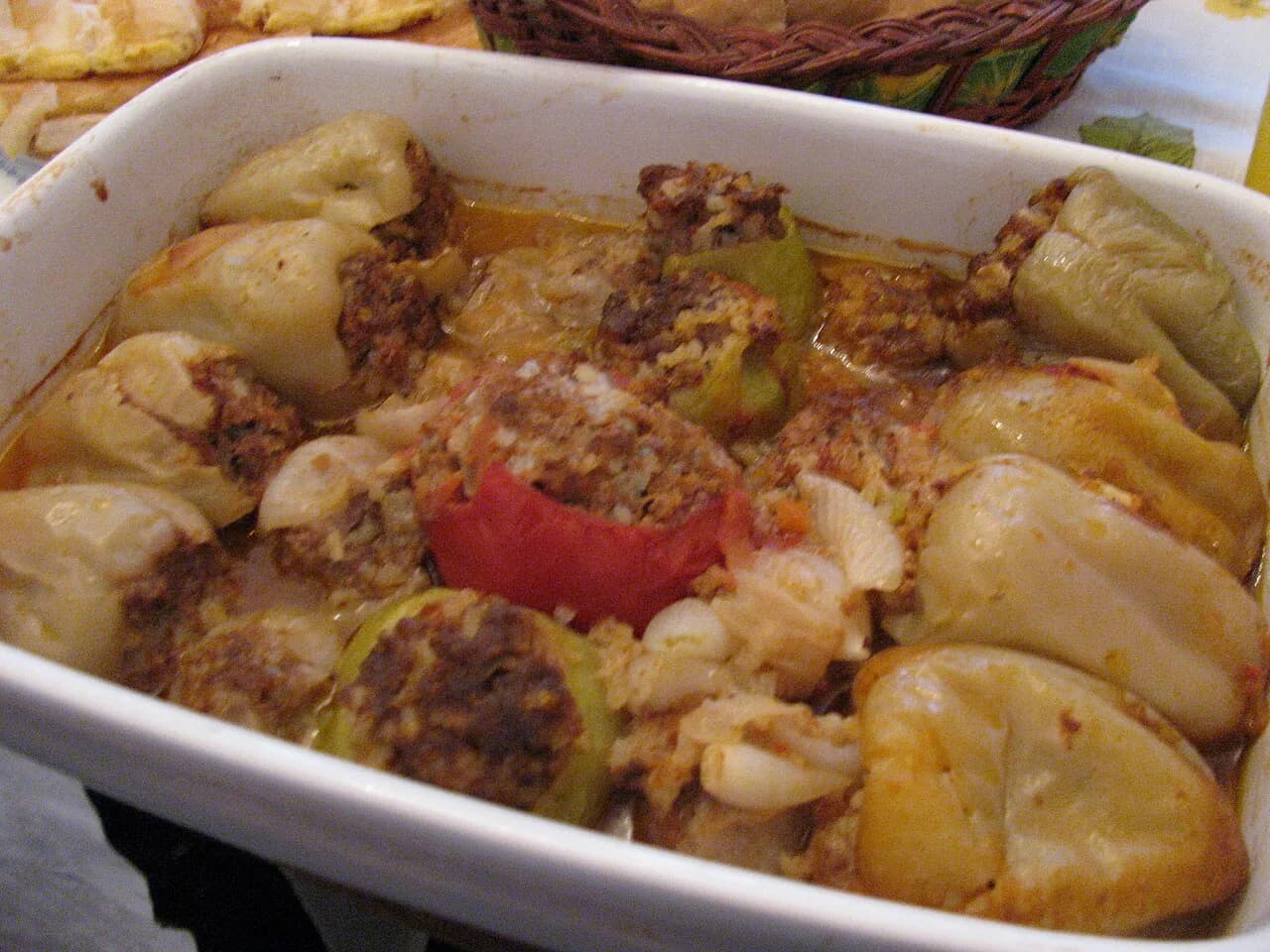
Punjene paprike are Croatian stuffed peppers: sweet capsicums filled with minced meat and rice and baked slowly on a bed of tomatoes.
On this page
Punjene paprike are Croatian stuffed peppers: whole sweet capsicums hollowed out, packed with a filling of minced meat and rice, then baked slowly on a layer of tomatoes. They are a home-cooked comfort dish that turns up on konoba menus and family tables across Croatia and the wider Balkans, and they are mild rather than hot. What follows covers the filling, the tomato base, the peppers themselves, what they are served with and the mistakes that spoil a batch.
What punjene paprike are
The dish is built from three parts: a soft, sweet pepper, a filling of minced meat and rice bound with onion, and a shallow layer of tomatoes underneath. The peppers stand upright in the pot or tray and take on the tomato liquid as they bake, so the rice finishes cooking in the juices rather than in plain water. It is a one-pot dish in the Balkan home tradition, designed to feed a table rather than to show off technique, and the seasoning stays plain: salt, pepper and a little paprika.
What the name means in English. Punjene paprike translates literally as stuffed peppers.
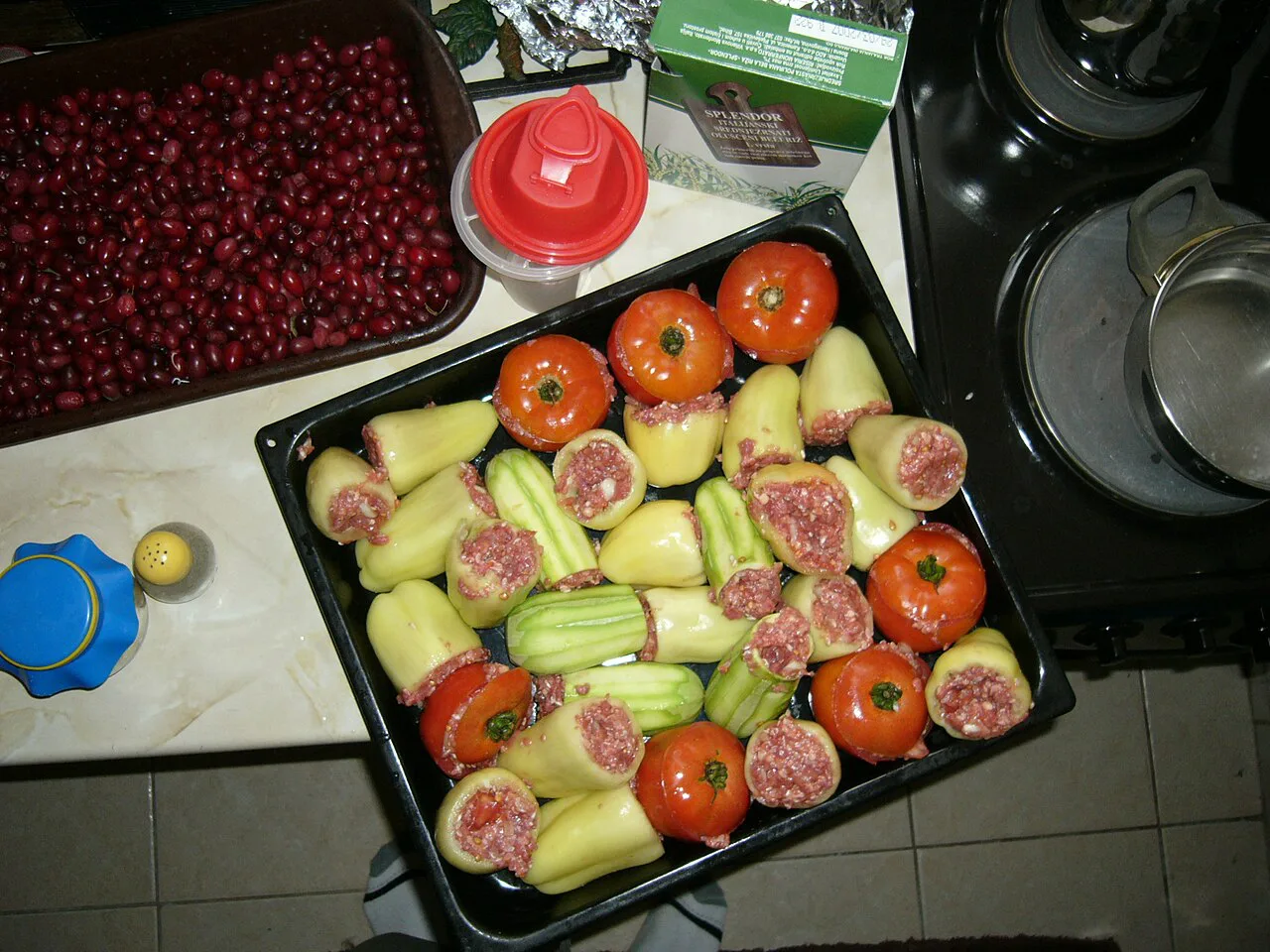
The filling: minced meat, rice, onion and seasoning. The standard filling is a mix of minced meat, uncooked rice, finely chopped onion and seasoning, worked together by hand before being pushed into the peppers.
Why the peppers sit on a bed of tomatoes and bake slowly. The tomato layer is the defining feature of the Balkan method: chopped or passata tomatoes go into the bottom of the pot, the stuffed peppers sit on top, and often the remaining peppers are sliced and scattered over them to baste the filling as it cooks.
What the name means in English
Punjene paprike translates literally as stuffed peppers. Punjene is the adjective for filled or stuffed, and paprike is the plural of paprika, which in Croatian means the vegetable pepper itself, sweet or hot depending on context, not only the ground spice. The singular form punjena paprika is used in some regions and appears on menus for a single portion. English-language Croatian menus often translate it as filled capsicums or simply stuffed peppers.
The filling: minced meat, rice, onion and seasoning
The standard filling is a mix of minced meat, uncooked rice, finely chopped onion and seasoning, worked together by hand before being pushed into the peppers. Most cooks use a combination of beef and pork for moisture, though a single meat works well too. The rice must be raw when it goes in, because it absorbs the meat juices and the tomato liquid around it as the dish bakes; precooked rice turns to mush in the same conditions. A little egg sometimes binds the mix, and a spoonful of the tomato base can be stirred through before filling.
Why the peppers sit on a bed of tomatoes and bake slowly
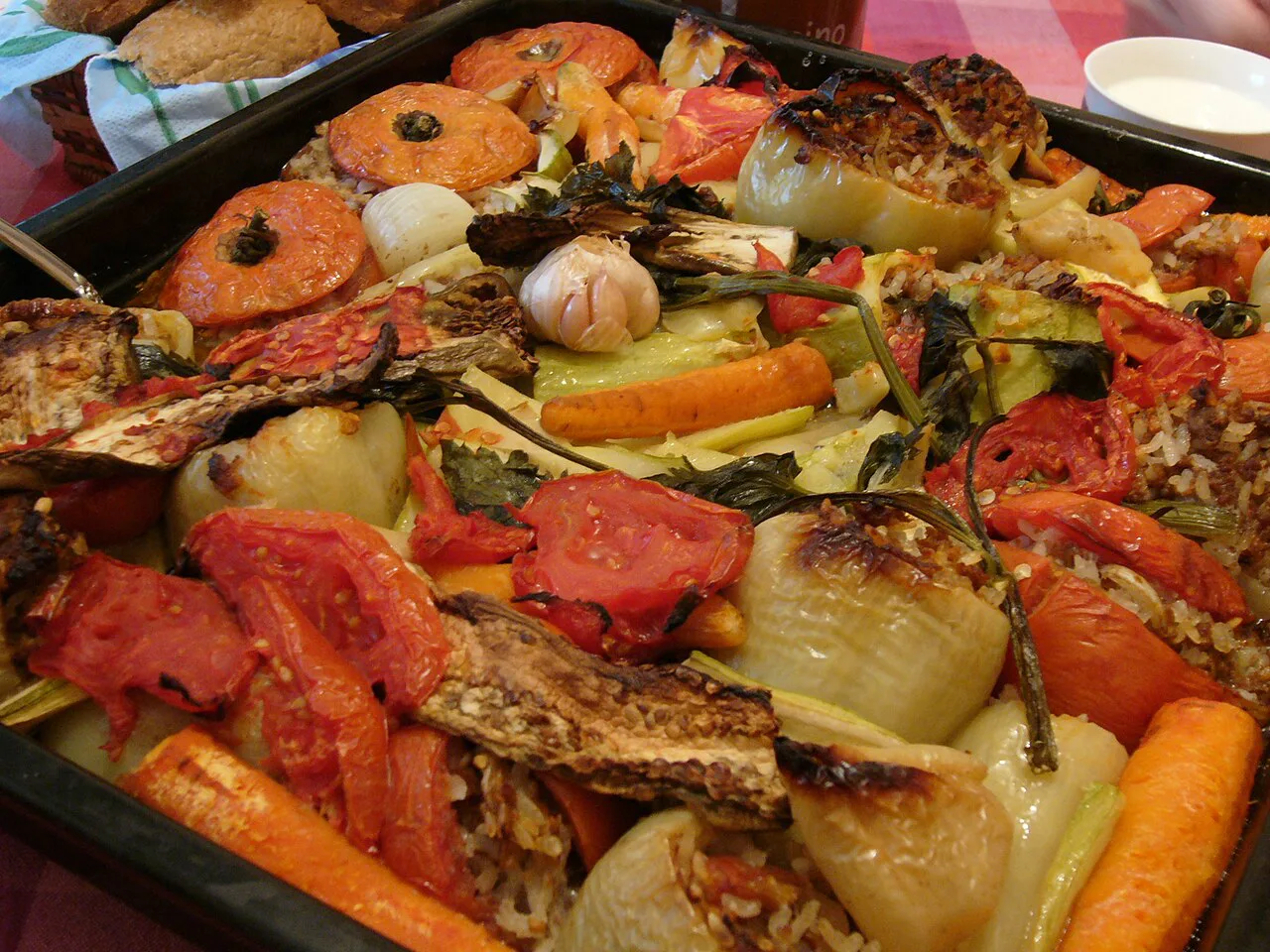
The tomato layer is the defining feature of the Balkan method: chopped or passata tomatoes go into the bottom of the pot, the stuffed peppers sit on top, and often the remaining peppers are sliced and scattered over them to baste the filling as it cooks. This keeps the whole dish moist, stops the filling drying out in the oven and produces a sauce that is spooned over the peppers at the table. Because the raw rice needs time to soften, the dish is baked low and slow in a covered pot or tray, then uncovered towards the end to let the liquid reduce. On the coast the same technique shows how vegetables are handled more generally, with sweet peppers and aubergines turning up in the vegetable-based dishes that sit beside the main courses in the region's kitchens.
Peppers used: pointed sweet capsicums rather than hot chillies
The right pepper is a sweet variety with thin flesh and a pointed or wedge shape, pale green turning red as it ripens; these soften in the bake and take on the filling's flavour. Hot chillies or small fiery varieties are a different ingredient and would overwhelm the dish. In Croatia the pointed sweet pepper is grown widely in the vegetable regions, and its mildness is the point: the flavour comes from the meat, the rice and the tomato base, not from heat.
What they are served with in Croatia
Punjene paprike are usually served with the tomato sauce they cooked in, and often with boiled potatoes or a spoonful of polenta on the side to soak it up. Many kitchens also offer a simple lettuce and onion salad alongside, and a generous spoonful of ajvar, the roasted pepper relish, is a natural partner to the meat filling. Many cooks make sarma, the stuffed cabbage roll dish, in the same style, using the same kind of rice-and-meat filling rolled in pickled cabbage leaves instead of peppers. What goes on the table elsewhere depends on the region: in Kvarner the emphasis shifts to local ingredients and fish, with dishes built on local produce rather than on the continental meat-and-vegetable repertoire. Though that coastal cuisine is famous for lamb, scampi and fish, the family table often has a simpler vegetable dish alongside.
How punjene paprike fit into a Croatian meal alongside other dishes
On Croatian menus the dish belongs to the baked and braised section, not to the grill, and it is usually listed with other one-pot dishes rather than with steaks and mixed grills. It is a main course in its own right, though restaurants sometimes serve a single pepper as a starter or as a side to a plate of meat. If you are ordering across a table, it works well alongside a grilled sausage or a slice of the roast meat dishes covered in the guide to Croatian meat dishes, where the Balkans' meat repertoire is set out. Another natural pairing is a plate of ćevapi, the small grilled minced-meat rolls, which are a separate dish but often arrive on the same menu.
Common mistakes: overfilling, undercooked rice and too much liquid
Overfilling is the most common error: the rice swells by roughly half its volume again as it cooks, so leaving a little space at the top of each pepper stops the filling bursting out of the casing. Undercooked rice is the second trap, and it usually comes from a short or too-hot bake; the rice needs the same slow heat as a rice dish on the hob. Too much liquid in the pot dilutes the tomato base into soup and boils rather than bakes the peppers, so the tomatoes should barely come up the sides of the peppers rather than covering them. Salt the filling a little more than feels right, because the tomato liquid will dilute it as it cooks.
Is it worth ordering punjene paprike?
Punjene paprike are a low-risk order: mild, filling and rarely expensive, they suit anyone who wants a home-style Croatian dish rather than a grill plate. Order them when the menu shows a baked or braised section and skip them if you want a dish built around a single piece of meat or fish. If the tomato sauce is thin or the rice tastes chalky, that tells you more about the kitchen than the menu wording does.
Explore more Croatia guides
Sources
Notes on eating well in Croatia
Optional updates to our food guides.
You might also like



Continue reading
More guides you'll find useful





