
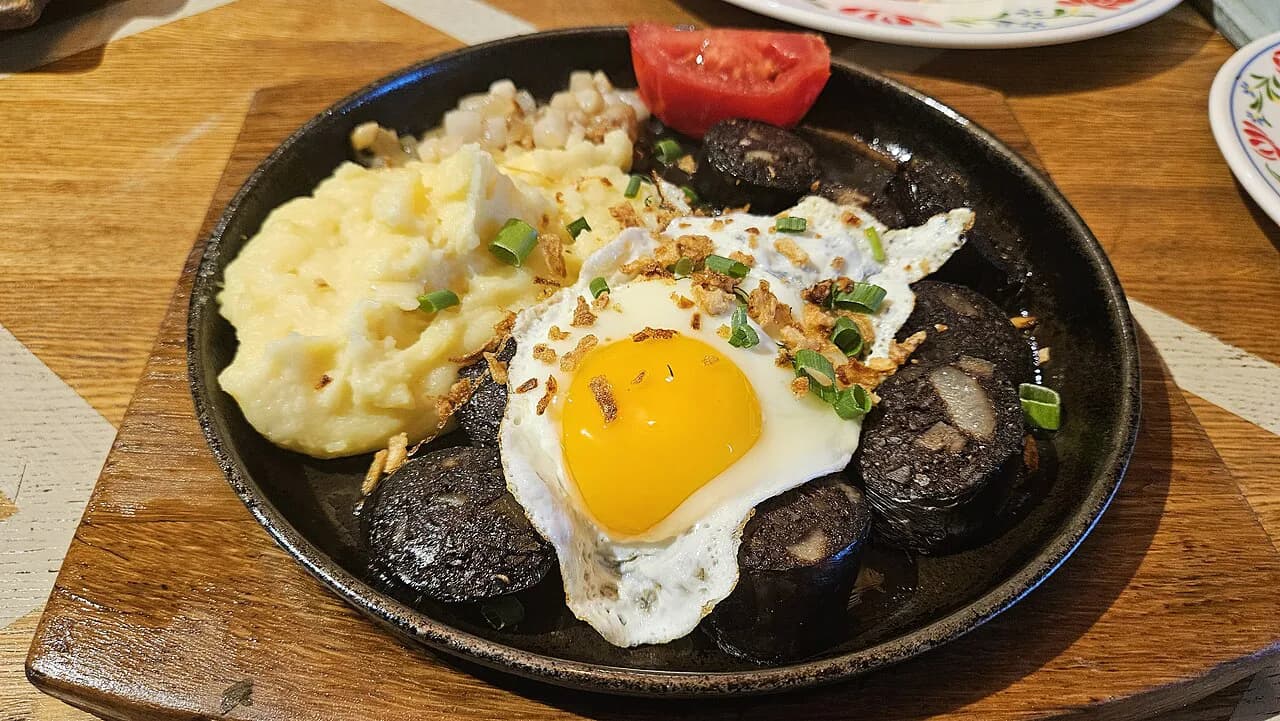
Krvavice: Croatian Sausages Explained and How to Order Them
Krvavice are Croatian sausages sold fresh for grilling or smoked and sliced. Here is what the name means and how to order them on a grill platter.
On this page
Krvavice are Croatian sausages, and the word alone will not tell you what turns up on your plate. It covers both a fresh, soft sausage made for grilling and a smoked, firm sausage sold by weight to slice cold, so the menu or counter is where the difference is settled. This guide walks through the name, the two main styles, how they reach the table and how they sit against Croatian Meat Dishes more broadly.
What krvavice means in Croatian and why the name covers more than one sausage
Krvavice is simply the plural of krvavica, the everyday Croatian word for a sausage, and it behaves like the English word in being loose rather than precise. A butcher, a menu and a market stall can all use it for quite different products, from a pale fresh link destined for the grill to a dark smoked one hanging behind the counter. Treat it as a category, not a recipe, and read the rest of the label or the menu line to find out which one you are getting.
Krvavice as a fresh sausage for grilling: texture, seasoning and how they are cooked. The fresh version is a soft, uncooked sausage in a casing, the kind sold raw from the chilled counter and cooked at home or over a restaurant grill.
Smoked and cured sausages sold by weight in delis and markets. The second krvavica is the smoked, firm one, sold whole or sliced by weight from a deli counter, a mesnica (butcher's shop) or a market stall.
Krvavica kobasica and regional sausage names on menus and labels. Kobasica is the other common Croatian word for sausage, so krvavica kobasica is a doubled-up name rather than a different animal, and both words appear on labels across the country.
The word is related to krv, meaning blood, which leads plenty of visitors to assume the sausage is always a blood sausage. In practice the term is used broadly across Croatia for sausages of different compositions, and neither a menu nor a shop label should be read as a guaranteed ingredient list on the strength of the name alone. If what you want is a particular style, ask at the counter or look for a descriptive name on the label rather than relying on krvavice by itself.
The name also belongs to a village on the Makarska Riviera: Krvavica sits within the municipality of Baška Voda, a few kilometres from Makarska, which is why a search for the word can land you on a map rather than a menu. That Krvavica is a coastal settlement first mentioned in 1792, and it has nothing to do with the sausage.
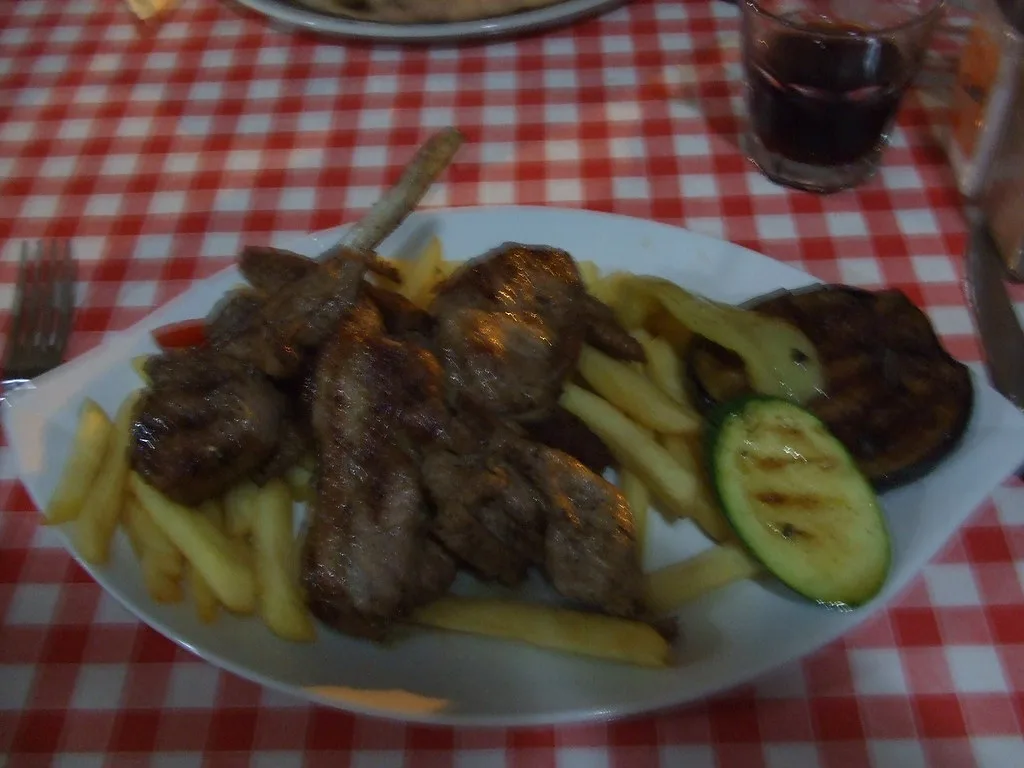
Krvavice as a fresh sausage for grilling: texture, seasoning and how they are cooked
The fresh version is a soft, uncooked sausage in a casing, the kind sold raw from the chilled counter and cooked at home or over a restaurant grill. It is a loose, juicy sausage rather than a dense dry one, and it is usually seasoned plainly so the pork does the talking rather than a heavy spice mix. On a grill it is cooked through over moderate heat and turned so the skin colours evenly without splitting, which is why it arrives blistered rather than charred.
When it comes to the table it is normally served whole or Split lengthways, with raw or roasted onion, a wedge of bread and mustard or ajvar alongside. The texture is softer than a British banger and looser than a firm cured sausage, so expect it to give easily under the fork rather than slice cleanly. If you want something to mop up with it, look to the bread and the pepper relish rather than expecting a pile of chips; ajvar is the roasted pepper relish that turns up alongside grilled meats across Croatia.
Cooking it at home is straightforward: prick the skin lightly, cook over medium heat and turn often, and avoid a fierce flame that bursts the casing before the middle is done. Because the sausage is raw, it needs to be cooked all the way through rather than browned and left pink in the centre. Ask the butcher whether a particular link is fresh or smoked if the counter display is not clear, since the cooking method differs.
Smoked and cured sausages sold by weight in delis and markets
The second krvavica is the smoked, firm one, sold whole or sliced by weight from a deli counter, a mesnica (butcher's shop) or a market stall. This is a keeping sausage: darker, drier and saltier than the fresh type, designed to be sliced thin and eaten cold with bread, cheese and pickled vegetables. It is also the version that travels well, which is why it appears in picnic baskets and on cold platters rather than on the grill.
Buying it by weight means you can ask for a small piece to try before committing to a whole one, and a good counter will slice a few rounds for you. Pay attention to the texture: a smoked sausage should feel firm and slightly waxy under the knife rather than soft and yielding. If you are assembling a cold plate, a modest amount goes a long way because the flavour is concentrated and salty.
Krvavica kobasica and regional sausage names on menus and labels
Kobasica is the other common Croatian word for sausage, so krvavica kobasica is a doubled-up name rather than a different animal, and both words appear on labels across the country. Regional sausage names are common too, and the same style of smoked sausage may be sold under a local place name in one county and a plain descriptor in the next. When a label carries a protected regional name, that tells you the product is tied to a defined area and method, which is worth knowing if you are buying a gift to take home.
On a restaurant menu, a sausage listed simply as krvavice is most likely the fresh grilled type on a platter, while one listed among cold starters or as a sliced addition is likely the smoked kind. If the menu line is bare, it is fair to ask whether it comes grilled or sliced cold, and that single question usually settles what you are ordering. The answer also tells you whether you need bread and mustard or a cold plate with pickles.
How krvavice appear on a Croatian grill platter and what comes with them
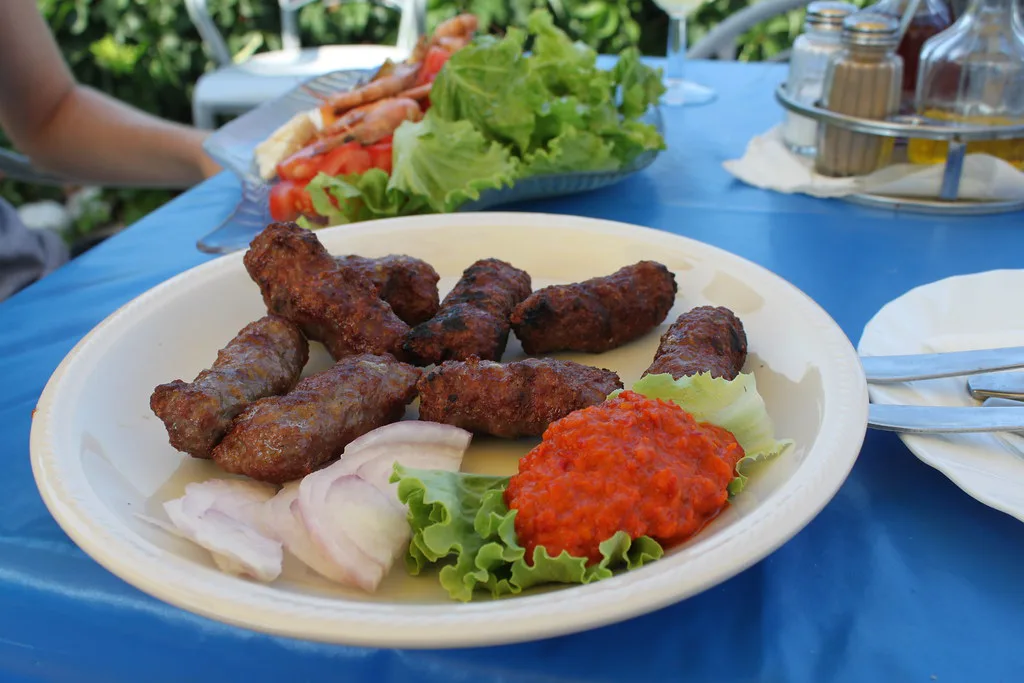
On a mixed grill platter, krvavice usually share the plate with ćevapi, a pljeskavica (a large flat grilled meat patty) and sometimes a chop or a skewer, all piled with raw onion and bread. The sausage component is there to add a softer, juicier texture against the denser minced-meat items, and it is normally the first thing to be eaten because it does not keep hot for long. If you are ordering for two, a mixed platter is the simplest way to try several grilled meats at once.
The bread that comes with a grill platter is usually lepinja, a flat round loaf that is Split and warmed, sometimes brushed with the meat juices. It is the tool for the job: tear it, stuff it with sausage and onion, and eat with your hands rather than trying to be neat. If you order a side of ajvar as well, use it sparingly, because it is sweet and rich against the salt of the grilled meat.
Portions on grill platters are generous, so a single mixed plate often feeds two people who are also ordering bread and a salad. If you only want to taste the sausage, order it as a standalone grilled item rather than committing to the full mixed platter. Waiting staff will generally tell you how many pieces come on the plate if you ask before ordering.
Where to buy krvavice: mesnice, markets and how they are sold
For fresh krvavice, the mesnica is the natural stop: a butcher's counter will sell them raw by weight, often made on site, and can tell you whether they are the grilling type. Market stalls in larger towns also sell sausages alongside cheese, cured meat and produce, and a morning visit is when the counters are fullest. Delis and supermarkets carry the smoked version vacuum-packed or loose, which is the easier option if you are self-catering and do not want to cook raw sausage.
Pekara, the Croatian bakery, is where you go for the bread to eat with them rather than for the sausages themselves, and a warm lepinja or a plain white loaf is the usual pairing. Buy the bread on the same trip so it is fresh, and keep smoked sausage wrapped separately so the bread does not pick up the smoke. A small amount of smoked sausage, a loaf and some cheese makes a good cold lunch without any cooking.
How krvavice compare with ćevapi and other Croatian grilled meats
Ćevapi are small skinless rolls of minced meat, usually beef or a beef-and-pork mix, and they are denser and more uniform than a krvavica because they have no casing and a finer grind. The sausage is softer, juicier and comes in a skin, so the two behave differently on the plate even when they share the same grill. If you want the beefier, springier bite, order ćevapi; if you want the softer, fattier one, order the sausage.
Beyond the grill, Croatian cooking uses sausage in slow-cooked dishes too: sliced smoked sausage goes into bean stews, sauerkraut and the stuffed cabbage rolls known as sarma. That is where the smoked type earns its place in the kitchen, adding salt and depth to a long-simmered pot rather than being eaten on its own. If you like the flavour of the smoked sausage cold, the same flavour is what makes those winter dishes taste the way they do.
Other grilled meats worth knowing sit alongside them on the same menus: janjetina, lamb cooked over an open fire, is a different order of thing entirely, and a Croatian gulaš is a stew rather than a grill item. Ordering one sausage dish and one minced-meat dish between two people is a good way to cover the range without over-facing yourselves. For a wider survey of the slow-cooked and grilled end of the repertoire, from spicy paprika stews to game, the Croatian meat dishes overview sets out the names you will keep meeting.
Which sausage should you order?
Order the fresh krvavice if you want something soft and juicy off the grill, ideally as part of a mixed platter shared between two. Buy the smoked version by weight from a mesnica or deli if you want something to slice cold with bread and cheese, or to add depth to a pot of sarma. Decide by how it is sold rather than by the word alone: raw from the chilled counter means grill it, firm from the deli counter means slice it.
If you are still choosing between the grilled options, remember that the sausage is the softer, fattier counterpoint to the denser ćevapi and pljeskavica on the same plate. Asking whether the krvavice come grilled or sliced cold is the one question that resolves most of the confusion.
Explore more Croatia guides
Sources
Notes on eating well in Croatia
Optional updates to our food guides.
You might also like



Continue reading
More guides you'll find useful



