
Lamb Peka: Croatia's Slow-Baked Lamb Under the Lid
Lamb peka is Croatian lamb slow-baked under a domed lid with potatoes, onions and herbs. Here is what the dish is, how it cooks and what to order.
On this page
Lamb peka is Croatia's slow-baked lamb, cooked in a shallow round dish with potatoes, onions, carrots, garlic and rosemary while hot embers are piled on and around a domed lid above it. The result is lamb that first steams and then bakes in its own juices, moist inside with a smoky edge from the wood fire. This guide covers what the dish is, how the lid and the embers do the work, how lamb compares with veal, chicken and octopus versions, and how to order or cook it.
What lamb peka is
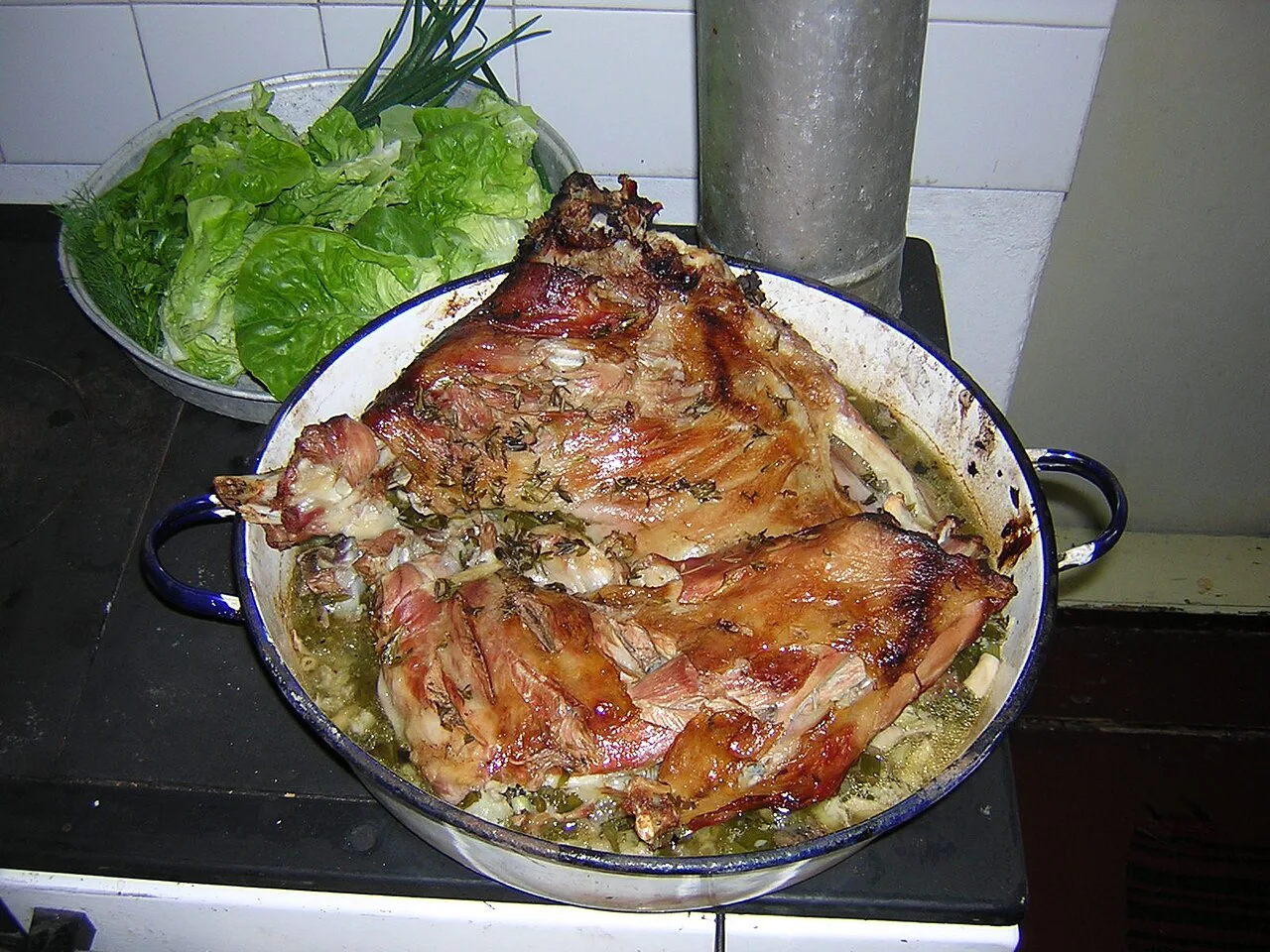
The dish is a one-pot bake of lamb and vegetables assembled in a shallow circular pan and sealed under a wide bell-shaped cover. Potatoes, onions, carrots, garlic and rosemary are the usual companions, with the meat cut into large pieces rather than diced small. Everything goes in raw with a little fat and liquid, and the sealed dome traps the steam so the lamb cooks gently before the heat from above browns and crisps it.
In restaurant terms, lamb peka sits firmly in the Croatian meat dishes tradition that runs from inland stews to coastal roasts, and it is one of the few dishes served in the pan it was cooked in. If you want to place it alongside the rest of the repertoire, from Slavonian čobanac to wild boar, the wider Croatian meat dishes guide maps out what else to look for.
Why the lid gives the dish its name
Peka is the name of the domed lid, not the pan and not strictly the food. Croatians also say ispod peke, meaning cooked beneath the lid, which is the clearest way to understand the dish. The same object carries regional names including šač, čripnja, lopiž and pokrivac, so you may see the meal called by another word depending on where you are.
What is the Croatian dish peka? Peka is both the domed lid and the dish cooked under it: meat or octopus with potatoes and vegetables, sealed beneath the dome with hot embers piled on and around it. Croatians also call it food cooked ispod peke, beneath the lid.
How long does lamb peka take to cook? The bake itself runs roughly an hour and a half under the embers, with the lid lifted partway through to turn the meat. Add at least an hour and a half before that for the wood to burn down to hot, ashy coals.
What is a famous lamb dish in Croatia? Lamb peka is one, and janjetina, lamb roasted on a spit, is the other big one. Peka is the sealed, slow-baked version with potatoes and herbs; spit-roast lamb is the open-fire version you see at roadside stalls and celebrations.
The method is old in this part of the world. The dish's traditional history is traced back millennia, with clay vessels of the kind used for this baking dated to several thousand years ago in eastern Croatia, and the technique said to have survived Roman rule rather than giving way to Roman ovens, kept alive by the Illyrians. Treat that as the story attached to the dish rather than a settled archaeological fact, but it explains why peka feels older than a restaurant invention.
How it cooks
The fire is the real skill. Wood is burned down until the coals are ashy and very hot, which takes well over an hour of preparation before any food is involved, and the coals are then spread over the domed lid and around its base. Beech or hornbeam, dense woods that hold heat, are the preferred fuel, and the lid must be heavy enough to sit tight and keep the steam in.
Once the dome is buried in embers, the food inside both steams and roasts: the trapped moisture keeps the lamb succulent while the heat from above gives it colour. The lid is lifted partway through, the meat turned and any juices spooned back over, then the dome goes back on to finish. That two-stage cook, long and sealed first, hotter and open at the end, is what separates a proper peka from a covered casserole.
What it tastes like
Expect soft, juicy lamb that pulls apart rather than slices cleanly, with potatoes that have taken on the meat juices and gone slightly caramelised at the edges. The smoke from the wood is present but not heavy; it reads as a savoury depth rather than a campfire tang, because the food sits under a lid rather than over an open flame. Rosemary and garlic come through clearly, and the whole thing arrives at the table still hot in its pan.
Lamb versus veal, chicken and octopus peka
Lamb and veal are the most common versions across Croatia, with chicken close behind as a cheaper family option. On the Dalmatian coast, octopus baked under the lid is common and highly regarded, while inland and in the countryside the heartier lamb and chicken versions dominate. If you are near the coast and want the sea version, order octopus peka; if you are inland or in a mountain village, lamb is the natural choice.
If lamb is what you are after, it helps to know the other lamb tradition: janjetina, lamb roasted on a spit over an open fire, is the roadside and celebration version, while lamb peka is the sealed, pot-baked one. The two are often on the same menu, so read the description carefully rather than assuming a lamb dish means a spit roast.
Ordering peka in a restaurant
Peka is a table dish, not a solo plate. It is built to feed a group, and because the fire needs to be lit and the dish needs an hour or more under the lid, it is worth arranging lamb peka when you book rather than deciding on it at the table. Ask how many people the pan serves, and check whether that day's fire will accommodate it; arriving without a plan is the most common way to miss out.
Because it feeds several people and takes a long cook, peka is rarely the cheap option on a menu, and the price for lamb is usually higher than for chicken. Ask what the pan serves and whether the price is for the whole dish or per person before you commit. Bread and a glass of white wine are the traditional accompaniments, and a simple green salad or some ajvar on the side works well without competing with the lamb.
Cooking lamb peka at home
The classic home version keeps it simple: a fatty cut such as lamb shoulder, cut into large pieces and well salted, with potatoes, roughly chopped onion, tomato and pepper, rosemary, a spoonful of lard and a glass of white wine. The full recipe proportions for the lamb and vegetable bake are easy to follow, and the fat matters, because lean lamb will dry out under the long cook.
The fire needs starting at least ninety minutes before you plan to eat, using dense hardwood so the coals last the whole cook. If you do not have a proper peka dome, a heavy lidded casserole in a low oven can approximate it, but you lose the smoky top heat that defines the dish. Turn the meat once, partway through, and resist lifting the lid to check too often.
Serve it straight from the pan with bread to mop up the juices and a dry white wine. Leftover lamb and potatoes reheat well the next day, though the crisp edges will soften. If you want a second Croatian meat dish for a bigger table, ćevapi, the grilled minced-meat rolls served with flatbread, cook in minutes and make a good contrast to the long-baked lamb.
Should you order lamb peka or the spit-roast?
Order lamb peka when you have a group, time to plan ahead and an appetite for something cooked slowly and served in its pan. Choose spit-roast lamb if you want a quicker plate or a roadside stop, and octopus peka if you are on the coast and want the sea version of the same technique. Either way, ring ahead for the peka: the fire does not wait for walk-ins.
Explore more Croatia guides
Frequently Asked Questions
What is the Croatian dish peka?
Peka is both the domed lid and the dish cooked under it: meat or octopus with potatoes and vegetables, sealed beneath the dome with hot embers piled on and around it. Croatians also call it food cooked ispod peke, beneath the lid. Lamb and veal are the most common versions, with octopus standard on the Dalmatian coast.
How long does lamb peka take to cook?
The bake itself runs roughly an hour and a half under the embers, with the lid lifted partway through to turn the meat. Add at least an hour and a half before that for the wood to burn down to hot, ashy coals. In a restaurant this means ordering ahead rather than choosing it at the table.
What is a famous lamb dish in Croatia?
Lamb peka is one, and janjetina, lamb roasted on a spit, is the other big one. Peka is the sealed, slow-baked version with potatoes and herbs; spit-roast lamb is the open-fire version you see at roadside stalls and celebrations.
Sources
Notes on eating well in Croatia
Optional updates to our food guides.
You might also like



Continue reading
More guides you'll find useful





