
Sir i vrhnje: Croatia's Fresh Cheese and Cream, Explained
Sir i vrhnje is fresh cow's cheese mixed with sour cream, a Zagreb and Medvednica staple. Here is what it is, how it is served and how to order it.
On this page
Sir i vrhnje is Croatia's everyday dairy plate: fresh cow's cheese crumbled and mixed with sour cream, eaten cold as a starter, a light meal or even a dessert. It is most at home in Zagreb and the villages and mountain huts of Medvednica, the wooded ridge above the city. This guide explains what the two words mean, how the dish reaches the table, how the texture varies and how to buy or make it yourself.
Sir i vrhnje translated: fresh cheese and sour cream
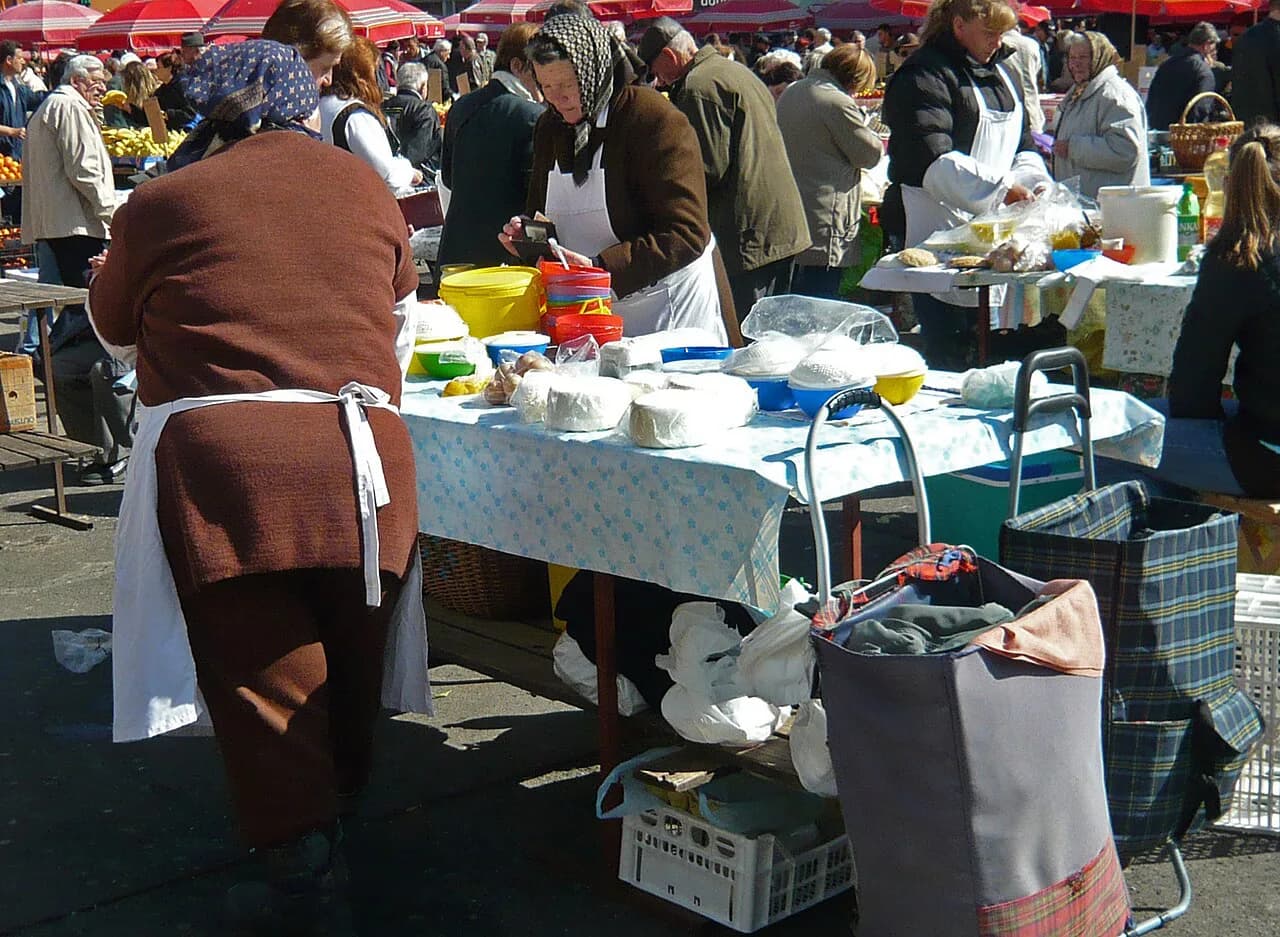
Sir means cheese and vrhnje means cream, and the dish is exactly that — fresh cow's cheese, lightly drained and crumbled, stirred together with whole-milk sour cream until it turns creamy. Nothing is aged or pressed, so you are tasting milk at its freshest rather than a matured wheel. The Medvednica tourist board calls it one of the culinary symbols of Zagreb and its surroundings and one of the best-known dishes of traditional Croatian cuisine.
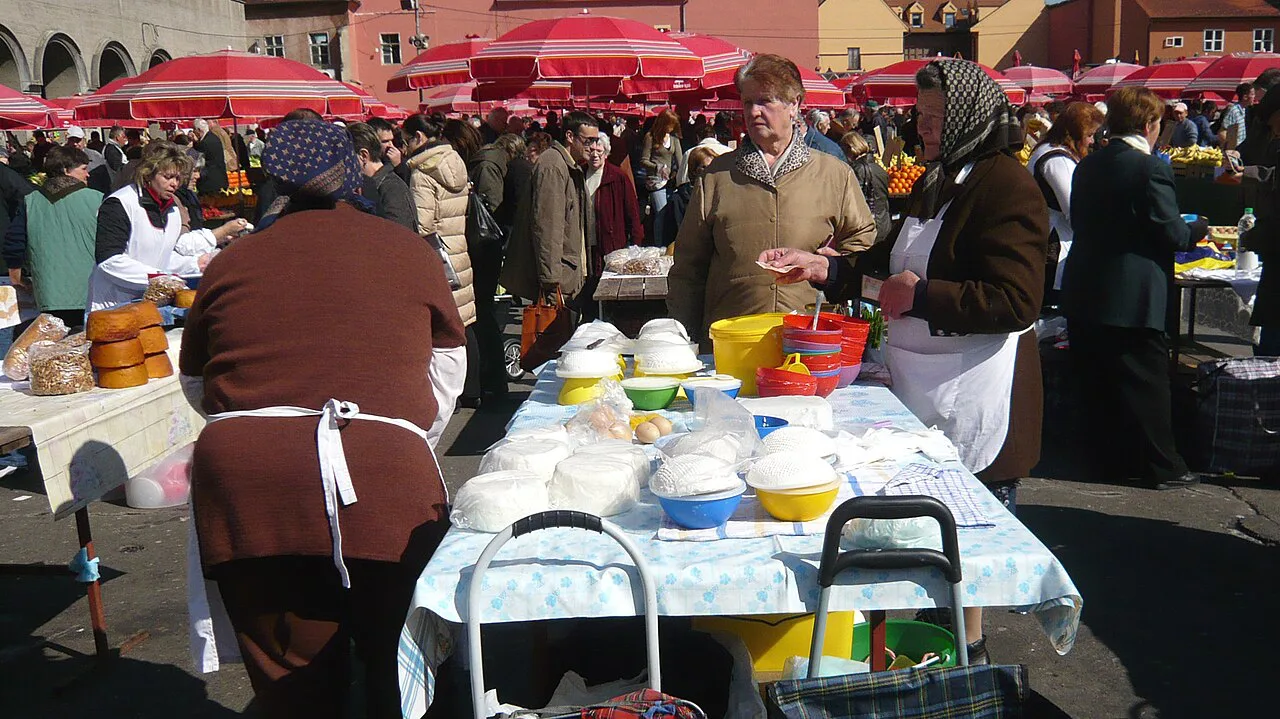
Why it belongs to Zagreb and Medvednica. The cheese-and-cream habit runs through Zagreb's markets, home kitchens and weekend kitchens, and it is tied to the slopes of Medvednica, where dairy farms sit close to the hiking trails.
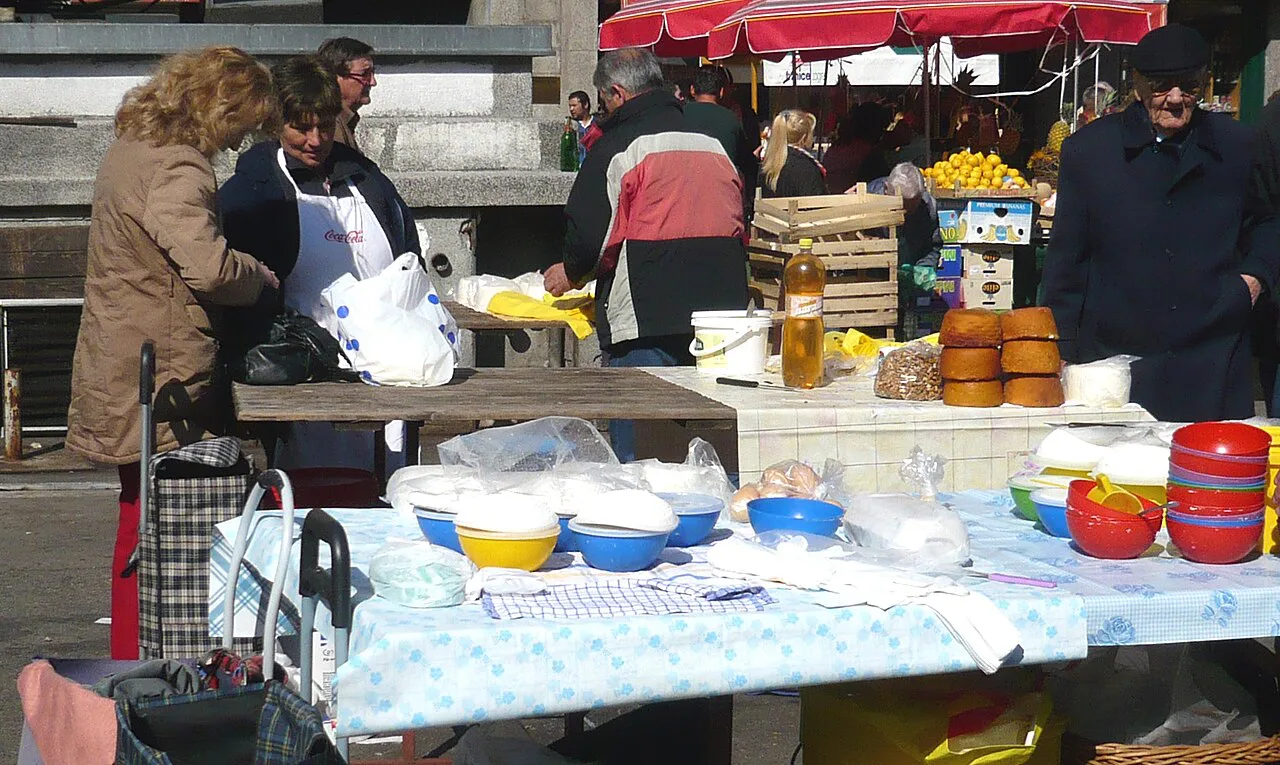
How it is served: cold, with bread and cured meats. Sir i vrhnje is served chilled as a cold appetiser, most often with homemade bread — cornbread, flatbread or a plain white loaf — which you use to scoop it up.
Sweet or savoury: salt, sugar, chives or paprika. The savoury version takes a pinch of optional salt plus a garnish of fresh chives or ground red paprika, and it is the one you will find on a mountain-hut platter.
English menus sometimes call it cottage cheese and sour cream, but treat it as a fresh spreadable cheese dish rather than a block of cheese to slice: it is built for spreading and scooping with bread, not for eating neat from a pot. If you want to place it among Croatia's other dairy products, our guide to Croatian cheese covers the aged and regional styles this one sits apart from.
Why it belongs to Zagreb and Medvednica
The cheese-and-cream habit runs through Zagreb's markets, home kitchens and weekend kitchens, and it is tied to the slopes of Medvednica, where dairy farms sit close to the hiking trails. The tourist board describes it as a refreshment beloved by hikers and notes that it is often served in mountain huts as part of a traditional platter.
That is why it belongs to the hill rather than the old town: after a morning on the forest paths, a cold bowl of cheese and cream with bread is the traditional rest stop. If you are walking the Medvednica trails, make a mountain-hut platter part of the day.
How it is served: cold, with bread and cured meats
Sir i vrhnje is served chilled as a cold appetiser, most often with homemade bread — cornbread, flatbread or a plain white loaf — which you use to scoop it up. The tourist board also suggests serving it as a side with cured meats, so a plate of pršut, salami or bacon alongside it is entirely normal. Our guide to pršut explains the dry-cured ham you are most likely to see on the same table.
On the mountain-hut platter the tourist board describes, it arrives with bread, onion, bacon and a glass of gemišt — white wine lightened with sparkling water. The mix is deliberately plain: the sharpness of raw onion and the salt of bacon cut through the cream, and the diluted wine keeps the meal light enough for the walk back down. Order it as a shared starter if you are in a group, or as a light plate on its own.
Sweet or savoury: salt, sugar, chives or paprika
The savoury version takes a pinch of optional salt plus a garnish of fresh chives or ground red paprika, and it is the one you will find on a mountain-hut platter. The sweet version is the surprise for visitors: a little sugar stirred in, eaten as a dessert or a sweet breakfast.
You choose by context. If it lands on a platter with onion and bacon, keep it savoury and let the bread do the work; if it is set down with coffee and a sweet pastry, taste it with sugar before adding salt. When you are buying it to take away, the plain version lets you go either way at home.
Texture: cream-led versus cheese-led
Two textures reach the table. A cream-led version is silkier and wetter, with small cheese grains floating in a milky mix; a cheese-led version is firmer and more crumbly, with larger grains and less loose cream. A Croatian comparison of two supermarket brands describes the Meggle pot as the silkier, more cream-forward style and the President pot as the firmer, more rustic one.
Both are sold under the same name, so if texture matters to you, look at the pot: a looser mix is better for spreading on soft bread, while a firmer one holds its shape on a platter and takes chives and paprika better. Neither is a ranking; it is a question of what you want on the plate.
Making sir i vrhnje at home
The home method is a ratio more than a recipe. The tourist board's version uses roughly 300 g of fresh cow's cheese to 200 ml of whole-milk sour cream, crumbled and stirred until creamy, lightly salted to taste or sweetened with a little sugar, then chilled before serving.
Serve it cold with homemade cornbread, flatbread or a plain loaf; the loaves that work best alongside it are the everyday breads covered in our guide to Croatian bread.
Where to eat it around Zagreb and Medvednica
Three Medvednica places feature on the tourist board's pages for the dish. Tomislavov Dom sits at 1,002 m on the western slopes just minutes from the cable car; Stara Lugarnica is a bistro deeper in the forest in an old forester's lodge; and Snježna Kraljica is a modern mountain lodge close to the ski slopes.
Treat these as mountain-hut stops rather than city restaurants, the kind of place where the platter arrives with bread, onion, bacon and a gemišt to go with it. It is the sort of informal, cold-plate eating that belongs to a day on the hill.
Buying it: markets, dairies and supermarkets
Buying it to make at home means a tub of fresh cow's cheese and a tub of whole-milk sour cream, which you mix yourself to your own taste. The branded supermarket pots, in the silkier and firmer styles described above, are the ready-mixed alternative if you are self-catering.
For a wider introduction to the dairy shelf and the other staples worth trying, from olive oil to cured meats, see our guide to Croatian delicacies and, if you are tasting oils on the coast, our Olive Oil Tasting guide.
How to put sir i vrhnje on your table
Order it cold with bread as a starter, let the bacon and onion balance the cream, and try a spoonful with sugar if you want the sweet version. If you are heading onto Medvednica, make a mountain-hut platter part of the walk and finish with a gemišt.
To take the taste home, buy fresh cow's cheese and whole-milk sour cream and mix them in roughly three parts cheese to two parts cream, then chill before serving. That is the traditional dish with no restaurant skills needed.
Explore more Croatia guides
Sources
Notes on eating well in Croatia
Optional updates to our food guides.
You might also like



Continue reading
More guides you'll find useful





