
Pršut: Croatia's Dry-Cured Ham and How to Eat It
Pršut is Croatia's dry-cured ham, salted and air-dried in the bura wind. Learn the four protected regional types and how to order and eat it.
On this page
Pršut is Croatia's dry-cured ham: a pork leg cured with sea salt and matured in the open air rather than cooked. It arrives on the table as a starter plate of thin slices with cheese, olives and bread, and it is one of the easiest things to order well anywhere on the coast. This guide covers the four EU-protected regional types, the difference between smoke-dried Dalmatian styles and the unsmoked northern ones, and how to buy a leg to take home.
What pršut is and how it is made
Pršut is made from the whole hind leg of a pig, rubbed with sea salt and left to dry and mature in cool, moving air. Nothing is cooked and, in the traditional method, nothing else goes in: no nitrites, nitrates or other additives beyond salt, a point Croatian producers make explicitly about their whole legs. The process is slow, and a leg can take a year or considerably longer to reach the point where it is sliced.
That simplicity is the point. The flavour comes from the pork, the salt and the climate where the leg hangs, which is why the same method produces noticeably different ham in Istria, on Krk, around Drniš and across Dalmatia. When you see a leg on a stand behind a konoba counter, you are looking at the finished product of that slow cycle.
How pršut differs from Italian prosciutto
The comparison with Italian prosciutto crudo is fair, because both are salt-cured raw hams, but they are not the same product. Croatian pršut leans on the bura, the cold, dry offshore wind that funnels down the Adriatic coast and does much of the drying work. The result is a firmer, saltier slice, and in Dalmatia a smoke-dried one, rather than the sweetest Italian crudo.
Is pršut the same as prosciutto? It belongs to the same family of product, a salt-cured raw ham, but Croatian pršut is its own thing. It is dried in the bura wind, often sliced a little thicker and saltier than Italian crudo, and in Dalmatia and around Drniš it may also be smoke-dried.
Why is pršut expensive? A leg loses a lot of weight as it dries and can hang for a year or more before it is ready, so you are paying for time, space and a large cut of pork. The EU-protected Croatian types also carry the cost of meeting defined production rules.
Can you eat pršut raw? Yes. Pršut is cured, not cooked, and is meant to be eaten as it is, sliced thin and served at room temperature.
Prosciutto cotto, the cooked ham sold in deli counters, has nothing to do with pršut, so ignore any menu translation that lumps them together. Where pršut really parts company is within Croatia itself: some regions smoke the leg over a fire as well as air-drying it, and that single step changes the flavour completely.
The four EU-protected regional types
Croatia has four pršut types protected at EU level. Istarski pršut carries a protected designation of origin, while Krk, Drniš and Dalmatian pršut are registered with protected geographical indication. The designations distinguish the hams by region and method, which is what the protected names on menus and deli labels signal.
The distinction is worth knowing when you read a menu or a deli label, because a protected name tells you the ham is tied to a named region and a defined method. The same system of protected names appears on Croatian olive oil labels, so reading one prepares you for the other.
Why the bura wind shapes the flavour
The bura is the reason coastal pršut tastes of the place. It blows cold, dry and salty off the mountains and over the legs hanging in drying rooms or open frames, pulling moisture out steadily and concentrating the meat. Because the wind varies from one valley to the next, so does the ham: a leg dried near the sea can taste brinier and more savoury than one from further inland.
Good producers work with the weather rather than trying to override it, using technology to manage temperature and humidity without abandoning the traditional open-air approach. In practical terms, that means the ham you eat in summer was already a year or more in the making before it reached the plate.
Smoke-dried Dalmatian and Drniš pršut
Dalmatian and Drniš pršut are the smoke-dried pair, described by the Croatian Prosciutto Cluster as the only ones in the Mediterranean still smoke-dried. The smoke adds a campfire depth and a firmer, drier edge to the slice, which is why these hams stand up well next to strong cheese and robust red wine.
Set that against Istarski pršut and Krk pršut, which rely on salt and air alone and taste cleaner and sweeter as a result. If you are ordering a single plate and want to understand the range, ask for one smoked and one unsmoked slice side by side and taste them against each other before you add anything else.
What it tastes like and how it is served
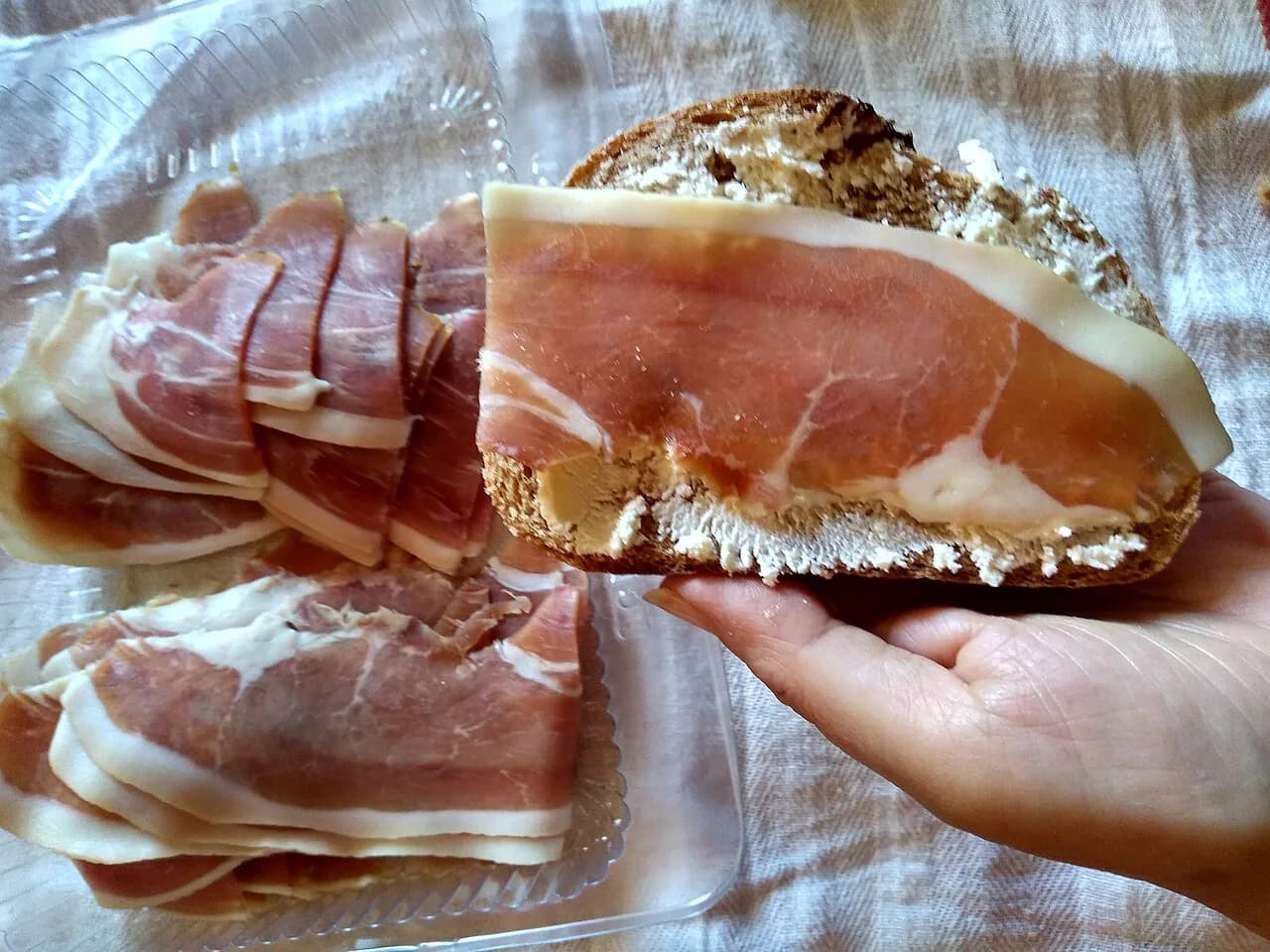
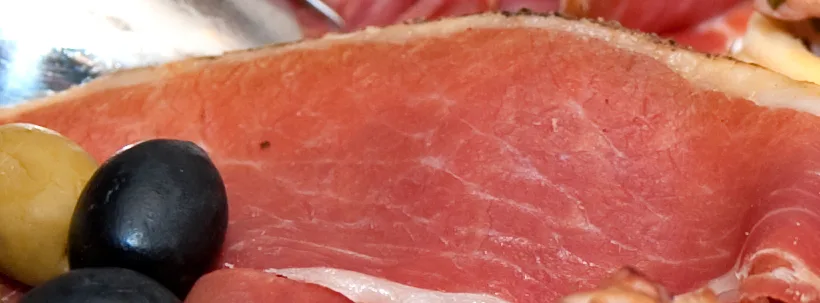
A good slice of pršut is silky and slightly translucent, with a nutty sweetness up front and a long salty finish. It should be cut thin enough to fold, and it is usually served at room temperature so the fat softens and releases its flavour rather than staying cold and waxy.
On a charcuterie board, pršut is often joined by other cured meats, which gives you a way to taste around the country in one sitting. If the board includes kulen, the spiced smoked sausage from Slavonia, try it after the pršut rather than before, because its paprika heat will otherwise drown the finer ham.
How to order pršut in a konoba
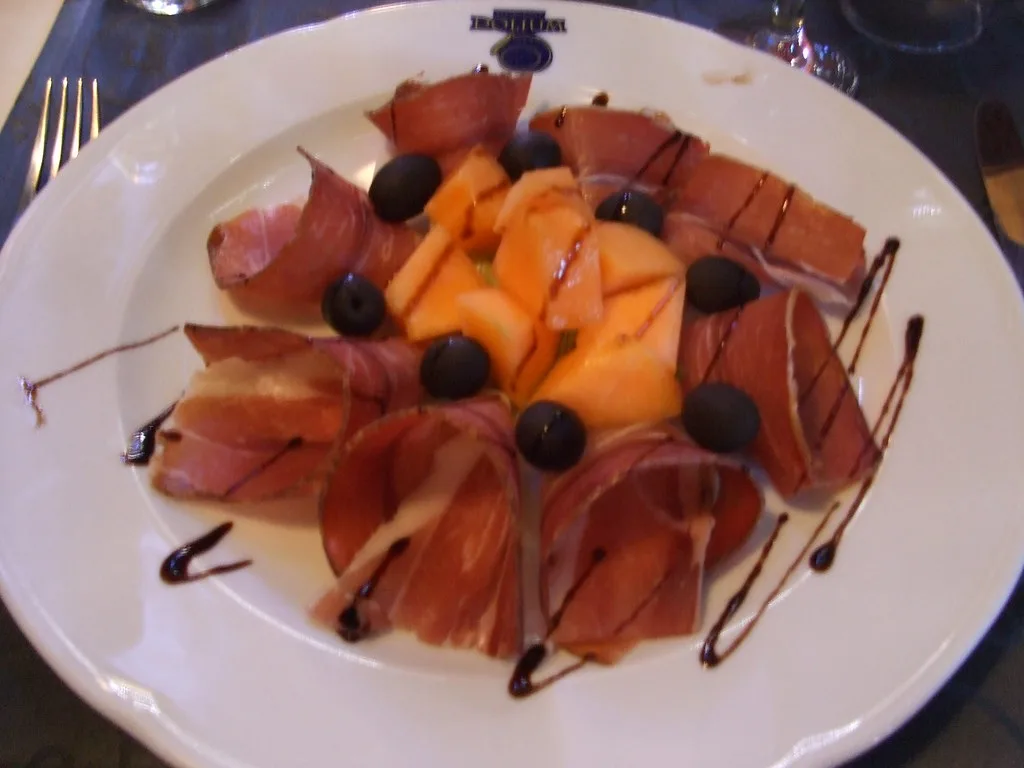
Pršut almost always appears as a cold starter, listed on the menu as a plate to share rather than a single portion. It typically comes with cheese, olives, sometimes figs or a fig spread, and bread, and it is the natural first order while you decide on the main course. A plate of pršut and cheese plus a bowl of something warm is a sensible light meal for two.
Bread matters more than it sounds. A plain, slightly sour loaf is the right vehicle for the salt and fat, and Croatian bread varies a lot from one bakery to the next, so it is worth noticing whether yours is fresh that morning. Order a plate of pršut with a simple glass of local white or a spritzer and you have the most reliable opening course on the coast.
Pršut with Paški sir
The classic pairing is pršut with paški sir, the hard sheep's milk cheese from the island of Pag. The cheese is salty, nutty and slightly tangy, and in aged form it has a firm, crystalline bite that contrasts nicely with the soft fat of the ham. Together they cover salt, richness and a long savoury finish without needing much else on the plate.
If a menu offers a Croatian cheese selection alongside the ham, the same logic applies: choose one hard aged sheep's cheese and one fresh soft cheese rather than four similar ones. For a broader picture of the styles you will meet, from Lika's squeaky škripavac to fresh cow's milk cheeses, see our notes on Croatian cheese.
Buying pršut to take home
You can buy pršut as a whole leg with the bone, as a boneless pressed cut, or in vacuum-packed slices, and the choice depends on how you plan to serve it. A whole leg is a centrepiece that needs a stand, a sharp knife and a cool place to hang, while a pressed boneless piece is far easier to transport and slice at home. One Croatian producer, for example, sells a whole bone-in leg of roughly eight to eight and a half kilos, and a boneless pressed cut of around six kilos.
Check the label for the protected name before you buy, since Istarski, Krk, Drniš and Dalmatian pršut are the versions with a guaranteed link to their region. Sliced vacuum packs are the practical choice for hand luggage, and they keep well enough to bring a taste of the coast home. If you are building a hamper, pair the pršut with a bottle of Croatian olive oil so you have the whole starter course covered.
Pršut on the wider Croatian table
Pršut sits at the centre of a wider culture of cured meat and cheese that runs from the coast into the mountains, and it is the natural entry point for anyone curious about Croatian Delicacies. Once you have tried the ham, the same shops and markets will lead you towards smoked sausage, aged sheep's cheese and preserved fish.
In Istria, pršut usually appears alongside the region's olive oil and, in season, truffles, so a plate can turn into a short tour of the peninsula. If you plan a visit around food, an Olive Oil Tasting in the interior makes a good counterpoint to a ham plate on the coast.
Which pršut should you order first?
Start with an unsmoked Istarski or Krk pršut to taste the salt and the bura cleanly, then try a smoke-dried Dalmatian or Drniš slice to feel the difference. Order it as a shared starter with paški sir and good bread, and you have the most dependable first course in Croatia.
Explore more Croatia guides
Frequently Asked Questions
Is pršut the same as prosciutto?
It belongs to the same family of product, a salt-cured raw ham, but Croatian pršut is its own thing. It is dried in the bura wind, often sliced a little thicker and saltier than Italian crudo, and in Dalmatia and around Drniš it may also be smoke-dried.
Why is pršut expensive?
A leg loses a lot of weight as it dries and can hang for a year or more before it is ready, so you are paying for time, space and a large cut of pork. The EU-protected Croatian types also carry the cost of meeting defined production rules.
Can you eat pršut raw?
Yes. Pršut is cured, not cooked, and is meant to be eaten as it is, sliced thin and served at room temperature. It is the same principle as Italian prosciutto crudo.
Which pršut should I try first?
Start with an unsmoked Istarski or Krk pršut to taste the salt and the bura cleanly, then order a smoke-dried Dalmatian or Drniš slice so you can compare the two styles in one sitting. Ordering a plate with paški sir and bread makes a complete starter for two.
Can I take pršut home from Croatia?
Vacuum-packed sliced pršut travels well and is the easiest option for a flight. Whole legs are heavy and bulky, and some countries restrict pork imports, so check your own country's rules before buying a leg.
Sources
Notes on eating well in Croatia
Optional updates to our food guides.
You might also like



Continue reading
More guides you'll find useful




