
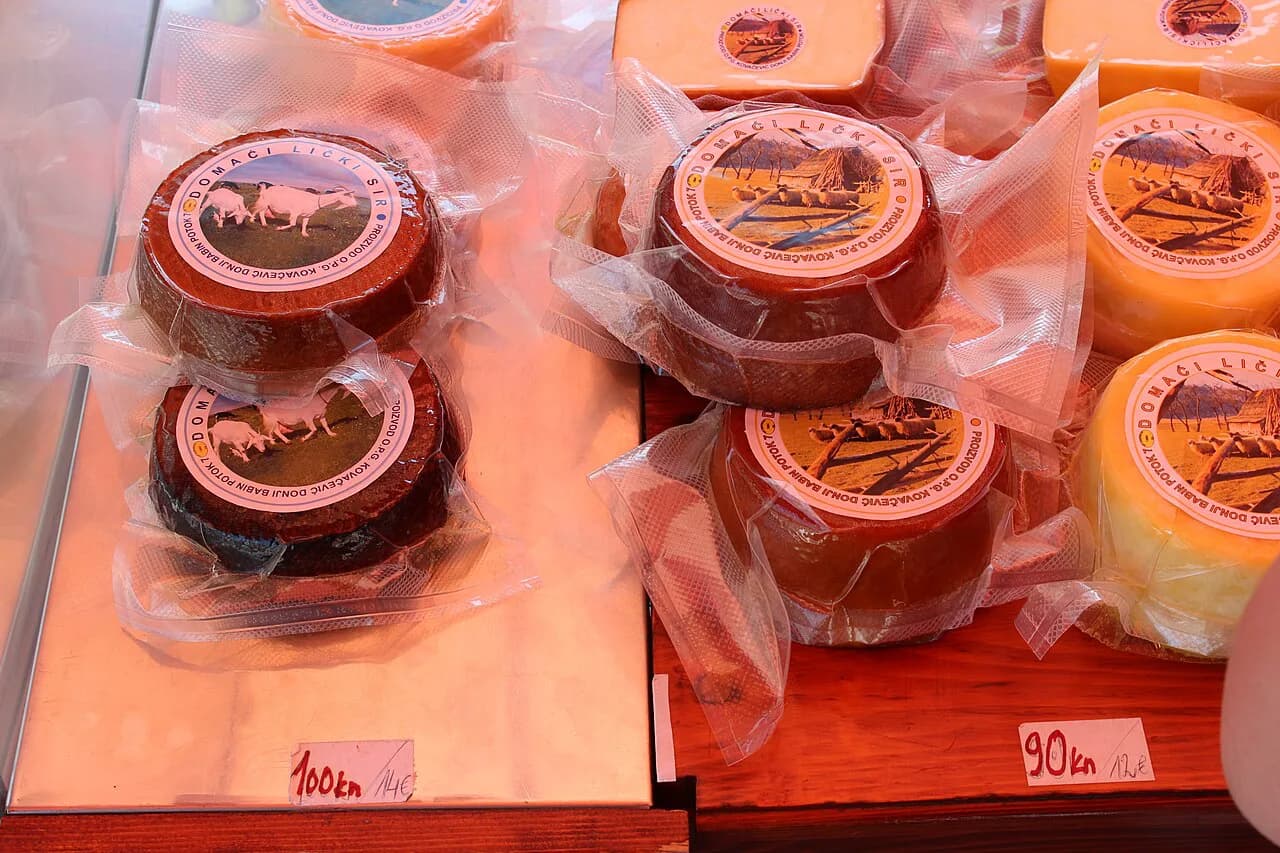
Croatian Cheese: Paški Sir, Skuta and Strukli Explained
Paški sir, skuta and the cheese inside štrukli: how Croatia's best-known cheeses taste, how they are made and what to order with them.
On this page
Croatian cheese on a menu usually means one of three things: Paški sir, the hard sheep's cheese from the island of Pag; skuta, a fresh curd cheese; or a cooked dish such as štrukli, where cheese is baked inside dough. The one to seek out first is Paški sir, because its salt-and-herb flavour comes from a specific place and a specific set of rules. This guide covers how each one tastes, how it is made and how to order it.
Eating cheese in Croatia is rarely a separate course. It arrives on a board with cured meat, or melted into a baking dish, or crumbled into pastry. Knowing which of the three you are ordering stops you expecting a soft, spreadable cheese when a firm wedge lands on the table.
What Croatian cheese means on a menu: hard sheep's cheese, fresh skuta and cooked dishes
The word sir simply means cheese, so a menu line reading sir tells you very little on its own. Look at the words around it: paški sir is the aged sheep's cheese from Pag, while skuta is a fresh cheese with a much shorter life. Strukli signals a hot baked dish rather than a cheese to eat on its own.
The fresh side of Croatian cheese is a small, distinct family. Paška skuta, basa and Istarska skuta are the fresh cheeses worth knowing, each sold under a regional name rather than a single dairy brand. If you want something softer to spread on bread at breakfast, this is the group to ask for rather than the aged wedges.
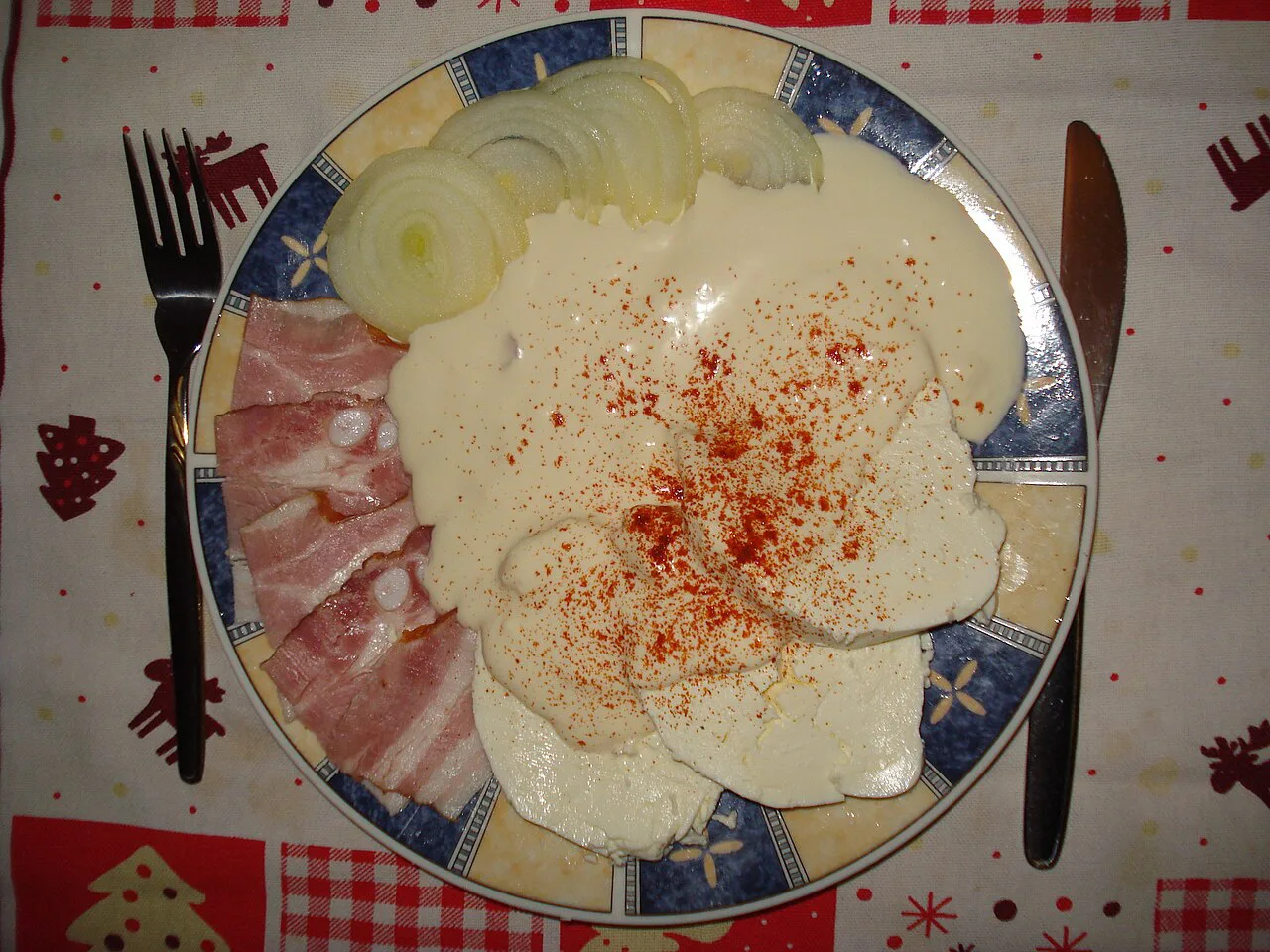
Paški sir: the hard sheep's cheese from the island of Pag
Paški sir is a hard sheep's cheese made on Pag, the long, wind-scoured island off the northern Dalmatian coast. Its milk comes from the island's native sheep, and the producers who make it work to a shared set of rules rather than each dairy improvising. That collective discipline is what makes the name mean something specific.
What is a traditional Croatian cheese? Paški sir, the hard sheep's cheese from the island of Pag, is the best-known traditional Croatian cheese. Its milk must come from native Pag sheep, and the cheese is aged from 60 days to two years.
Is skuta the same as Paški sir? No. Paška skuta is a fresh cheese and belongs to the group of named fresh cheeses that also includes basa and Istarska skuta, while Paški sir is a hard aged sheep's cheese from the same island.
In 2005 a group of Pag's established dairies formed the Association of Pag Cheese Producers to defend the authenticity of the cheese. Under those rules the milk must come from autochthonous Pag sheep milked between January and June, and the animals must graze freely on the island's pastures. That collective rulebook is what makes the name mean something specific rather than a generic sheep's cheese label.
One of the best-known dairies on the island is Gligora, now run by the third generation of the family. Buying a wedge from a named island producer at a market or deli is the simplest way to taste the cheese as it is meant to be.
Why Pag tastes salty and herbal: the bora wind, salt spray and grazing
Pag's flavour starts with weather. Cold mountain air meets the warm Adriatic and rushes down as the bora, a fierce wind that whips up a dense fog of salt water droplets over the island. As that dries, the land is left with a fine white dusting of salt, and only tough herbs survive it.
Those herbs are the second half of the story. Sage, immortelle, cistus, fennel and Jerusalem thorn grow on the salted ground, and the sheep graze them freely. That diet, combined with the wind and the salt, is why the cheese tastes both markedly salty and distinctly aromatic and vegetal.
How Paški sir is made and aged, and what that does to the texture
The milk is gathered from shepherds across the island, cooled and taken to the dairy, where it is pasteurised, coagulated and cut so the curds form. The curds go into moulds, are pressed for several hours, then salted and held in brine for a few days. That brine stage is where much of the pronounced saltiness is set in.
Ageing runs from 60 days to two years, and the wheels are turned, washed and oiled every day while they mature on shelves in a mild, humid room. A younger wheel is gentler; an older one is denser and more savoury.
Visually the cheese can mislead. It is hard, candle-yellow and granular and looks a little like parmesan, and the first bite seems to confirm it. Then the sheep's-milk character, the salt and the herbal notes arrive behind it, which is the point of difference worth noticing.
How to eat Paški sir: charcuterie boards, olive oil, fig chutney, grating
In Croatia the cheese is most often served on a board with cured meats and a drizzle of good olive oil. That combination works because the salt and the herbal edge cut through the fat of the meat. See our guide to Olive Oil Tasting if you want to compare oils for the board.
Taste Croatia in London serves it with fig chutney, a sweet-sharp preserve that offsets the saltiness, and the same instinct applies with a syrupy vinegar: a few drops on a shard of cheese is enough. If you have a bottle of Croatian olive oil at home, drizzle a little over the cheese before serving.
The cheese is more versatile than a board suggests. There is nothing to stop you grating it over pasta, where it behaves much like a hard Italian cheese, or shaving it over a salad. Taste it plain first so you know what you are adding to the dish.
Skuta: Croatia's fresh cheese and where it sits alongside Paška skuta and Istarska skuta
Alongside the aged sheep's cheeses, Croatia has a set of named fresh cheeses: Paška skuta, basa and Istarska skuta. They are the softer, younger counterpart to a firm wedge, so order one when you want something mild to spread rather than nibble. Each is known by its regional name.
These names sit in the fresh-cheese family rather than the aged one, which is the distinction to hold on to when a menu lists them together. If a board includes both a hard paški sir and one of the fresh cheeses, you are tasting two quite different things from the same country.
Skuta also turns up away from the cheese board, notably in baking and in savoury pies. If a slice of pastry is described as having skuta in it, expect a soft, milky filling rather than a melted hard cheese.
Strukli: cheese baked in dough, and what the filling is made from
Strukli is a hot baked dish of rolled dough wrapped around a soft cheese filling and cooked until golden. The filling is designed to be creamy and mild rather than sharp, so the finished dish tastes rich and comforting.
Because the filling is soft and creamy rather than an aged grating cheese, štrukli tastes mild and rich rather than sharp. If you are ordering several plates to share, bear in mind that it is filling.
Cheese as part of a meal rather than a course of its own
In Croatia cheese tends to appear inside a meal rather than after it. It turns up on a sharing board before the main event, or baked into štrukli. Treat it as part of the meal rather than a separate course.
On the coast, a plate of crni rižot, the black cuttlefish risotto, or a grilled fish is often the main event, with cheese as the opener. If you are building a meal around a cheese board, ask for it to come first and share it.
Cheese also earns its place at the table on a rural farm stay, where a board of local produce is part of the meal. That is where you are most likely to meet a cheese you cannot buy in a city deli. If a farm stay is on your route, plan a lunch there.
Buying Croatian cheese to take home
A hard cheese like Paški sir is the sensible souvenir to buy if you are flying home with checked luggage. A vacuum-sealed wedge holds its condition far better than a cut piece wrapped in paper. Ask the stall or deli to seal it for you.
Buying from a named producer tells you what you are getting. The London Borough Market trader Taste Croatia sells Paški sir, which is a useful reference point if you want to compare before you travel. At home, keep the cheese cool and let it come to room temperature before serving.
For the rest of the pantry, look at the wider range of Croatian Delicacies, from cured meats to olive oil and preserves, and build a board around what you bring back. A single good cheese goes further with the right accompaniments than a suitcase full of mediocre ones.
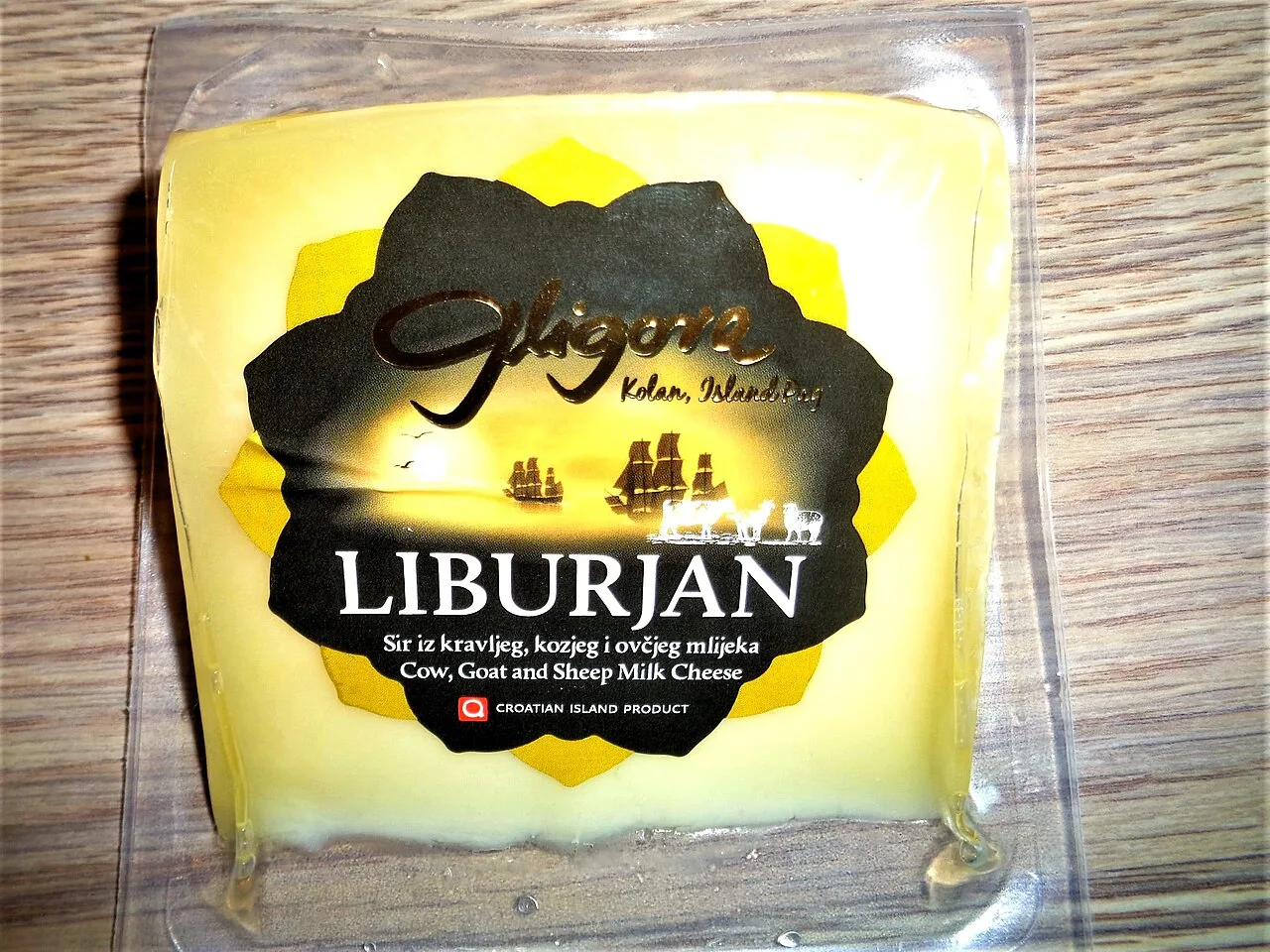
Which Croatian cheese should you order first?
Start with Paški sir. It is the one Croatian cheese with a story you can taste on the plate: salt, herbs and sheep's milk from a single island. Order it on a board with pršut and a little olive oil, then try skuta and štrukli on later days to see how different fresh, aged and baked cheese can be.
If you only have one meal in Croatia and cheese is on your mind, make it a starter of Paški sir followed by fish or a baked dish, rather than a cheese-only supper. You will see how the country actually eats it, and you will know what to look for when you buy a wedge to take home.
Explore more Croatia guides
Frequently Asked Questions
What is a traditional Croatian cheese?
Paški sir, the hard sheep's cheese from the island of Pag, is the best-known traditional Croatian cheese. Its milk must come from native Pag sheep, and the cheese is aged from 60 days to two years.
Is skuta the same as Paški sir?
No. Paška skuta is a fresh cheese and belongs to the group of named fresh cheeses that also includes basa and Istarska skuta, while Paški sir is a hard aged sheep's cheese from the same island. They are different cheeses with different textures.
Sources
Notes on eating well in Croatia
Optional updates to our food guides.
You might also like



Continue reading
More guides you'll find useful





