
Croatian Delicacies: The Dishes and Foods to Try
Croatian delicacies explained: black risotto, pašticada, peka, ćevapi, shellfish na buzaru, soparnik, fritule, rožata and kremšnita, and what each one is.
On this page
Croatian delicacies come in two groups: restaurant dishes such as crni rižot, pašticada and peka, and foods you buy and eat on the go, such as burek and fritule. Knowing which is which stops you ordering a shared pot for one person or hunting a bakery counter for a slow-cooked beef stew. This guide explains each delicacy, how it is cooked and what to order with it.
What Croatian delicacies means
The phrase covers a wide spread of food, from seafood landed on the Adriatic coast to pork and pastry from inland Croatia. Coastal cooking leans on olive oil, garlic, parsley and white wine, while inland kitchens favour slow-cooked meat, paprika and dough. That Split is the most useful thing to know before you read a menu.
Seafood from the Adriatic: what to order and how it is cooked. Seafood is the strongest card on the Croatian coast.
Black risotto (crni rižot): cuttlefish ink, squid and garlic. Crni rižot is a risotto coloured almost jet black by squid or cuttlefish ink, cooked with squid, garlic, onion, olive oil and white wine.
Shellfish na buzaru: a method, not a species. Na buzaru describes how shellfish are cooked, not a type of shellfish.
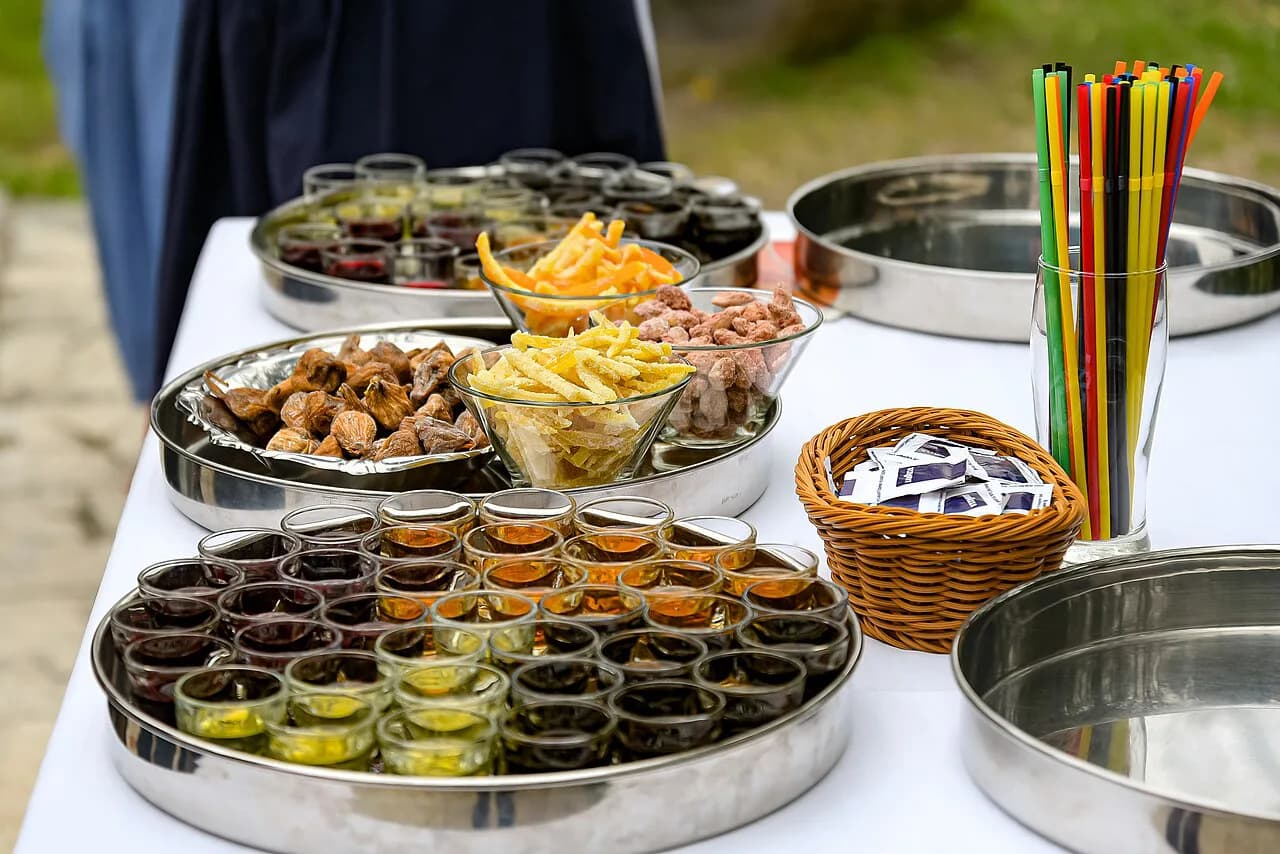
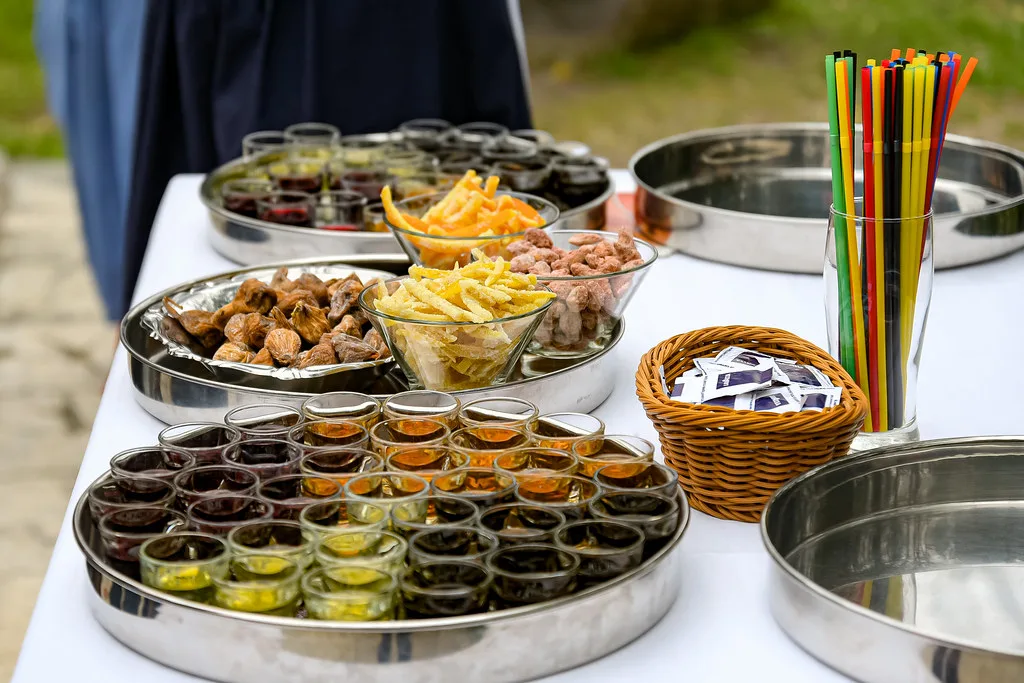
It also covers produce you buy rather than order. Croatian olive oil, cheese, cured ham and honey are all part of the same table. A deli or market stall is the practical place to buy them, and tasting before you commit is part of the ritual on many counters.
Decide early whether you want restaurant dishes or picnic food, because they come from different places. The dishes below are grouped that way, so you can jump to the ones that match the meal in front of you.
Seafood from the Adriatic: what to order and how it is cooked
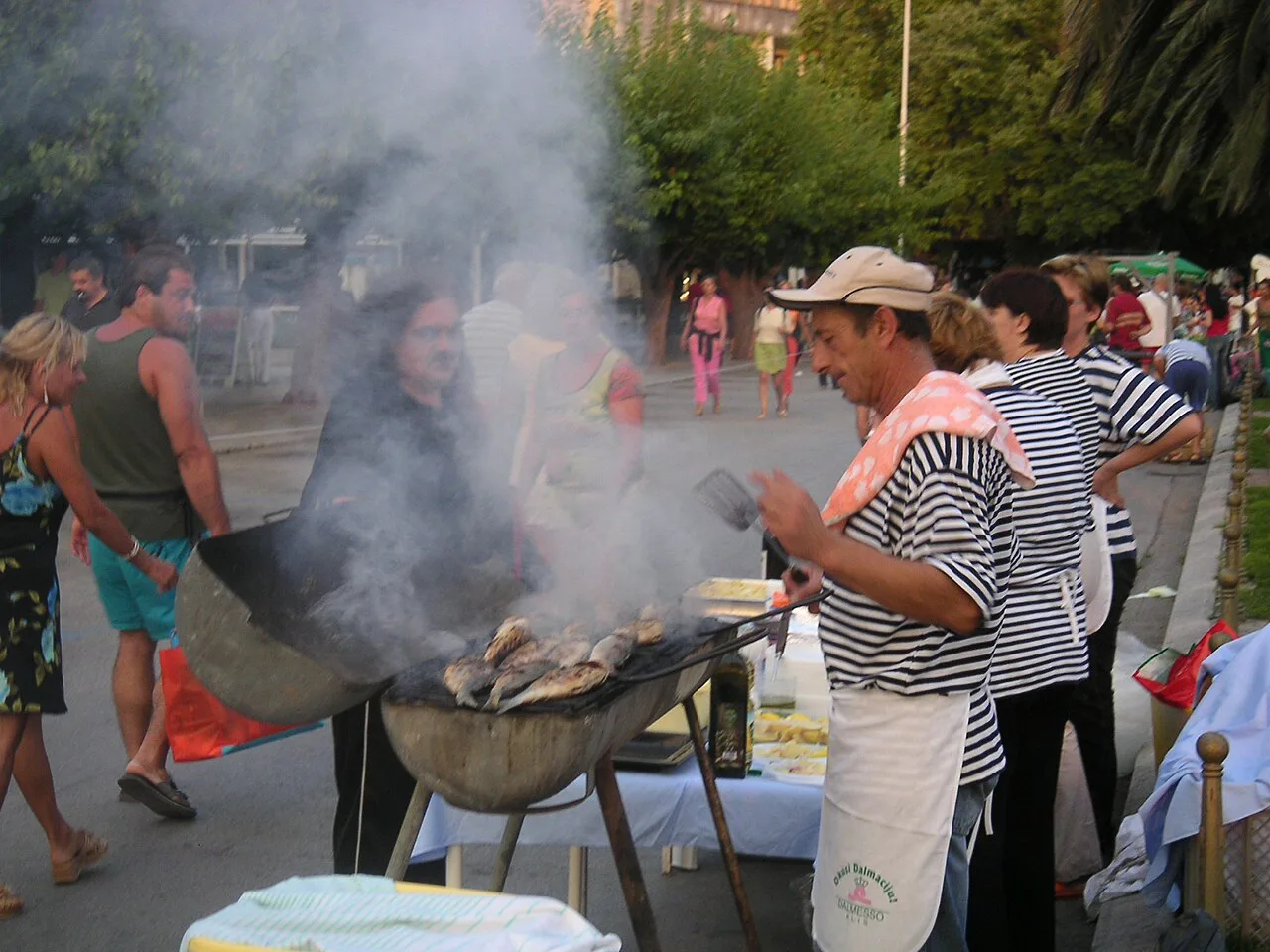
Seafood is the strongest card on the Croatian coast. Black risotto, grilled squid, shellfish na buzaru and whole grilled Adriatic fish are all standard, and each shows a different cooking approach. Sea bass, sea bream and John Dory are common choices, usually grilled whole and served simply with vegetables or potatoes, and many coastal restaurants display the day's catch before you order.
The cooking style matters more than the species. Buzara means the shellfish has been cooked with olive oil, garlic, white wine and parsley, sometimes with tomato or breadcrumbs, so you are choosing a sauce rather than a particular shellfish. That is worth knowing before you ask what is in the pot.
Simpler plates, such as grilled squid with potatoes, give you an Adriatic seafood meal without the whole-fish presentation and picking around bones. Order it when you want a straightforward plate and more room for a dessert.
Black risotto (crni rižot): cuttlefish ink, squid and garlic
Crni rižot is a risotto coloured almost jet black by squid or cuttlefish ink, cooked with squid, garlic, onion, olive oil and white wine. The ink is what makes the dish, giving a rich, creamy rice with a strong seafood flavour.
It looks alarming and tastes better than it looks. The ink will almost certainly stain your lips and teeth, so it is a poor choice before a long afternoon of photographs. Order it as a first course or a light main, not both.
Because the rice is cooked with the ink rather than tossed in it, the colour runs right through the grains. If the plate in front of you is white rice with dark sauce pooled on top, it is a different dish.
Shellfish na buzaru: a method, not a species
Na buzaru describes how shellfish are cooked, not a type of shellfish. Mussels, clams or prawns go into olive oil, garlic, white wine and parsley, and some versions add tomato or breadcrumbs. The result is a thin, garlicky sauce that is the real point of the dish.
Bread is the essential partner and can disappear quickly. Ask for more early rather than watching the sauce go back to the kitchen, and order a bowl of it if the table is sharing. This is the one dish where a side of bread genuinely is the side.
Order it as a starter to share, because the portion of sauce is generous and the shells take time. In a group of four, two bowls alongside a fish main makes more sense than four individual portions.
Grilled squid (lignje na žaru) and whole Adriatic fish
Grilled squid appears on menus along the whole coast, usually dressed with olive oil, garlic and parsley and served with seasonal vegetables or potatoes. It relies on the quality of the Adriatic catch and little else, which makes it a good test of a kitchen.
Whole fish is the same idea at a higher price. Expect it scaled, gutted and grilled, with lemon and oil on the side rather than a sauce, and eat it off the bone. It is a slow, hands-on plate that works best as the centre of a long lunch.
Mussels and clams are common, and Ston, on the Pelješac peninsula near Dubrovnik, is the best-known oyster ground in Croatia. Eat them raw with lemon where they are offered, or order them grilled if you prefer. If you are basing yourself in the city, our Dubrovnik guide covers what to eat there, from seafood to sweets.
Slow-cooked meat: pašticada with gnocchi
Pašticada is a Dalmatian speciality of beef marinated before being slow-cooked for hours in a sauce of red wine, vegetables and spices. It comes with homemade gnocchi, which are there to soak up the sauce. The beef should be tender enough to cut with a fork and the sauce rich without being heavy.
Order it as a main and skip a starchy first course, because the gnocchi are filling. It is the dish to choose in Split or elsewhere in Dalmatia when you want the inland, slow-cooked side of Croatian food.
If you have been eating seafood for days, pašticada is the reset. It also suits cooler evenings and inland konobas, where the kitchen has often been making it for longer than you have been in the country.
Peka: meat or seafood cooked under a domed lid
Peka is a cooking method rather than an ingredient: meat, seafood or vegetables are cooked under a domed metal lid covered in embers. It is a shared dish best ordered for a group, and it takes time to cook, so order it early rather than deciding as the waiter arrives.
Choose it when there are at least three of you and you have time to wait. For a couple, it often means a large amount of food and a long sit; a smaller peka shared between two leaves room for a vegetable or salad alongside.
It is most often found at a rural konoba or an agroturizam rather than a city-centre terrace, where the kitchen fires a peka for the whole room.
Ćevapi: skinless grilled sausages with flatbread and onion
Ćevapi are small skinless grilled sausages, served with flatbread and chopped onion, and they appear across Croatia as well as in neighbouring Bosnia and Herzegovina. They are a quick, cheap and filling order, closer to fast food than to a long dinner.
Order them with raw onion and a cold drink, and add ajvar or kajmak if the menu offers them. A portion is usually enough for one hungry person, so ask before ordering two.
If the children or the fussy eaters at the table have tired of fish, ćevapi are the safe, familiar option that most kitchens do well.
Baked and savoury specialities: soparnik and burek
Burek is thin pastry rolled around a filling—usually meat, though cheese and apple versions are common—and sold by weight. It is breakfast or lunch food, eaten hot from the tray, and the best bakery in town is usually the one with a queue at nine in the morning.
Soparnik is a different creature: a thin savoury pie from the Dalmatian hinterland, folded over a filling of chard or spinach and onion. It is a vegetarian option that is genuinely traditional rather than an afterthought on the menu.
Both are foods to buy and eat rather than order in a restaurant. Ask for burek sliced or by the piece, and eat it within the hour—it loses its crispness quickly, so a paper bag in the sun is not its friend.
Sweet delicacies: fritule, rožata and kremšnita
Fritule are small fried dough balls, light and dusted with sugar. In coastal towns they turn up on dessert menus and at takeaway stands.
Rožata is a coral-coloured baked custard caramel, similar in spirit to crème caramel. Kremšnita is a cream slice of crisp puff pastry and thick custard, and it can easily replace a whole dessert order.
Order one dessert between two and add a coffee. Croatians take their coffee seriously, and the sweet and the coffee are usually a single ritual rather than two separate courses.
What to drink with Croatian delicacies
A glass of white wine or a light lager with grilled fish and shellfish, and a red with pašticada, is the simple approach. Coffee is the constant that runs from breakfast to the end of a long lunch.
With burek or ćevapi, a yoghurt drink or sparkling water keeps the meal light. Olives, bread and olive oil at the start of a meal are the classic partner and the easiest place to try a local oil for the first time.
How regional differences shape the menu
The coast cooks with olive oil and seafood, while inland Croatia cooks with pork, paprika and slow-cooked stews. The further south you go along the Dalmatian coast, the more the menu leans on fish and shellfish; the further inland, the more you see peka and ćevapi.
Produce follows the same pattern. Pag, off the northern Dalmatian coast, is known for its sheep's cheese, and the island's cheese producers work under its own name. Pag cheese and its sheep, the Pag sheep, are good examples of a regional food you can buy and take home.
Cured meats, truffles, honey and sea salt are all sold by region as well, and a market or a deli stop is the quickest way to taste the difference. If you are driving inland or through Istria, a short visit to a producer is often worth the detour, and many will let you buy directly.
Truffles are the inland-Istrian counterpart to coastal seafood, usually shaved over pasta, eggs or cheese. The aroma fades fast, so buy them late in the trip and keep them cool.
Croatian cheese is not one thing: fresh, hard and smoked versions all sit on the same deli counter. Buy small pieces rather than a large wedge and taste them before you carry them home.
Honey and sea salt are the easiest things to pack for the return, and both are produced in named areas. Buying from the producer rather than the souvenir shop gives you the best chance of knowing where the jar or bag came from.
Which Croatian delicacy to order first
Start with crni rižot or lignje na žaru to get the measure of a coastal kitchen, then book a pašticada dinner inland or in Split. Add burek from a bakery for breakfast and one of the desserts at lunch, and you have covered most of the country in a few days.
If you are staying in one place and eating out often, mix in a deli or market stop so you can taste the cheese, ham, oil and salt that sit behind the restaurant dishes. That is where the delicacies you can carry home live.
Explore more Croatia guides
- Agroturizam in Croatia
- Croatian Bread
- Croatian Cheese
- Croatian Figs
- Croatian Olive Oil
- Kulen: Croatia's Spiced Dry-Cured Sausage
- Mali Ston Oysters
- Olive Oil Tasting
- Paški sir
- Pršut: Croatia's Dry-Cured Ham Explained
- Truffle Hunting in Croatia
- Truffles in Croatia
- Croatian Honey
- Croatian Sea Salt
- Sir i vrhnje
Sources
Notes on eating well in Croatia
Optional updates to our food guides.
You might also like



Continue reading
More guides you'll find useful




