
Skradin Risotto: Croatia's Slow-Cooked Dalmatian Dish
Skradin risotto is a Dalmatian rice dish of veal, chicken and Arborio rice cooked for eight to ten hours. Here is what goes into it and how it is served.
On this page
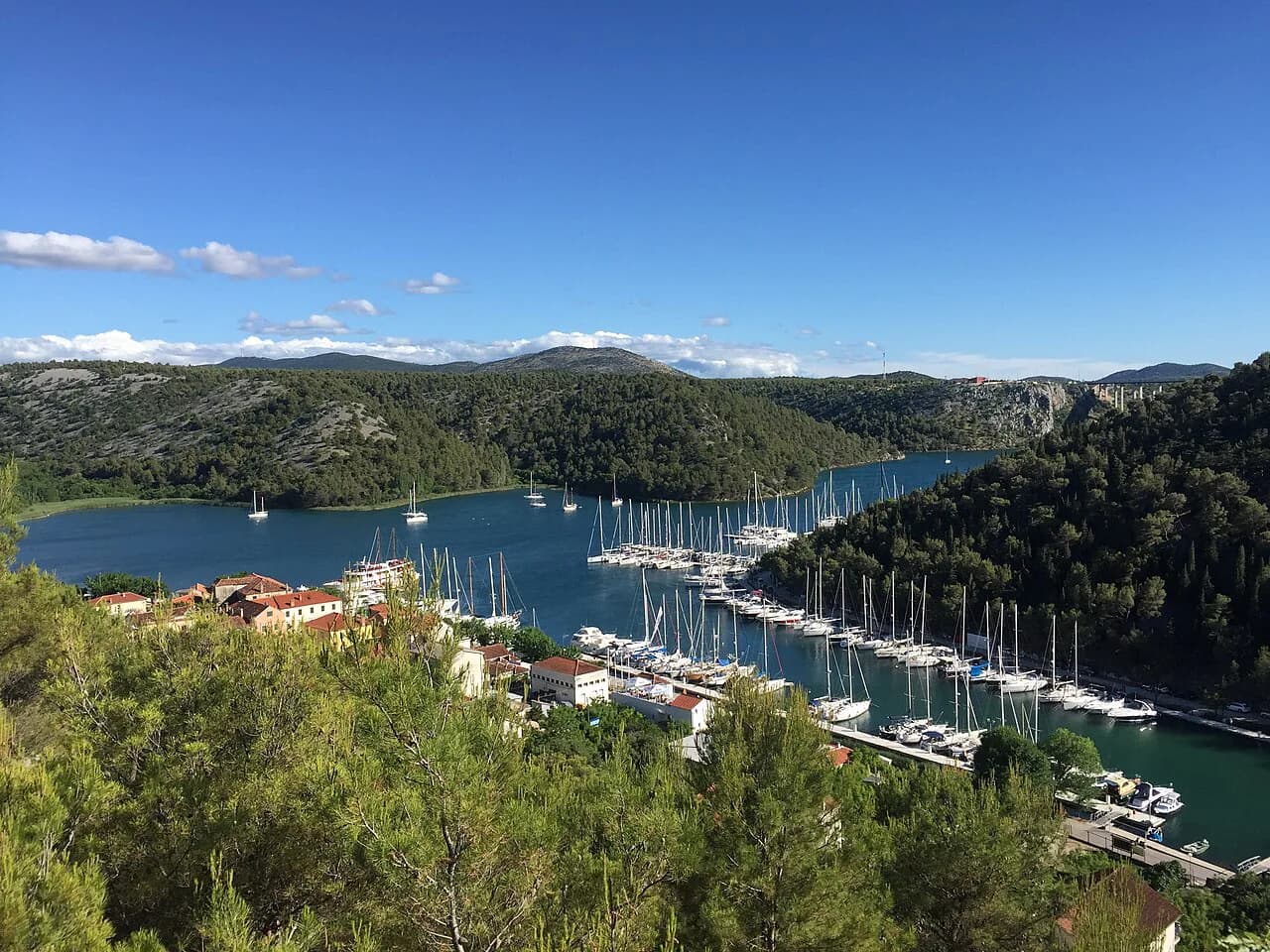
Skradin risotto is a slow-cooked Dalmatian rice dish made with veal, chicken and Arborio rice, and it takes eight to ten hours to prepare. It is the signature dish of Skradin, a small town in Šibenik-Knin County, and it sits in the wider family of Croatian dishes built on patience rather than speed.
This guide explains what goes into Skradinski rižot, why the cooking runs for the better part of a day, how it is finished and served, and how it differs from other Croatian rice dishes. The measurements below follow the quantities published for a traditional pot of about ten portions.
What Skradin risotto is
Skradin risotto, or Skradinski rižot, is a thick, deeply savoury rice dish in which rice is cooked down with veal, chicken and a rich homemade stock until the meat softens into a paste. It is a special-occasion dish rather than an everyday one, which is why it is made in large quantities for a table of family or friends. The town is in the Dalmatian hinterland near Krka, and the dish belongs to continental Dalmatian cooking rather than the seafood tradition of the coast.
The defining feature is the cooking time: the preparation runs for eight to ten hours, which is far longer than any standard risotto. Where a Venetian-style risotto is finished in twenty minutes, this one is built over a whole day, with stock added again and again until the meat and rice reach a soft, almost spoonable texture.
Why it takes eight to ten hours to make
The long cook is not padding; it is what transforms tough cuts of veal into something that melts. Red onions are fried slowly in olive oil for around twenty minutes, salted partway through so they soften, and the diced veal is then stewed with repeated additions of stock. That cycle continues until the meat breaks down into a pasteta-style mixture, at which point tomato purée, diced chicken fillet and nutmeg go in.
Is Skradin risotto the same as black risotto? No. Skradinski rižot is made with veal, chicken and a long-simmered meat stock, giving it a pale, savoury character.
Can you make risotto with veal? Yes, and Skradinski rižot does exactly that. Veal rump is cut into cubes and stewed with stock for hours until it breaks down into a soft paste, which forms the base of the dish before the rice is added.
Why does Skradin risotto take so long to cook? The time goes into the meat and the stock rather than the rice. The onions and veal are stewed with repeated additions of stock until the meat nearly dissolves, and only then does the Arborio rice go in to finish cooking, which is why the whole process is measured in hours rather than minutes.
The rice only joins the pot once that meat base is ready, and it is then cooked by adding stock until the grains are done. That sequencing explains the time: the base and the stock each need hours before the rice can start. An exact figure will vary between kitchens and pot sizes, but the cook is measured in hours rather than minutes.
The ingredients: veal, chicken, Arborio rice and stock
For roughly ten people, the traditional quantities are 0.5 kg red onions, 1.5 kg veal rump cut into 3×3 cm cubes, 300 g chicken fillet and 1.5 kg Arborio rice. Olive oil, finely chopped parsley, half a cup of local Prošek wine and grated sheep's cheese or Parmesan complete the list, with several knobs of butter stirred in at the end.
The stock is a project in itself and is made with local chicken backs and upper thighs, plenty of root vegetables including carrots, parsley, celery and parsley leaf, a leaf of Savoy cabbage and white cabbage, and small tomatoes. Everything goes into a large pot and simmers gently, half-covered, for as long as possible. Good local ingredients matter as much as the time, and the tourist board is explicit that good company helps too.
How it is cooked, step by step
Start with the onions: fry them in olive oil for twenty minutes, salting after ten so they soften rather than colour too fast. Add the cubed veal and stew it, topping up with stock each time the pan gets dry, until the meat is almost cooked away into a paste.
Next stir in tomato purée, the cubed chicken fillet and grated nutmeg, with a little chopped dry-cured ham if you like. Bring the mixture briefly to the boil, add the Arborio rice and ladle in stock until the rice is cooked, seasoning with salt, pepper, nutmeg and parsley.
Finish with half a cup of Prošek and grated sheep's cheese or Parmesan, then stir in the butter off the heat and let the pot stand for a few minutes before serving. The rest lets the rice settle and the flavours come together, which is why the final stir is not rushed.
Prošek and cheese: the finishing flavours
Prošek is a sweet Croatian dessert wine, and a small measure goes into the risotto right at the end to add depth rather than sweetness. It is a Dalmatian staple, and using it here ties the dish to the region around Skradin.
The cheese is listed as grated sheep's cheese or Parmesan, so either works and the choice depends on what the kitchen has to hand. Butter goes in after the cheese for aroma, and the finished risotto is topped with more grated cheese at the table.
How it is served: grated cheese and a fuller red wine
Skradinski rižot is served in deep plates, dusted with grated cheese and accompanied by a fuller-bodied red wine. The cheese on top reinforces the savoury, slow-cooked character of the dish, and the wine is chosen to stand up to the rich veal and chicken base rather than to be sipped lightly alongside it.
Portions are generous by design because the recipe is built for about ten people, and a single serving is dense enough that a starter is rarely needed. Order it as a main course and keep the rest of the meal simple. Note that the pot takes the best part of a day, so a restaurant serving it will want notice ahead of your visit.
Traditionally made by men in Skradin, and Bourdain's role
In Skradin, Skradinski rižot is traditionally prepared by men, and the cooking is a social affair built around a large pot and a long day. The dish became known well beyond Dalmatia after Anthony Bourdain featured it on his television series No Reservations, which turned a local speciality into one of the region's gastronomic icons.
That exposure explains why visitors now seek the dish out, but the recipe itself remains a home and celebration dish rather than restaurant fast food. If you want to eat it, ask ahead rather than expecting to find it ready to order on a whim, since the pot needs a full day's cooking.
Skradinski rižot versus other Croatian rice dishes
The closest comparison on most menus is black risotto, or crni rižot, which is made with cuttlefish ink and squid and carries a briny, dark character entirely unlike the meaty, cheesy flavour of Skradinski rižot. Both are Dalmatian, but one comes from the sea and the other from the inland pot.
Other Croatian slow-cooked dishes share the same logic of long, gentle heat, including peka, where meat or fish is cooked under an iron bell, and pašticada, a marinated beef fricandeau stewed for hours in a sweet-sour sauce. Skradinski rižot is unusual in that the slow cooking happens on the hob with constant additions of stock rather than in a sealed vessel, which is why it needs a cook in attendance rather than a timer.
Should you seek out Skradinski rižot?
Yes if you want to taste a dish that is genuinely built around time rather than convenience. Skradinski rižot is a Dalmatian icon for a reason: the veal, chicken and stock reduce into something far richer than its short ingredient list suggests, and finishing it with Prošek and cheese gives it a character you will not find in a standard risotto.
Go in knowing what you are ordering. It is a heavy, meaty main course best shared at a table, not a light lunch, and it rewards anyone who plans the meal around it. For the practical details, see the burek.
Explore more Croatia guides
Frequently Asked Questions
Is Skradin risotto the same as black risotto?
No. Skradinski rižot is made with veal, chicken and a long-simmered meat stock, giving it a pale, savoury character. Black risotto, or crni rižot, is made with cuttlefish ink and squid, which gives it its dark colour and a briny seafood taste.
Can you make risotto with veal?
Yes, and Skradinski rižot does exactly that. Veal rump is cut into cubes and stewed with stock for hours until it breaks down into a soft paste, which forms the base of the dish before the rice is added.
Why does Skradin risotto take so long to cook?
The time goes into the meat and the stock rather than the rice. The onions and veal are stewed with repeated additions of stock until the meat nearly dissolves, and only then does the Arborio rice go in to finish cooking, which is why the whole process is measured in hours rather than minutes.
Sources
Notes on eating well in Croatia
Optional updates to our food guides.
You might also like



Continue reading
More guides you'll find useful





