
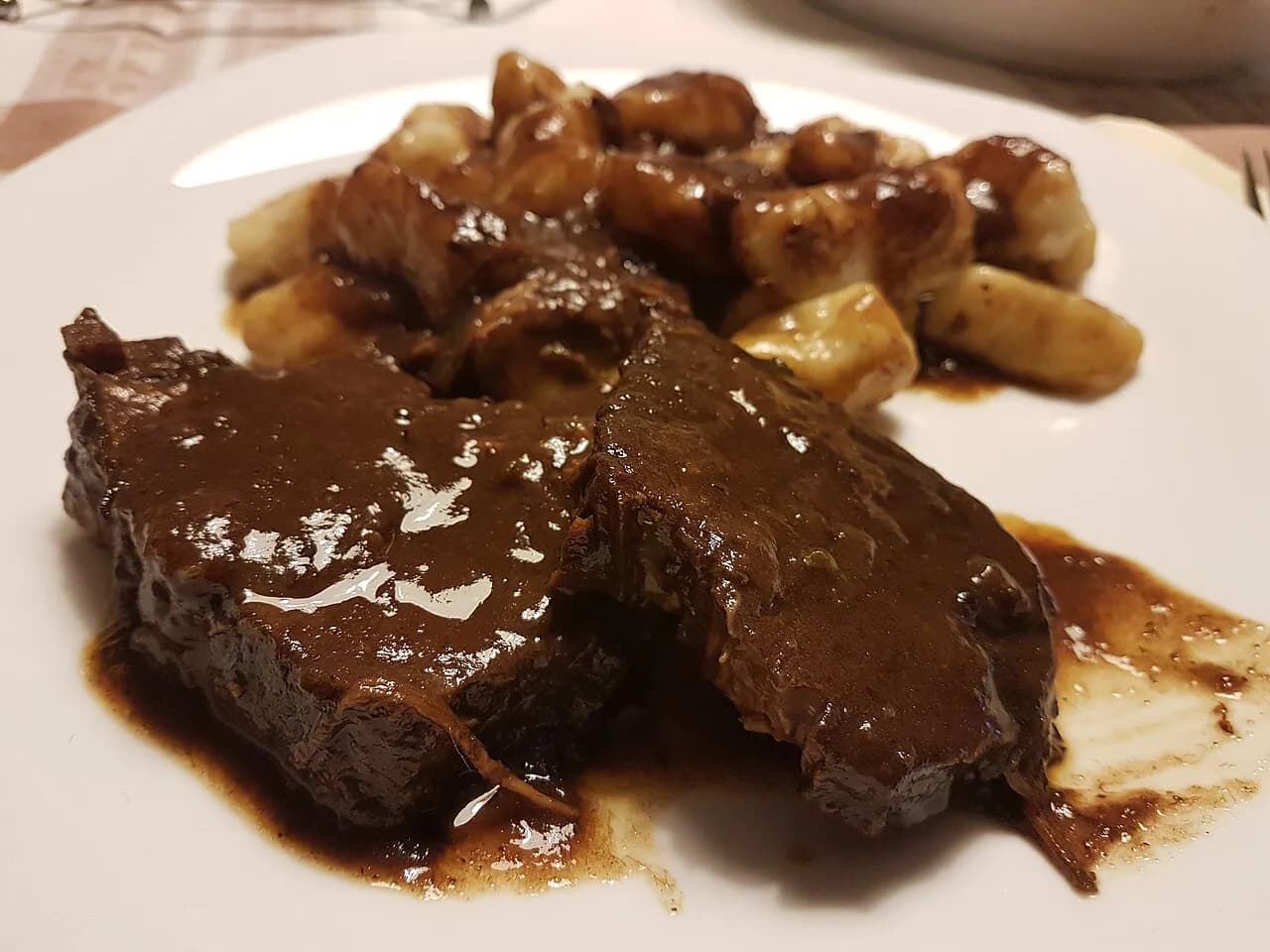
Pašticada: Croatia's Dalmatian Beef Stew Explained
Pašticada is Dalmatian beef marinated in spiced wine, braised slowly with prunes and served with gnocchi. Here is what the dish is and how it tastes.
On this page
Pašticada is a Dalmatian beef stew: a single cut of beef marinated in wine and vegetables, larded with pancetta and root vegetables, then braised slowly until the sauce turns dark, silky and sweet-sour from prunes. It is the dish to order when you want to understand Dalmatian home cooking in one plate, and it almost always arrives with gnocchi. This guide covers what goes into it, why it tastes the way it does, when Croatians cook it and how to order it without surprises.
What pašticada is
Pašticada is beef, not a mixed stew: the classic version uses a single boneless cut, described in one Dalmatian recipe as beef fricandeau, which is stuffed and then braised whole before being sliced. That is the first thing that separates it from a everyday beef goulash, where cubed meat simmers in paprika. The second is the marinade, which does most of the flavouring before the pot is even heated.
The dish belongs to Dalmatia, the coastal strip and hinterland of southern Croatia, and it carries a festive reputation rather than an everyday one. In Dalmatian households it is cooked for weddings, New Year's Eve and anniversaries, which is why it turns up on celebration menus more often than on a quick lunch card. For a visitor, that context matters: pašticada signals a kitchen cooking something with care, and the price usually reflects it.
In English, the simplest description is marinated braised beef in a wine and prune sauce. Menu listings sometimes label it Dalmatian pašticada, and Dalmatia is where the dish is most closely associated, though versions are cooked across Croatia. If you see it written as pašticada with gnocchi, that is the standard serving, not a variation.
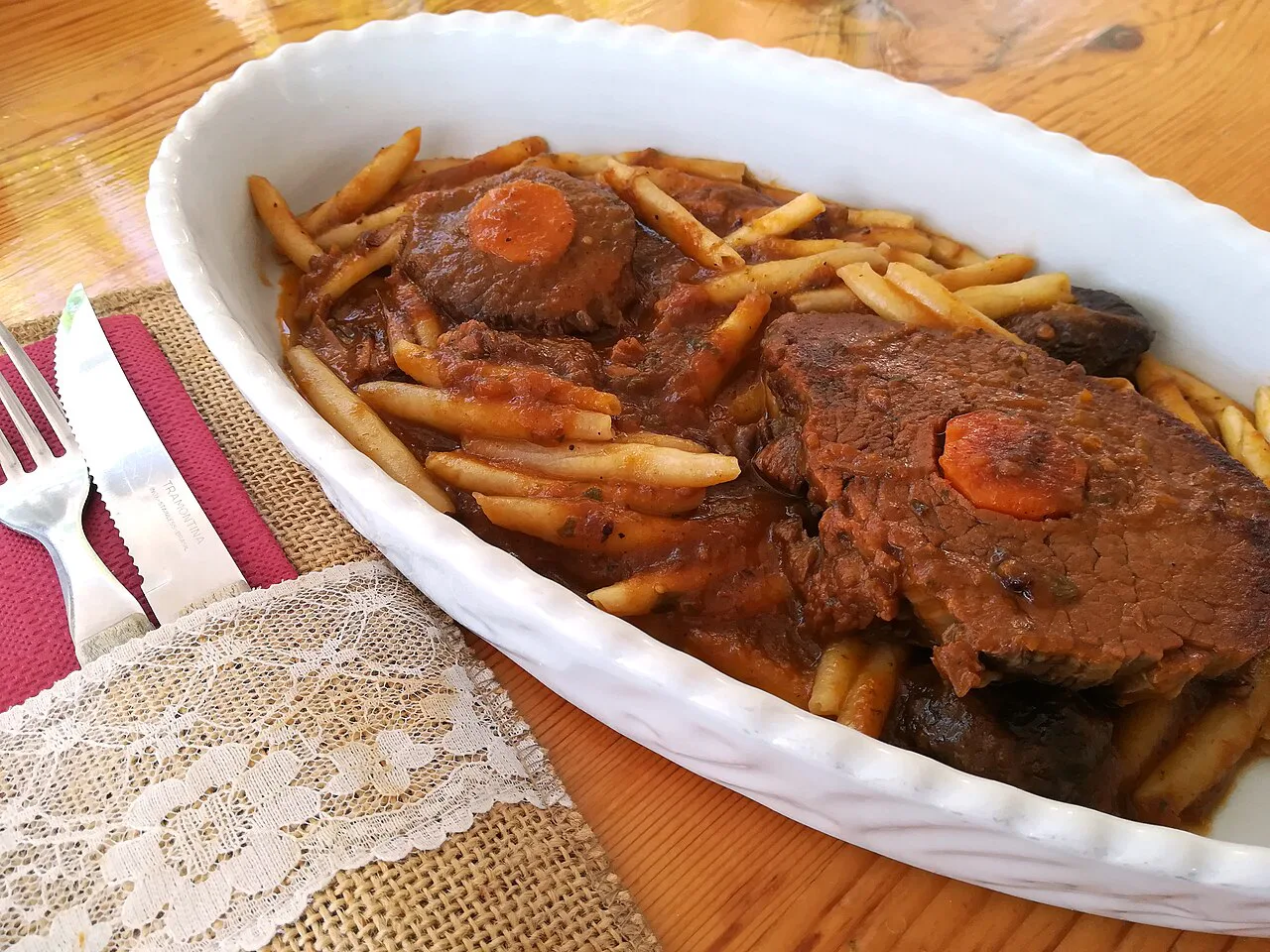
How pašticada is made: marinade, larding, long braise
The first stage is the marinade. The beef sits in red wine with chopped carrot, celery root, onion, garlic, bay leaves, peppercorns and cloves, and it needs at least eight hours in the fridge, turned now and then, so most cooks start the day before. The wine does two jobs here: it seasons the meat and it becomes part of the braising liquid once the vegetables are sweated down.
How do you pronounce pašticada? Roughly pash-tee-TSAH-da, with the stress on the third syllable. The š is pronounced sh, and the c before the a is a ts sound.
What is pašticada in English? It is Dalmatian marinated beef: a single cut of beef rested in a spiced red-wine marinade, larded with pancetta and vegetables, then braised slowly with prunes until the sauce is dark and silky. It is usually served with gnocchi, sometimes with pasta or polenta.
What is Dalmatian pašticada with gnocchi? It is the standard serving of the dish: sliced braised beef in its prune and wine gravy, with potato gnocchi alongside to soak up the sauce. The gnocchi are usually plain, and you spoon the gravy over them at the table.
The detail that defines pašticada is the larding. Small slits are cut into the beef and packed with sticks of pancetta, carrot, celery and garlic, so the meat is seasoned from the inside as it cooks and slices into neat rounds with a mosaic of vegetables through them. Skip that step and you have a good beef stew, but not pašticada.
Then comes the braise. The marinated beef is dried, salted and seared hard for a dark crust, then returned to the pot with the softened vegetables, tomato paste, stock and a splash of prošek. It simmers gently for two to three hours, after which the sauce is strained or blended smooth, the meat sliced, and everything goes back in the pot for a final fifteen to twenty minutes so the slices absorb the gravy.
Recipe timings vary, and they are worth reading as a guide to effort rather than a schedule. One Dalmatian recipe lists an hour of preparation, four hours of cooking and five hours in total for eight servings, which tells you the dish rewards a free afternoon. That long, low cooking is why the beef ends up spoon-tender and the sauce thick enough to coat gnocchi.
What pašticada tastes like
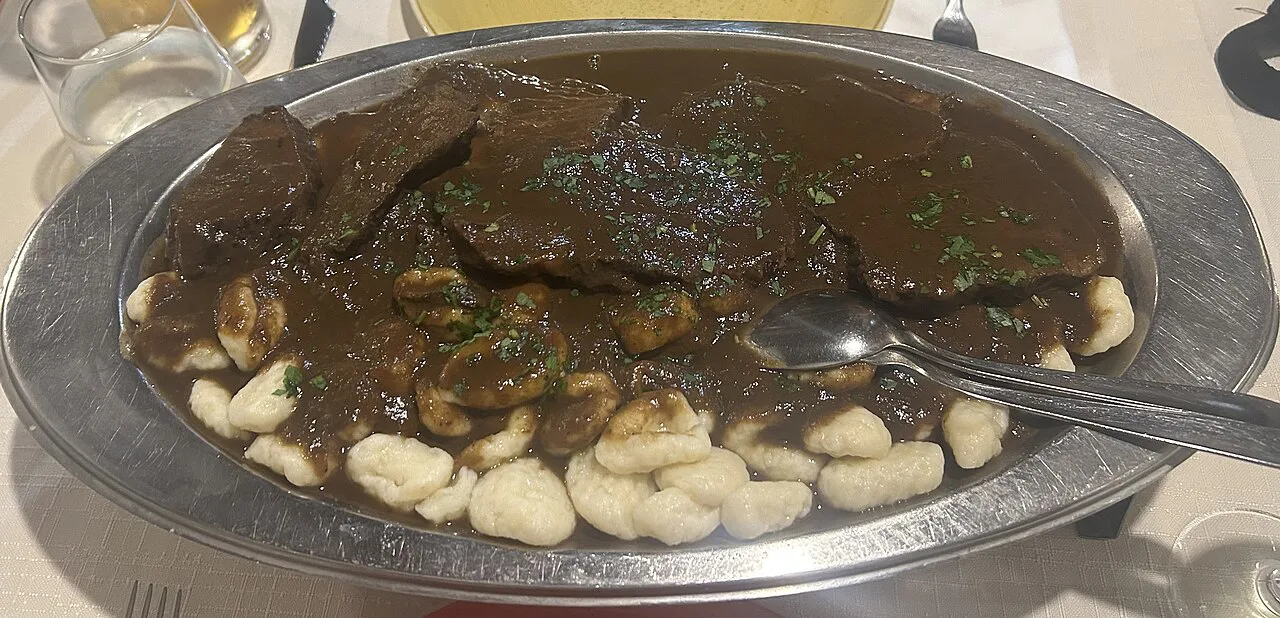
The flavour is deep and savoury first, then sweet-sour at the edges. Prunes or dried figs melt into the sauce and give it a fruity darkness, while the wine, vinegar-like notes from the marinade and the slow-reduced tomato keep it from turning sweet. It is rich but not heavy in the way a cream-based stew is, and the silkiness of the strained gravy is the thing most first-timers remember.
Expect the sauce to be the point of the plate, not a garnish. It is dark, glossy and thick enough to cling, with the sliced beef laid through it rather than piled on top. A Dalmatian recipe strains or blends the sauce smooth and returns the sliced meat to it for a final simmer, so the gravy coats every piece. Because the meat was larded, each slice carries a little salty hit of pancetta against the sweet fruit, and that contrast is the whole trick of the dish.
First-time eaters often expect a plain pot roast and are surprised by the fruit. If you normally avoid sweet-savoury combinations, order it once before deciding: the prune flavour reads more like a deep wine reduction than a dessert. The gnocchi underneath soak up the gravy and soften the intensity, which is precisely why they are the default accompaniment.
How pašticada is served
Pašticada most commonly comes with homemade gnocchi, the small potato dumplings that mop up the sauce without competing with it. Pasta or polenta are the accepted alternatives, and either works if the kitchen offers it. The gnocchi are usually plain and unsauced on the side, so you spoon the gravy over yourself at the table.
A portion in a konoba is a full main course, not a starter, and it is a slow-eating plate: sliced beef, a generous ladle of sauce and a pile of dumplings. Because the cooking is long and the cut is a good one, it tends to sit at the higher end of a menu rather than the cheaper end, so it is the dish to choose when you plan one substantial sit-down meal rather than a quick bite.
To drink, the natural match is a red wine from the same coastal region, and a small glass of prošek, the Dalmatian dessert wine, works after the meal rather than alongside it. Keep it to one glass if you are driving. Water and bread on the table do just as well with the sauce.
When Croatians eat pašticada
This is festive food. Pašticada is cooked for weddings, New Year's Eve and anniversaries, occasions when a household has time and a reason to spend an afternoon at the stove. That is why it appears on celebration menus and Sunday-style tables more than on a weekday lunch list.
For a visitor, that means it is a good dish to order when you want a proper sit-down meal rather than a quick plate between sights. It also means availability can be uneven: a kitchen that cooks it properly needs hours, so it may appear only on certain days or as a special. Ask what is on before you settle in, and treat a yes as a good sign about the kitchen.
Pašticada on a Croatian menu
The name is usually written as pašticada, and Dalmatian pašticada is a common alternative label. Read the rest of the description for the giveaway words: prunes or dried figs, red wine, and a slow-cooked or braised note. If the menu describes a beef stew with dumplings but no fruit or wine, it is probably something else.
Pronunciation helps when you order aloud: roughly pash-tee-TSAH-da, with the stress on the third syllable. Pointing at the menu is entirely acceptable, and staff are used to visitors asking how a dish is made. If you want the sauce on the side or extra gnocchi, ask when you order rather than after the plate arrives.
One menu point worth knowing: the classic pašticada recipe carries none of the fourteen EU allergens, so it is a reasonable choice if you are avoiding the usual suspects. That describes the traditional recipe itself; if the kitchen adds pasta, cream or a different side, ask about the specific ingredients.
Related Dalmatian dishes to try alongside it
Buzara is the seafood counterpart: mussels or langoustines cooked briefly in olive oil, garlic, parsley and white wine, sometimes with tomato and a scatter of breadcrumbs to thicken the juices. It is fast where pašticada is slow, and it is the dish to order if you want the sea rather than the land. Serve it with bread or polenta and keep the rest of the meal light.
Čičvarda is a chickpea stew with smoked bacon, softened with onion, carrot, potato and tomato, and it is the kind of one-pot winter food Dalmatians cook on cold days. It is cheap, filling and often better on the second day. If pašticada feels too rich for the weather, this is the plate to swap in.
Finish with rožata, the Dalmatian caramel custard also known as Dubrovačka rožata. It is a baked custard turned out of its mould with a dark caramel top, light enough after a beef stew. Order one between two if you have already eaten a full portion of pašticada and gnocchi.
Beyond Dalmatia, the wider canon of Croatian dishes runs from coastal fish stews to inland bakes and pasta, and it is worth learning a few names before you travel. A plate of burek from a bakery is a cheap breakfast, while peka, meat or fish cooked under an iron bell, is the celebratory option in many konobas. Knowing what each dish involves makes ordering faster and more rewarding.
Making pašticada at home
The two-stage method is not negotiable if you want the real thing: an overnight marinade, then a long braise. Start the marinade the day before you plan to eat, and use a cut that holds together through hours of cooking. A single piece of beef rather than cubes is what allows the larding and the neat slicing later.
For the shopping list, you need beef, red wine, carrot, celery root, onion, garlic, pancetta, tomato paste, bay leaves, peppercorns and dried prunes or figs. Prošek or a splash of dessert wine goes in towards the end, and stock or water keeps the pot from drying out. None of it is exotic; the cost is in the time.
Cook it a day ahead if you can. Like most braises, it improves overnight as the sauce settles, and reheating gently slices of beef in gravy is far easier than serving a whole piece at the table. Boil the gnocchi at the last minute so they stay light rather than gluey.
Order pašticada when you want the slow plate
Pašticada is the dish to choose when you want one proper Dalmatian meal rather than a quick bite: marinated beef, pancetta and root vegetables inside, prunes and wine in the gravy, gnocchi underneath. It is festive cooking, so expect it on celebration menus and specials rather than every lunch card.
If it is not on the menu, buzara, čičvarda and rožata give you the same Dalmatian kitchen in faster, lighter forms. Order one of those, keep an eye out for pašticada the next day, and you will have covered both the everyday and the celebration ends of the coast's cooking.
Explore more Croatia guides
Frequently Asked Questions
How do you pronounce pašticada?
Roughly pash-tee-TSAH-da, with the stress on the third syllable. The š is pronounced sh, and the c before the a is a ts sound. Saying it slowly usually gets you there, and pointing at the menu is fine too.
What is pašticada in English?
It is Dalmatian marinated beef: a single cut of beef rested in a spiced red-wine marinade, larded with pancetta and vegetables, then braised slowly with prunes until the sauce is dark and silky. It is usually served with gnocchi, sometimes with pasta or polenta.
What is Dalmatian pašticada with gnocchi?
It is the standard serving of the dish: sliced braised beef in its prune and wine gravy, with potato gnocchi alongside to soak up the sauce. The gnocchi are usually plain, and you spoon the gravy over them at the table.
What are some traditional Croatian dishes to try with it?
Alongside pašticada, look for buzara, shellfish cooked quickly in white wine, garlic and breadcrumbs; čičvarda, a chickpea and smoked bacon stew; and rožata, a caramel custard to finish. Inland, burek from a bakery and peka cooked under an iron bell are the other names worth knowing.
Sources
Notes on eating well in Croatia
Optional updates to our food guides.
You might also like



Continue reading
More guides you'll find useful





