
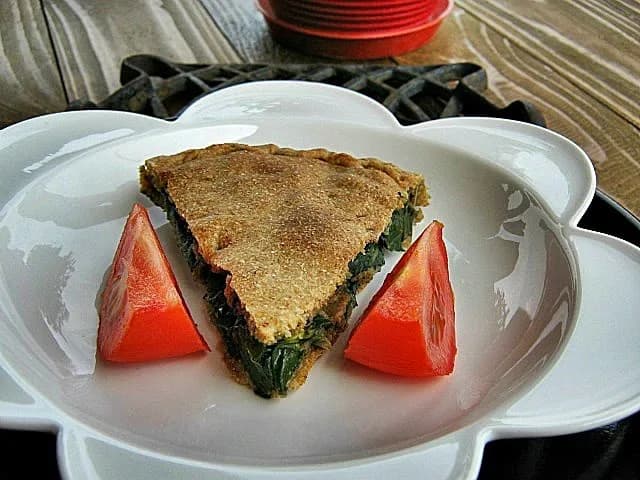
Soparnik: Croatia's Chard Pie and How to Eat It
Soparnik is a thin Croatian pie of Swiss chard and onion baked between two sheets of plain dough, cut into diamonds and finished with olive oil.
On this page
Soparnik is a thin savoury pie from Dalmatia, filled with Swiss chard and onion and baked between two sheets of plain flour-and-water dough. Order it warm, cut into diamonds with a slick of olive oil, and you have one of the few traditional Croatian dishes that is green, meat-free and dairy-light. This guide covers what soparnik tastes like, how it is made, the other names it appears under and why it is not Croatian pizza.
If you are working through the menu one dish at a time, it sits comfortably alongside the wider list of Croatian dishes, from stews and grilled fish to the pastries you buy before the restaurant opens. Soparnik is the one that looks like a pie and eats like a flatbread, and it is worth knowing before you sit down.
What Soparnik Is
Soparnik is a savoury pie made of two thin rolled sheets of dough pressed together around a filling of Swiss chard and onion. It belongs to the wider body of Croatian dishes that come out of a simple oven, and it is eaten as a starter, a snack or a light lunch. The filling is greens-led: chard first, then onion, with parsley in most home versions.
What Soparnik Tastes Like and How It Is Served. Soparnik is served warm rather than hot from the oven, and the classic cut is a diamond, made by slicing the round into strips and then on the diagonal.
How Soparnik Is Made. The dough is the simplest part: flour, water and salt, rolled out with no proofing and no yeast.
The Other Names: Soparnjak, Zeljanik, Uljenjak. On a Croatian menu, soparnik can appear as soparnjak, zeljanik or uljenjak, and the three names point at the same family of greens pie.
Swiss chard is the traditional green here, and that matters on a menu: chard tastes earthier and slightly more bitter than spinach, so a soparnik made properly is not a bland greens pie. It is described as a savoury pie filled with Swiss chard and onion, and it also goes by the alternative names soparnjak, zeljanik and uljenjak.
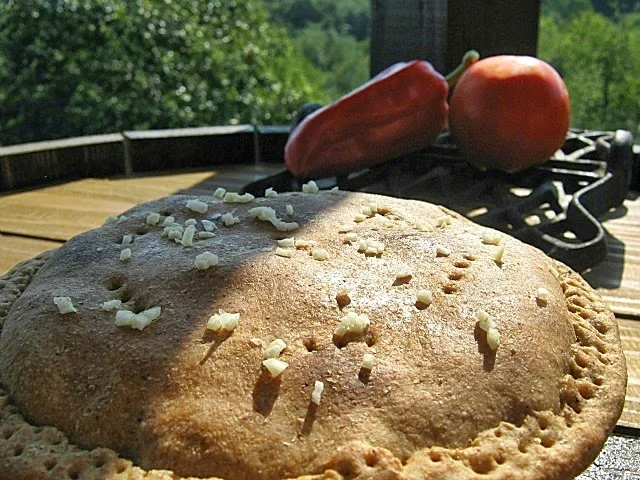
What Soparnik Tastes Like and How It Is Served
Soparnik is served warm rather than hot from the oven, and the classic cut is a diamond, made by slicing the round into strips and then on the diagonal. That shape is not decoration: it gives you edges with a bit of crispness and a soft middle, so each piece has a little bite and a little give. A drizzle of extra virgin olive oil on top is standard.
The flavour is green and savoury rather than rich. Chard and onion cook down into something distinctly vegetal, and the dough around them stays thin and chewy rather than bready. Home cooks sometimes use kale in place of chard, and this Croatian kale-pie version serves it warm with a final drizzle of extra virgin olive oil, which is the right instinct for the eater too.
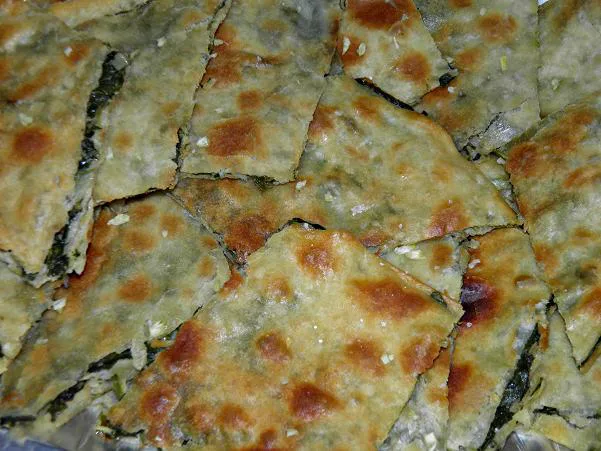
How Soparnik Is Made
The dough is the simplest part: flour, water and salt, rolled out with no proofing and no yeast. One home recipe makes the point that the dough is not even proofed, unlike pizza. Two thin sheets are rolled, the filling goes between them, and the edges are sealed before baking.
The filling is finely chopped chard or similar greens, onion, garlic and parsley, dressed with olive oil and seasoning. The top sheet is pressed down firmly to push out air, a few holes are pricked in the surface, and the pie bakes until the dough is lightly browned. Home recipes give oven temperatures and timings for domestic kitchens, not restaurant practice, so treat any figures you see online as guidance for cooking at home.
The Other Names: Soparnjak, Zeljanik, Uljenjak
On a Croatian menu, soparnik can appear as soparnjak, zeljanik or uljenjak, and the three names point at the same family of greens pie. Zeljanik comes from the word for greens, and uljenjak from the word for oil, which tells you what the finish is. All four names are recorded for the dish.
That matters practically: if you are scanning a menu in Dalmatia and see zeljanik or uljenjak, the description of chard and onion between two sheets of dough tells you more than the name does. The same instinct applies when you order burek, another pastry where the name and the shape carry as much information as the filling.
Soparnik and Pizza: Why They Are Not the Same
Soparnik is often described as a Croatian pizza, but that comparison only holds for the shape. Pizza has a yeasted, proofed base, a tomato layer and cheese on top; soparnik has none of the three. There is no tomato, no cheese and no risen dough, so the texture is thin, pliable and a little chewy rather than crisp-crusted and airy.
The consequence for ordering is that soparnik is a greens dish, not a cheese-and-carbohydrate one. It will not fill you the way a pizza does, which is why it works best as an opener shared across the table before a fish or meat main. If you want the fuller, slow-cooked end of the Dalmatian repertoire instead, look at peka, Croatia's iron-bell dish.
Is Soparnik Vegetarian or Vegan?
Soparnik is vegetarian by construction, and in its classic form it is made without meat, cheese, egg or dairy: dough of flour, water and salt, filling of chard, onion, garlic and parsley, finished with olive oil. For a vegetarian traveller in Croatia who has spent a week negotiating around pršut and grilled fish, this is the dish you can order without a single follow-up question.
Treat that as a baseline rather than a guarantee at every table. Some kitchens add a little cheese or serve it alongside something creamy, and bread or pastry dough can vary in what it contains. Asking whether there is cheese in it is a fair question in a restaurant, and it is much easier to ask about soparnik than about a stew.
Where Soparnik Comes From
Soparnik is associated with the Poljica area of Dalmatia, inland behind Split, where the dish is traditionally linked to village ovens and communal baking. That regional root is what makes it different from the generic 'Croatian pizza' label: it is a greens pie from a specific inland Dalmatian setting rather than a coastal seafood dish, and it has a place on the wider table of Croatian dishes, from crni rižot onwards.
By the time a restaurant serves it, soparnik may be baked in a large round and cut to order rather than made individually. If you are ordering across a table of mixed eaters, it is a useful bridge: it suits vegetarians, travels well as a shared starter and does not compete with whatever mains are coming. For a contrast in the other direction, pašticada is the beef fricandeau braised with wine and served with njoki.
Should You Order the Soparnik?
Yes, order it, especially if there is a vegetarian at the table or if you want to start a Dalmatian meal with something green rather than cured. It is light in texture and generous in flavour, and it gives you a second look at chard, a vegetable that does not get much attention in British kitchens. Ask for it warm and share the diamonds before the mains arrive.
Expect it as a starter or a snack rather than a full meal, and expect the name to change with the kitchen. If the menu says zeljanik or uljenjak, it is the same idea; if it says pizza, it is not.
Explore more Croatia guides
Sources
Notes on eating well in Croatia
Optional updates to our food guides.
You might also like



Continue reading
More guides you'll find useful





