
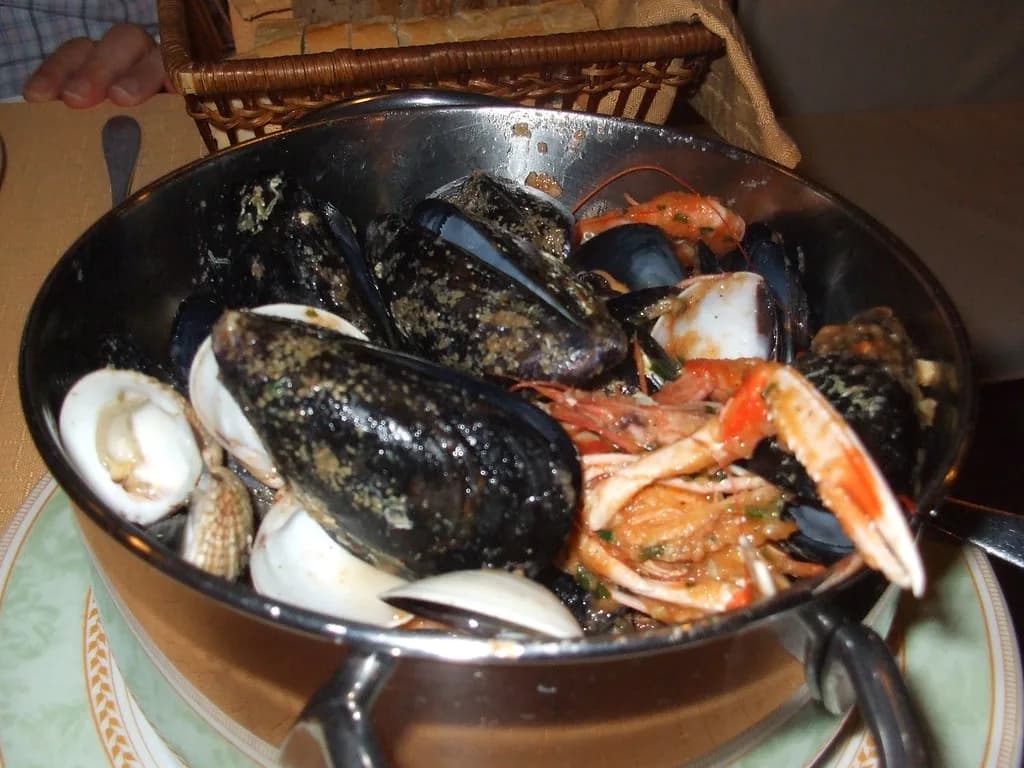
Buzara: Croatia's Dalmatian Way with Mussels, Scampi and Prawns
Buzara is Croatia's Dalmatian technique for cooking shellfish in olive oil, garlic, white wine, parsley and breadcrumbs, with bread to mop the sauce.
On this page
Buzara is Croatia's Dalmatian method for cooking shellfish: mussels, scampi or prawns simmered in olive oil, wine, garlic and fresh herbs, often parsley, with breadcrumbs stirred in to thicken the juices into a sauce. It is a technique applied to whatever shellfish is good that day rather than a single set dish, and that is the key to ordering it well. This guide explains the white and red versions, how each shellfish behaves in the pan, and how the plate arrives.
Two details matter before you order. First, whether the kitchen is cooking the white version or the red one with tomato, because they taste quite different. Second, whether the shellfish comes with its shells on, which determines whether you need your fingers or a fork.
What buzara is
Buzara is defined by its cooking liquid rather than by the shellfish itself. Olive oil, wine, garlic and chopped fresh herbs go into the pan, the shellfish steams in that mixture, and breadcrumbs are sprinkled in to bind the released juices into something you can scoop up. The method is shared across the Croatian coast and appears in Istria and around Trieste and Venice too, which is why you see it written as buzara, busara or alla busara.
Think of it as a family of dishes rather than one recipe. The same technique works on mussels, scampi, prawns and langoustines, and the cook adjusts the sauce to suit. For a broader survey of what else arrives on a Croatian fish menu, see the guide to Croatian seafood, where buzara sits alongside griddled fish, stews and cold starters.
White buzara and red buzara: what changes
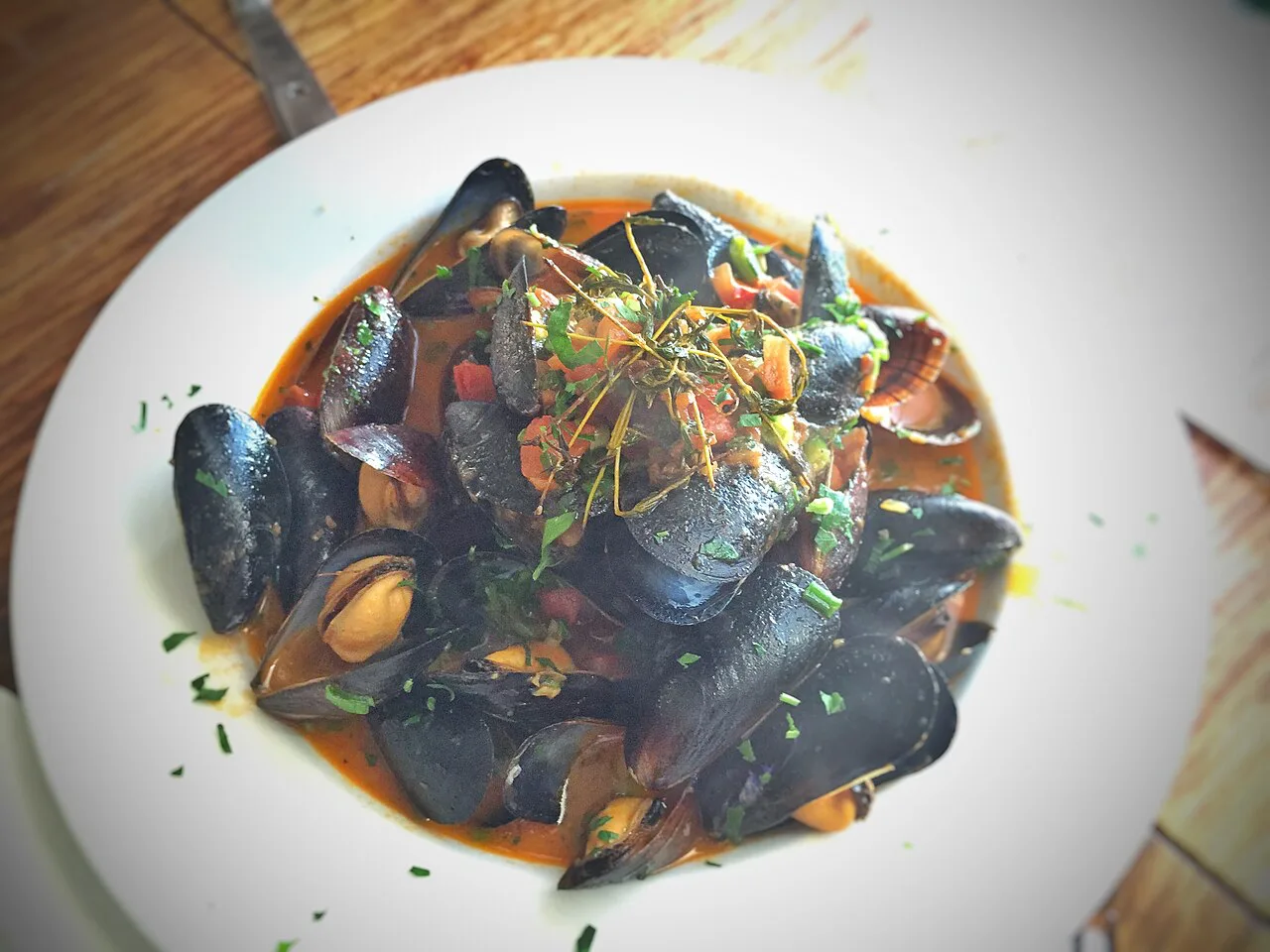
The white version is the simpler of the two: olive oil, garlic, white wine, fresh parsley and breadcrumbs, nothing more. The red version adds finely chopped onion and tomato, giving a fuller, sweeter sauce. The red style is a variation most commonly used with langoustines.
What are buzara style mussels? Mussels cooked in a covered pan with olive oil, garlic, white wine and fresh parsley, then finished with breadcrumbs that thicken the released juices into a sauce. They are served in their shells with the sauce poured over, and any mussel that has not opened after cooking is discarded.
What is scampi buzara? The same technique applied to langoustines, usually with the shells left on and often in the red version with onion and tomato. The shells add flavour to the sauce, so expect to eat it with your fingers and plenty of bread rather than a knife and fork.
How do you eat buzara? Use your fingers for the shellfish and bread for the sauce. The sauce is the point of the dish, and a fork leaves most of it on the plate.
Which one to order depends on what you want from the plate. White buzara lets the shellfish taste of itself and keeps the sauce light enough to drink up with bread. Red buzara is the better choice when you want something closer to a stew, and it handles scampi and langoustines particularly well.
What buzara tastes like
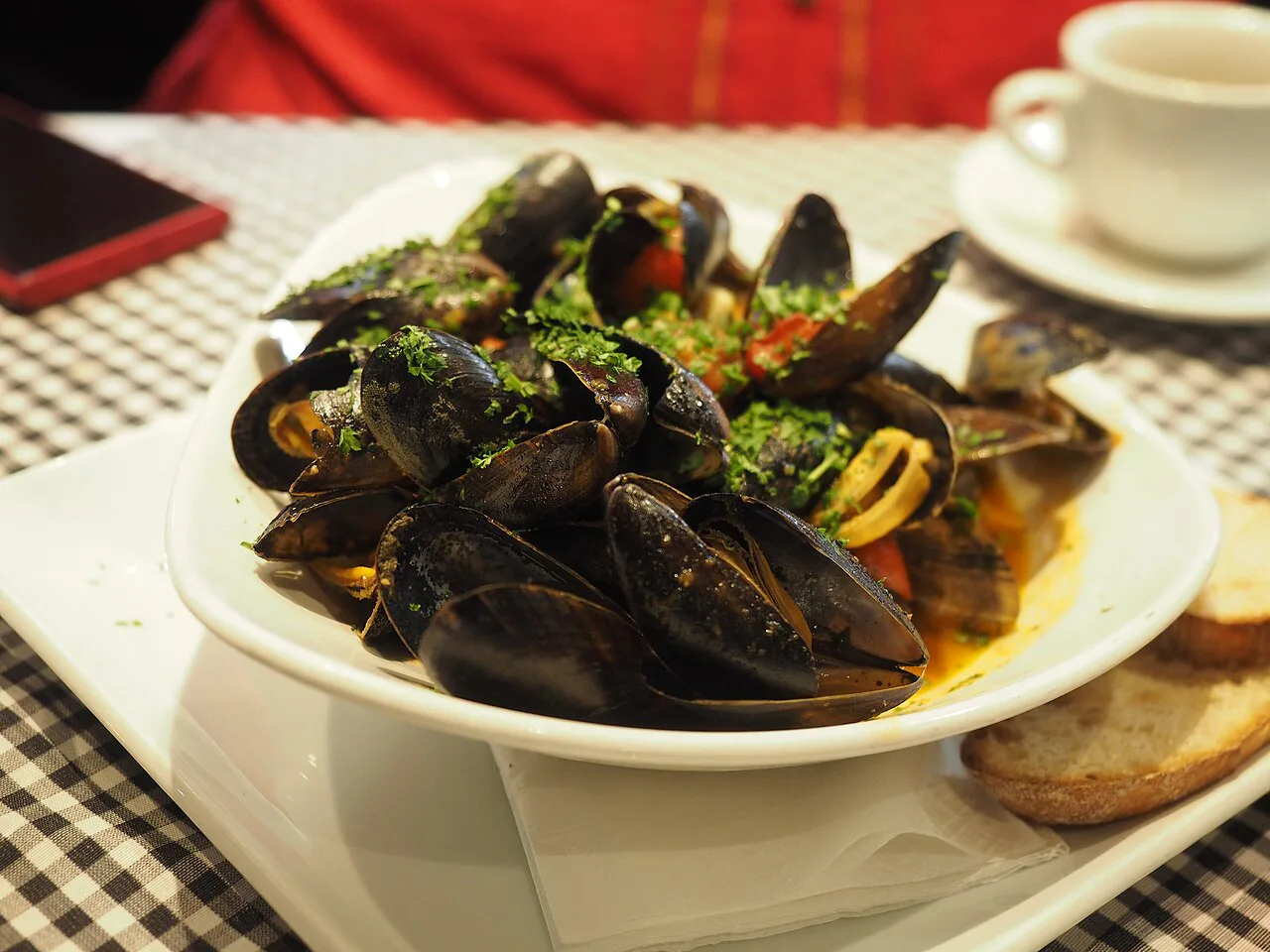
Expect a sharp, savoury sauce: wine and garlic first, then the sweetness of the shellfish, with parsley cutting through the richness. The breadcrumbs are not decoration. They absorb the cooking juices and give the sauce body, which is why a properly made buzara clings to the shells instead of running off them.
The dish is deliberately light. Because the shellfish steams quickly in the covered pan, the meat stays tender, and the sauce is built from what the shells release rather than from long simmering. That makes it a good choice before a main course of grilled fish such as orada, gilt-head bream, or brancin, sea bass.
Mussels buzara: the most common version
Mussels are the version you will meet most often, and they are the most forgiving to cook at home. Clean them, pull off the fibrous beards, discard any with broken shells, and tap open ones sharply: any that stay open are dead and should go in the bin. Then garlic and oil go into a wide pan, wine and breadcrumbs follow, and the mussels go in with a lid on for roughly six minutes, shaken now and then, until they open.
Serve them in the pan or tipped into a bowl with the sauce poured over and extra parsley scattered on top. Discard any mussel that has not opened after cooking. Buzara mussels do not reheat well, so they are a dish to eat as soon as they are ready rather than to make in advance.
Scampi buzara: shells on, fingers out
Scampi buzara is the same technique turned on langoustines, the small lobster-like crustaceans the Adriatic does well. The shells stay on through cooking, and that is deliberate: they add depth to the sauce, and the red tomato version is a common pairing. Ordering it means accepting a hands-on plate, with a finger bowl or a pile of napkins doing more work than the cutlery.
If you want scampi in a less messy form, look for scampi risotto, where the same shellfish is folded through rice instead of served in its shells.
Prawns and langoustines buzara
Larger prawns behave much like scampi in the pan, and the shells are usually left on for the same reason. The white version is finished with breadcrumbs, so the sauce is thickened with crumbs that coat the shellfish rather than leaving it pooling underneath.
Prawns cook faster than langoustines, so they need less time in the pan. If a plate arrives with tight, rubbery prawns, the kitchen has left them in too long; the sauce may still be good, but the shellfish will not be. That is the trade-off with a dish built on very fast cooking.
Bread, not cutlery
The point of buzara is the sauce, and the proper instrument for it is bread. Order a bowl of crusty bread alongside, tear it, and wipe the pan or plate with it; the sauce is where the wine, garlic and shellfish juices end up. A fork gets you the shellfish, but it leaves the best part behind.
If you want a cold seafood opener before the buzara arrives, an octopus salad is the standard Dalmatian choice, dressed simply and served chilled.
Where buzara sits on a Croatian menu
You will see buzara listed among the hot starters or the lighter seafood plates, and its position tells you how to order it. As a starter it is a shared opener for two or a light first course for one. As a main it is a modest portion, so most people add a plate of something else rather than treating it as a full dinner.
On a table of mixed seafood it works as one of several small plates, alongside girice, the tiny fried fish served by the plateful, or a bowl of brudet, the Croatian fish stew. Buzara is the lighter, sharper option of the three, so it is a good counterweight to fried fish.
Buzara at home: what matters and what goes wrong
The ingredients that matter most are fresh shellfish, decent olive oil, dry white wine, garlic and flat-leaf parsley. Buy mussels that smell of the sea rather than fish, keep them loose under a cloth in the fridge, and clean them only when you are ready to cook. A wide pan with a lid is more useful than a deep pot because it lets the shellfish sit in a single layer and cook evenly.
The common mistakes are overcooking and under-thickening. Shellfish left in the pan too long turns rubbery, and a sauce without enough breadcrumbs stays thin and watery. Add the crumbs in stages, let the sauce bubble briefly, and taste before serving.
Ordering buzara with confidence
Buzara rewards a simple decision: choose the white version for mussels and prawns where you want the shellfish to lead, and the red for scampi and langoustines where you want a fuller sauce. Ask whether the shellfish comes shelled or not, and make sure there is bread on the table.
If the plate disappoints, it is usually a cooking-time problem rather than a recipe one, and the same technique done well elsewhere on the coast will taste quite different. Treat the first plate as a measure of the kitchen and order the rest of the meal accordingly.
Explore more Croatia guides
Frequently Asked Questions
What are buzara style mussels?
Mussels cooked in a covered pan with olive oil, garlic, white wine and fresh parsley, then finished with breadcrumbs that thicken the released juices into a sauce. They are served in their shells with the sauce poured over, and any mussel that has not opened after cooking is discarded.
What is scampi buzara?
The same technique applied to langoustines, usually with the shells left on and often in the red version with onion and tomato. The shells add flavour to the sauce, so expect to eat it with your fingers and plenty of bread rather than a knife and fork.
How do you eat buzara?
Use your fingers for the shellfish and bread for the sauce. The sauce is the point of the dish, and a fork leaves most of it on the plate.
Sources
Notes on eating well in Croatia
Optional updates to our food guides.
You might also like



Continue reading
More guides you'll find useful




