
Brudet: Croatia's Fish Stew and What Goes Into It
Brudet is Croatia's coastal fish stew, cooked with mixed fish, shellfish, tomato, wine and vinegar and served with palenta or bread. Here is how it is made.
On this page
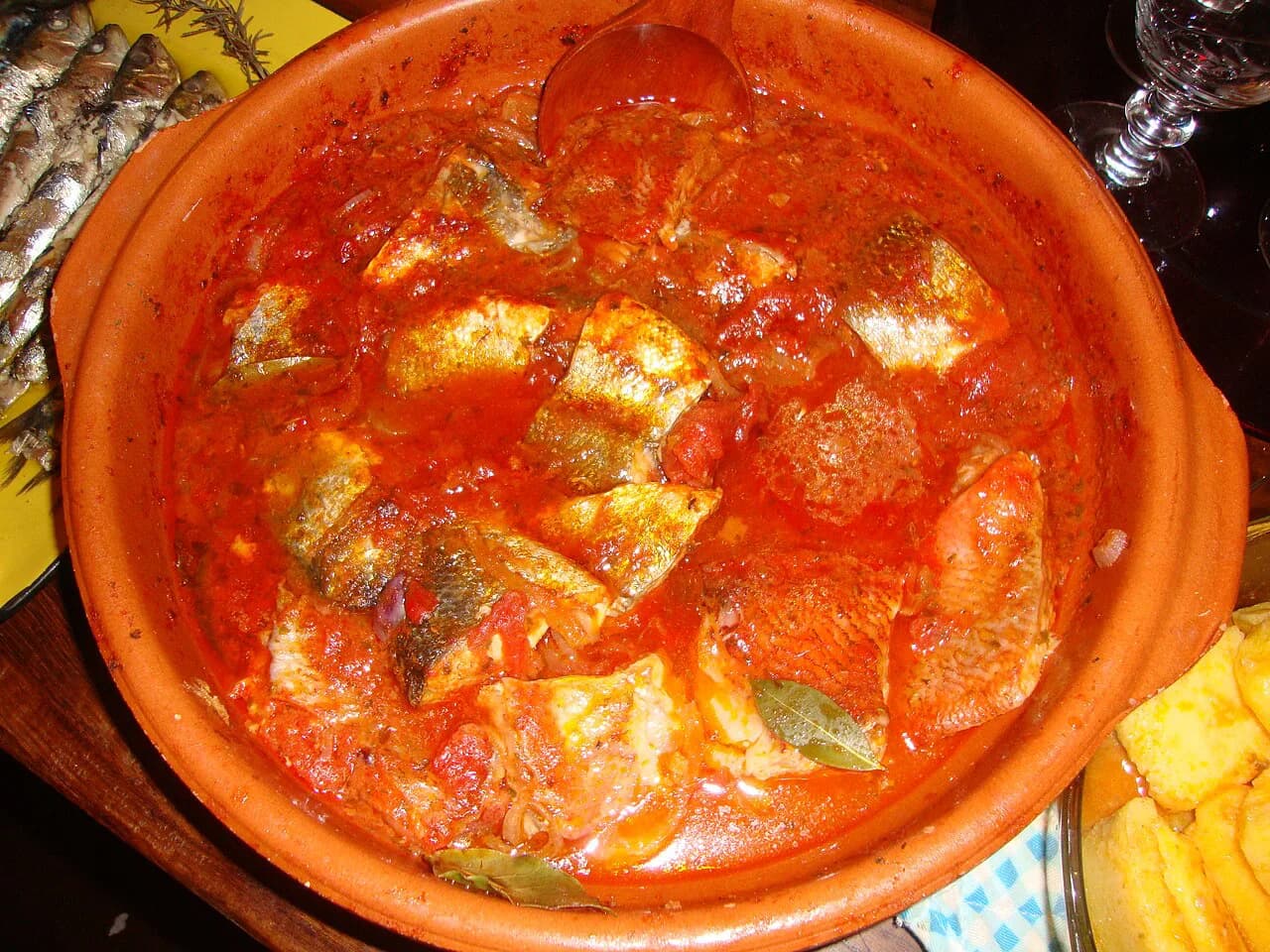
Brudet is Croatia's coastal fish stew: a shallow, tomato-rich braise of mixed fish, often with mussels, prawns or squid, sharpened with wine and vinegar and finished with parsley. On menus and in recipes it also appears as brodet or brujet, and all three names point to the same dish. This guide sets out what goes into it, why cooks use several kinds of fish, why the pot is shaken rather than stirred, and how it reaches the table.
What brudet is, and the names it goes by
Brudet is a fish stew built on a base of onions, garlic and tomato cooked down in olive oil, with wine and a little vinegar added before the fish goes in. It is a coastal dish, at home in Dalmatia and Istria, and it belongs to the same family of Adriatic seafood cooking as the dishes in this guide to Croatian seafood. The vinegar is the detail that separates it from a plain tomato fish braise: it cuts through the oil and tomato and keeps the stew bright rather than heavy.
The name shifts as you move along the coast. Dalmatian recipes commonly print brodet or brujet, while brudet is a spelling you also meet in English-language writing about the dish. None of these is a different recipe; treat the spellings as one dish and read the rest of the menu for what actually goes in the pot.
Croatian recipes tend to emphasise mixed fish and a generous quantity of onion, cooked slowly in olive oil until soft rather than browned. One widely followed Dalmatian version builds the base from roughly half a kilo of onion to a kilo of mixed fish, with tomato, garlic, parsley, wine, vinegar and water, then simmers for half an hour to forty minutes. That ratio tells you what kind of dish this is: the fish is the headline, but the sauce is substantial enough to want bread.
Why mixed fish makes a better brudet than one kind
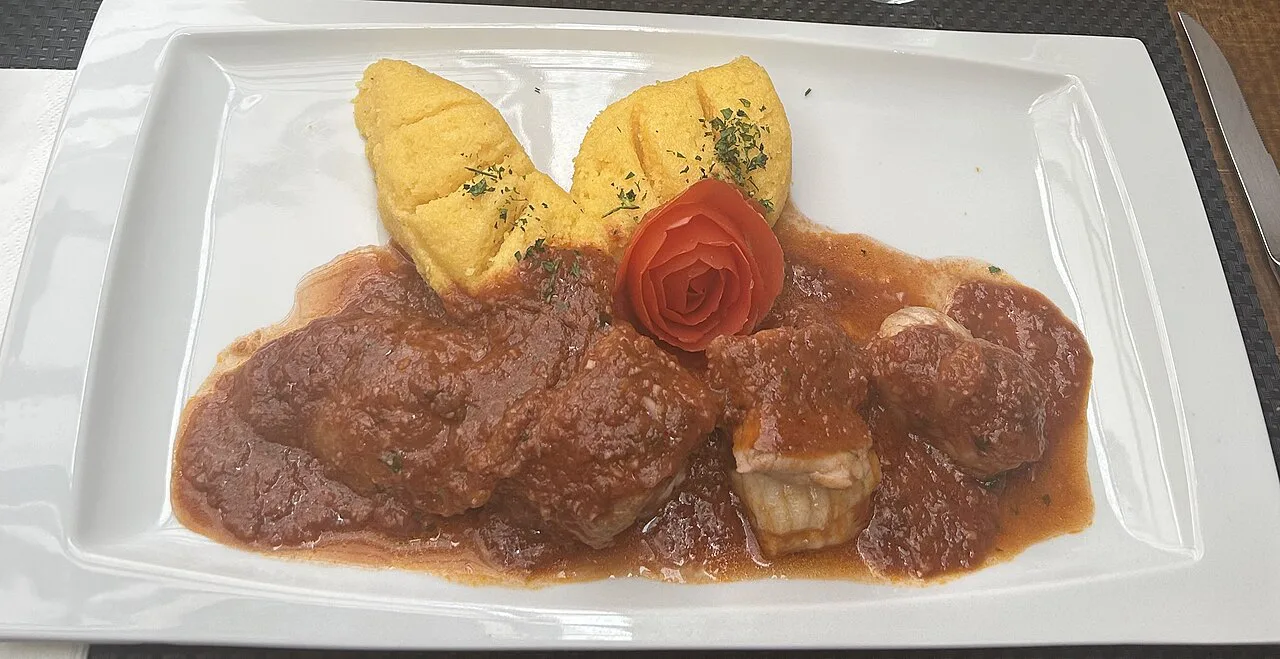
A brudet made from a single fish tastes thin, which is why cooks reach for a mixture. One recipe writer calls seven kinds of fish the traditional standard for an 'authentic' brudet, though few cooks go that far; the underlying principle is sound, since more variety gives a deeper broth. Firm white fish give body, softer fish break down and thicken the sauce, and a bony fish or two adds sweetness that fillets alone cannot.
What fish goes into a Croatian brudet? Croatian recipes call for a mixture of fish: firm white fish for body, softer fish that break down and thicken the sauce, and often a bony fish for sweetness. Named examples include sea bass, monkfish (grdobina), hake, red mullet, scorpionfish (škarpina), conger eel (ugor) and squid (lignja), with mussels, prawns or scampi added near the end.
Why is the pot shaken rather than stirred? Brudet is cooked in a wide, shallow pan so the fish sits in roughly a single layer. Stirring breaks the fish into flakes and turns the stew into a mush, so Croatian recipes advise a gentle shake of the pot instead, which moves the liquid around the fish and lets it cook through whole.
Practical choices named in Adriatic recipes include sea bass, monkfish, hake, red mullet and scorpionfish, with cheaper fish entirely acceptable for a stew. The same logic applies to sea bass ordered elsewhere on the coast: a whole baked brancin is a different proposition from the mixed catch that goes into a pot. Ask what is in the brudet before you order, because the answer tells you how the kitchen is cooking that day.
The core ingredients: onion, garlic, tomato, olive oil, wine, vinegar, parsley
The base is a sofrito of finely chopped onion wilted in plenty of olive oil, with garlic, bay leaf and sometimes a piece of chilli added. Peeled tomatoes or tomato purée go in next and cook down for ten to fifteen minutes until they darken and lose their raw edge. Salt goes in with the onion rather than at the end, so it seasons the whole pot as it builds.
Wine and vinegar are added once the tomato base is ready, and they are what give brudet its edge. A Dalmatian home version uses roughly two decilitres of white or red wine plus wine vinegar to taste, added before the fish so the alcohol cooks off and the acidity settles into the sauce. Parsley, chopped fine, is scattered at the very end, just before serving, so it stays green and fresh.
Olive oil is not a background note here but a main ingredient, and the quantity is generous. The oil combines with the tomato and fish juices to make a sauce that clings rather than pools, which is also why the dish is served with something to mop it up. If you are cooking it at home, use an oil you would be happy to taste on its own.
Shellfish and other additions: mussels, prawns, squid
Mussels, prawns, scampi and squid are common additions, and they go in near the end because they cook in minutes. Shellfish add sweetness and body, but they also make the stew less forgiving to reheat, which is why home cooks often leave them out of any portion they plan to keep. A spoonful of the sauce with a mussel is arguably the best bite of the whole dish.
Cuttlefish and squid appear in many versions, cut into pieces and added early enough to soften. Croatian recipes list ugor (conger eel), grdobina (monkfish), škarpina (scorpionfish) and lignja (squid) among the usual suspects, with the note that a mixed catch gives the best result. If you see cuttlefish or squid cooked in their own ink elsewhere on a menu, that is the black risotto known as crni rižot, a separate dish with a very different character.
Why the pot is shaken and not stirred
Brudet is cooked in a wide, shallow pan so the fish sits in roughly a single layer, and the pan is shaken rather than stirred. Stirring breaks the fish into flakes and turns the stew into a mush; shaking moves the liquid around the fish and lets it cook through whole. Croatian recipes say this explicitly, warning against mixing and advising a gentle shake of the pot instead.
There are other kitchen habits that make the difference between a clean stew and a cloudy one. Potatoes, if used, are cooked separately so they finish on time rather than disintegrating while the fish waits; skinning and boning the fish makes serving easier, and larger fish are cut into cutlets. The stew simmers for around 30 to 40 minutes, then rests briefly before it goes to the table.
How it is served: palenta, bread, or potatoes in the stew
Palenta, Croatia's polenta, is the classic accompaniment, served soft and warm so it soaks up the sauce at the bottom of the bowl. Recipes that include potatoes cook them separately and add them at the end, which keeps the stew from turning starchy and lets you control how thick it gets. Either way, the point is something plain and starchy against the concentrated tomato and fish.
Bread is an equally good answer and is always at hand on a Croatian table. A drizzle of good olive oil and a wedge of lemon on top is common, and a scatter of chopped parsley or fennel fronds finishes the bowl. If you are eating brudet as a main course, it is filling enough that you may want a light seafood starter such as octopus salad rather than another stew.
Brudet versus riblja juha: stew or soup
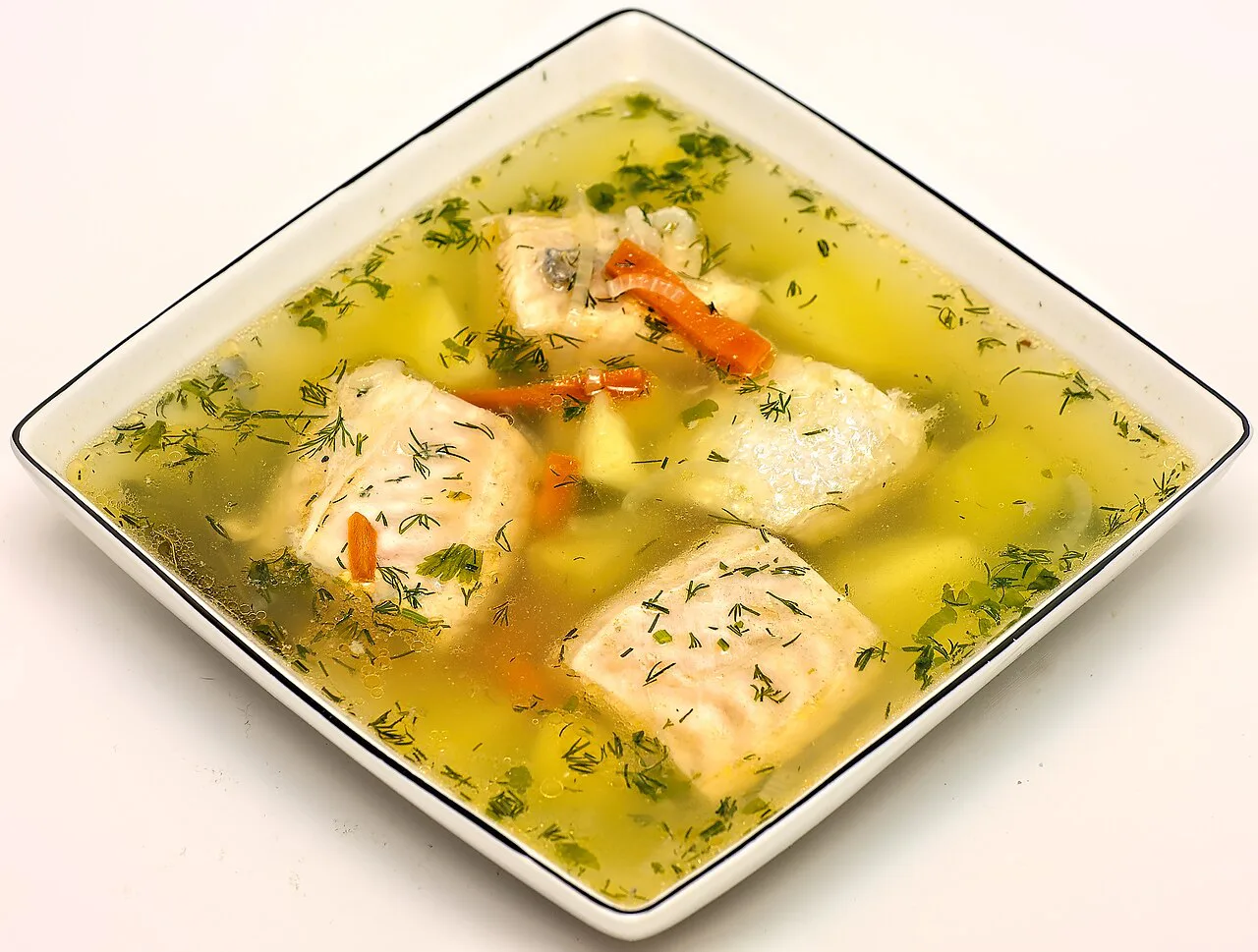
Brudet is a stew, served as a main course with something starchy for the sauce, and eaten with a fork for the fish. Croatian fish soup, riblja juha, is a separate dish with its own place on a menu.
On a menu, a fish soup is usually listed with the starters and a brudet with the main fish dishes. That matters in Croatia, where whole fish is commonly sold by the kilo and the final bill depends on the weight of the fish you are shown, so a stew priced per portion is a more predictable order if you want to know what you are spending.
Brudet in restaurant terms: what to expect on a Croatian menu
Look for brudet among the fish dishes, sometimes under the Dalmatian or Istrian regional headings, and expect it to arrive in a wide bowl or a shallow earthenware dish rather than on a plate. The fish may be boned or left on the bone depending on the kitchen. Ask what fish is in it that day; the answer is a fair signal of how seriously the kitchen treats the dish.
Brudet suits a shared table: order one brudet between two, add a plate of girice, the small fried fish Croatians order by the plateful, and you have a full coastal lunch. If you see brudet on a menu, ask which fish are in it that day, because the answer is a fair signal of how seriously the kitchen treats the dish.
Ordering brudet on the coast
Brudet rewards a kitchen that cooks fish well and resists the urge to complicate it: a wide pan, a generous base of onion and tomato, mixed fish, wine and vinegar, and a final scatter of parsley. If you see it on a menu, ask which fish are in it and whether it comes with palenta or bread, then order accordingly. If you are cooking it at home, start with a mixed bag of white fish and a couple of shellfish, and shake the pan rather than stirring.
Explore more Croatia guides
Frequently Asked Questions
What fish goes into a Croatian brudet?
Croatian recipes call for a mixture of fish: firm white fish for body, softer fish that break down and thicken the sauce, and often a bony fish for sweetness. Named examples include sea bass, monkfish (grdobina), hake, red mullet, scorpionfish (škarpina), conger eel (ugor) and squid (lignja), with mussels, prawns or scampi added near the end.
Why is the pot shaken rather than stirred?
Brudet is cooked in a wide, shallow pan so the fish sits in roughly a single layer. Stirring breaks the fish into flakes and turns the stew into a mush, so Croatian recipes advise a gentle shake of the pot instead, which moves the liquid around the fish and lets it cook through whole. The stew simmers for around 30 to 40 minutes.
Sources
Notes on eating well in Croatia
Optional updates to our food guides.
You might also like



Continue reading
More guides you'll find useful





