
Croatian Seafood: The Dishes to Order on the Adriatic Coast
Croatian seafood explained: crni rižot, brudet, buzara, grilled fish with blitva and octopus salad, plus how whole fish is priced by weight.
On this page
Croatian seafood is built on the day's Adriatic catch, cooked simply with olive oil, garlic, parsley and a handful of vegetables, and served at its best when the fish is grilled whole. If you order one thing, make it a whole fish with blitva, the Swiss chard and potato side that turns up beside almost every grilled plate on the coast. This guide runs through the dishes worth ordering, explains what each Croatian name means, and sets out how fish is chosen and charged before it reaches your table.
Two things surprise first-time visitors. First, the cooking is closer to Italy than to the rest of the Balkans, with plenty of olive oil and grill work, though inland menus lean on meat. Second, the fish is usually priced by weight rather than as a fixed plate, so the size of what you choose shapes the bill.
What Croatian coastal cooking is built on
The base is the daily catch, and coastal kitchens keep the treatment light so the fish still tastes of the sea. Olive oil, garlic and parsley do most of the work, with wine and vegetables appearing in stews and sauces rather than on the grill. A charcoal grill is the default for whole fish, and a garnish of Swiss chard with potatoes is the standard companion.
Squid is a staple, particularly in Dalmatia, and it turns up as a starter or a main in several guises. You will see it lightly battered and fried, grilled, or worked into a sauce or ragù. That range makes it a good dish to order when you want something simpler than a whole fish.
Menus split roughly into cold and warm starters, then fish, then grilled meat for anyone at the table who does not eat seafood. Bread and olive oil fill the gap while a whole fish cooks, and sharing is normal. Order one starter each, one fish between two, and a side of blitva, and you will eat well without over-ordering.
Crni rižot: black risotto coloured with squid ink
Crni rižot is a risotto made black with squid ink, traditionally cooked with cuttlefish, and it is filling enough to work as a main. The ink gives it a briny, faintly metallic depth rather than a fishy hit, and the rice should be loose rather than stiff. It is a good first-order dish if you want something unmistakably Croatian without committing to a whole fish.
What is the difference between brudet and buzara? Brudet is a slow stew of several fish cooked with vegetables, spices and wine, while buzara is white fish and shellfish cooked in a wine and herb sauce and served with pasta. They often appear side by side on the same menu, so check which one you are ordering.
Why is fish in Croatia priced by weight? Whole fish is sold by weight, so the price follows the size of the fish you choose rather than being fixed per plate. The fish is often brought to the table before it is grilled so you can see it, and in some restaurants brudet works the same way.
What side dish comes with grilled fish in Croatia? Blitva, Swiss chard cooked with potatoes, is the standard side with grilled fish on the coast. Fish plates usually arrive with a garnish and a portion of the same chard and potatoes.
The same ink turns up elsewhere: gnocchi and pasta are sometimes coloured and flavoured the same way. If you are eating on a terrace in high season, risotto is a safer bet than a large fish when you are short of time, because it is cooked to order in a pan rather than grilled whole.
Brudet: a slow stew of several fish
Brudet is a traditional fish stew made with several kinds of fish, vegetables, spices and wine, cooked down until the broth thickens. It is a different dish from buzara, the wine-sauce preparation described below: brudet is the stew you eat with bread and a spoon. Order it when you want something slow-cooked and shared rather than a grilled plate.
In some restaurants brudet is priced by weight, and you pick the fish that goes into it before the finished stew comes to the table to share. That makes it a good choice for a group, since one pot feeds several people and the fish is visible before it is cooked. Ask what is in the pot that day, as the mix of fish varies with the catch.
Buzara: shellfish and white fish in a wine sauce
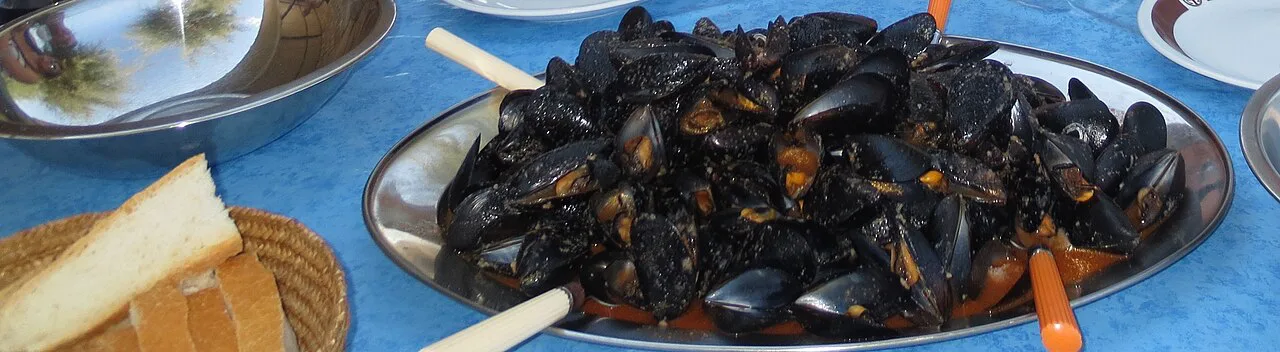
Buzara is white fish and shellfish cooked in a wine sauce with herbs and served with pasta, which makes it a substantial one-plate meal. The shellfish versions are the ones to look for if you want something to share, since the shells and pasta spread further than a single fillet. It sits alongside brudet on many menus, so check which one you are ordering.
The sauce is the point: white wine, garlic and herbs reduced around the shellfish, with pasta underneath to catch it. Eat it with a fork and your fingers, and ask for extra bread rather than another starter. It is a forgiving dish for a mixed table where not everyone wants a whole grilled fish.
Grilled whole fish, blitva and potatoes
Grilled fish with Swiss chard is the defining coastal plate, and it is both simple and easy to get right. The fish is grilled whole over charcoal and arrives with blitva and potatoes. Sea bream, sea bass and red scorpionfish are the names you will see most often on the grill.
At a basic island restaurant the menu may be unnecessary, because the day's special is whatever came off the boats that morning. The waiter shows you the fish, you choose, and it goes onto the outdoor charcoal grill. That is the ritual to expect, and it is why the fish is worth ordering whole rather than as fillets.
When it is done well the flesh needs nothing beyond a squeeze of lemon and the olive oil already on the plate. If you want the full Croatian name for sea bream before you order, orada is the word to look for on the menu.
Sea bass is the other name to know, brancin, and it usually appears grilled whole with the same chard and potato side. Ask which of the two is fresher that day rather than defaulting to the pricier option.
Octopus salad: a starter or a light lunch
Octopus salad is served in towns along the Adriatic coast, usually with broad beans, tomatoes and other salad items, and it works as a starter or a light lunch. The octopus should be tender rather than chewy, and the dressing is typically olive oil and lemon rather than anything creamy. Order it when you want something cold before a grilled main.
It is also the dish to fall back on at lunchtime, when a whole fish feels like too much before an afternoon outside. Pair it with bread and a glass of white and you have a complete light meal.
Squid: fried, grilled or in a ragù
Squid appears as an appetiser or a main across the coast, and the fried version in a light batter is the one most people remember. Grilled squid is the lighter option, while squid in a sauce or ragù is the wintery version. In Dalmatia it is close to a staple, so it is a reliable order almost anywhere.
For the grilled version, lignje na zaru is the menu phrase, and it usually comes with blitva or a simple salad. Fried squid is heavier and better shared as a starter.
Fish plates for two
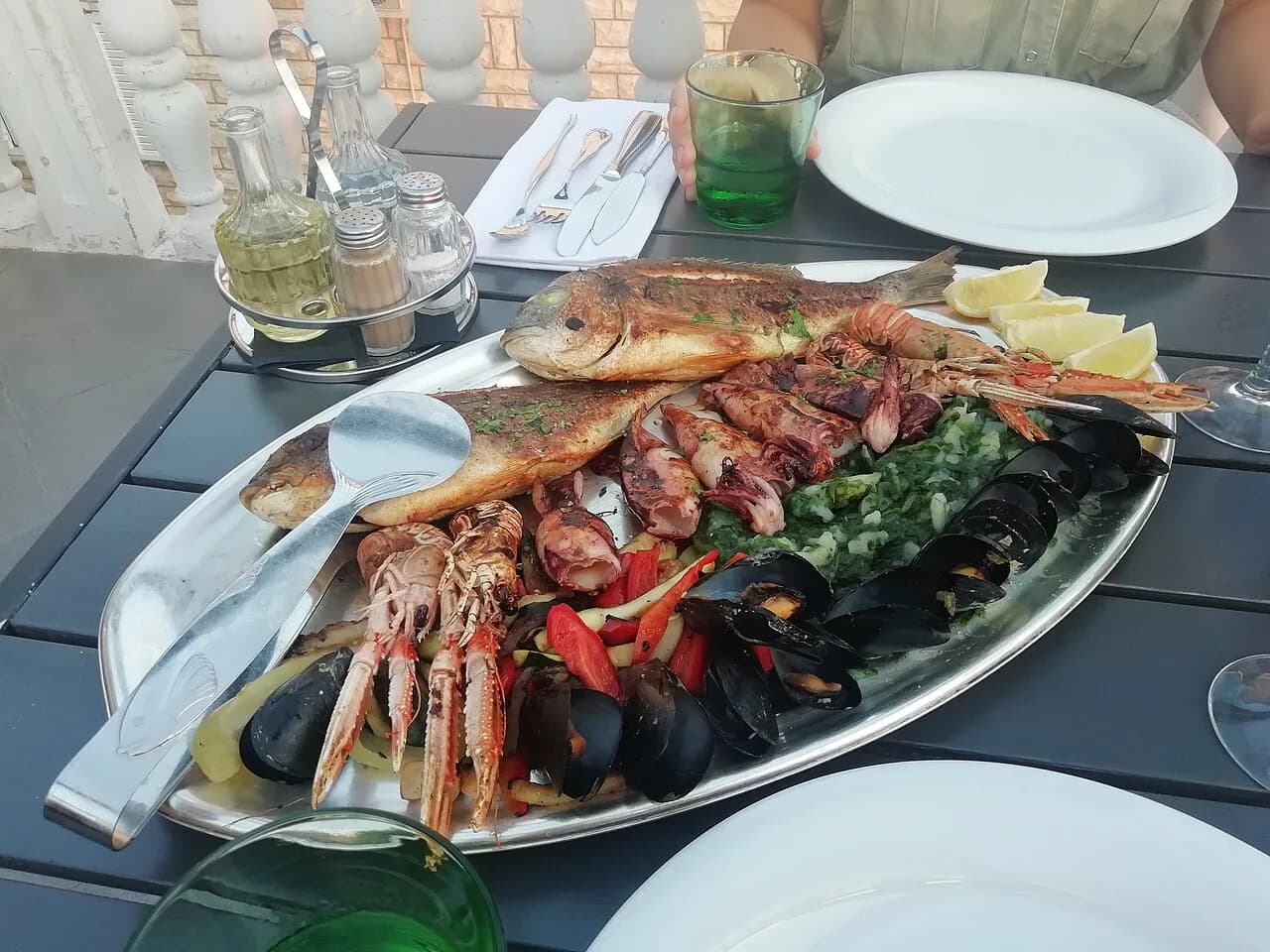
A fish plate is usually built for two to share, and it is the efficient way to try several things at once. Expect sea bass, sea bream, mussels, prawns, squid and langoustines, sometimes grilled and sometimes lightly battered. It normally arrives with a garnish and a side of Swiss chard with potatoes.
The contents vary by kitchen, and red scorpionfish sometimes turns up on the platter as a bonus. Ask what is on it before ordering, particularly if you are avoiding shellfish. One plate plus a starter usually feeds two comfortably.
Red scorpionfish soup
Red scorpionfish soup is a clear fish soup found on menus along the Adriatic coast and inland in Zagreb too. It suits anyone who likes a light, clean broth rather than a thickened chowder, and it is a good opener before a grilled main. It is one of the clearest examples of how far Adriatic seafood travels inland.
For a broader look at the soupy end of the Croatian repertoire, the coastal kitchens also turn out thicker fish soups and broths. If the menu lists both, the clear scorpionfish version is the lighter start.
Small fish: anchovies, sardines and girice
Small fish are where coastal cooking gets cheap and good, and anchovies with capers and lemon are a common opener. They are served cold or at room temperature, sharp with lemon and salt, and they cost far less than a whole fish. Order them with bread and olive oil while the main is on the grill.
Girice are small fried fish eaten whole, heads and all, and they are the sort of plate that appears on simple konoba menus along the coast. They are best eaten hot, straight from the fryer, with lemon rather than a heavy sauce.
Sardines are the other small fish worth knowing, grilled or cured, and they show up alongside anchovies as a starter. They are a sensible order when you want flavour without the weight of a main course.
How fish is chosen and charged by weight
Whole fish is usually priced by weight rather than per plate, which is why the size of the fish you choose matters. In many places the fish is brought to the table whole so you can see it before it goes on the grill, and the bill follows what you picked. That is not a trick, but it does mean you should look at the size before nodding. It is the same weighing ritual described in this guide to the best restaurants in Split.
Some restaurants apply the same logic to brudet, letting you choose the fish that goes into the stew before it is cooked. It is worth asking whether a dish is charged by weight or as a fixed price before you commit to a large fish for the table. If the answer is unclear, choose something smaller.
Peka and the oven: seafood cooked under the bell
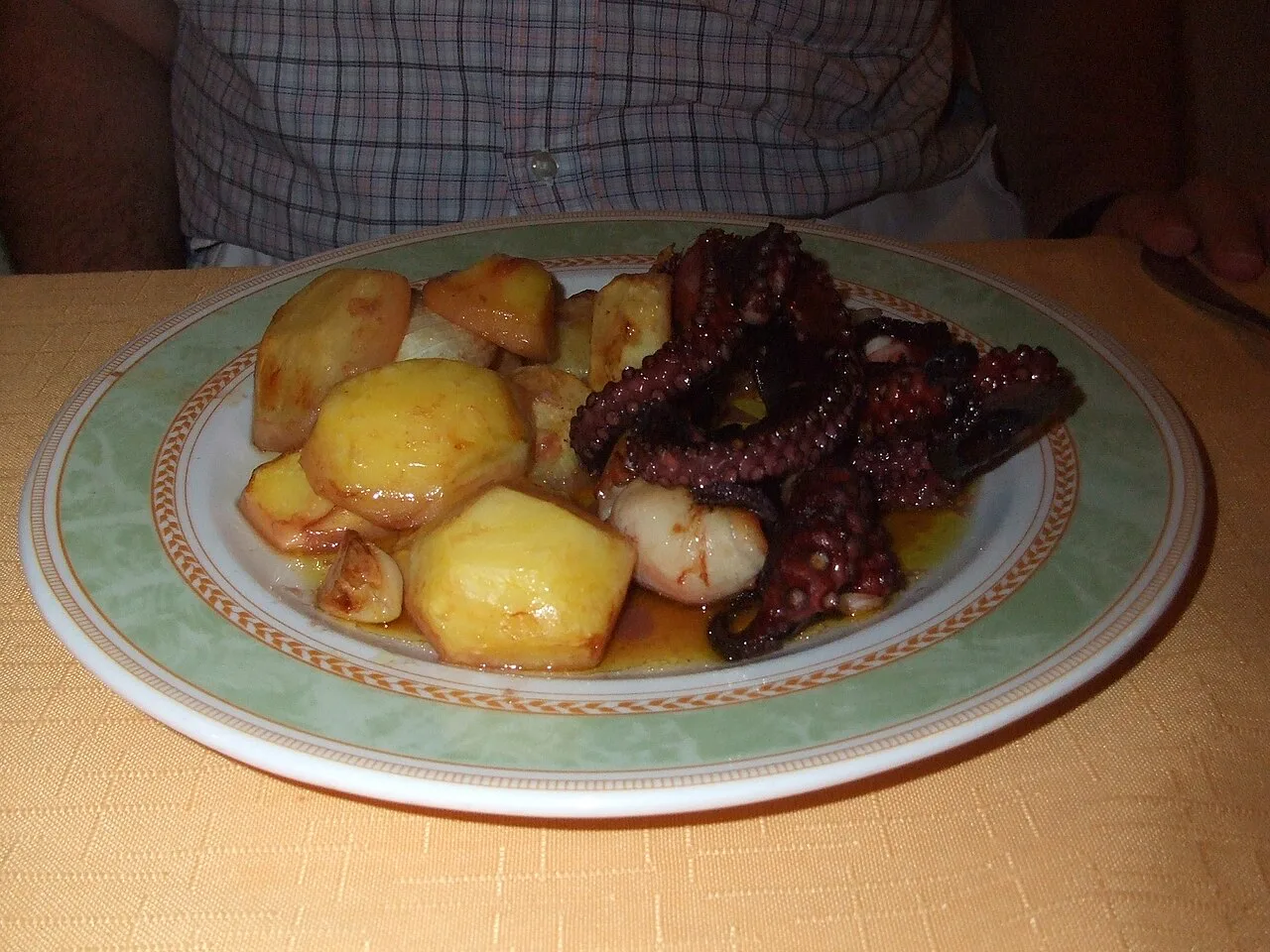
Peka is a method rather than a dish: a pan goes over coals with a lid that is also covered in coals, so the food bakes and steams at once. Meat is the classic filling, often veal or lamb, but the same technique is used for octopus. The result is soft, rich and best shared.
Hobotnica ispod peke is octopus cooked under the bell, and it is worth ordering with people who will share it rather than as a solo main. Because it cooks slowly, it is not the dish to order when you are in a hurry.
Is Croatian seafood like Italian cooking?
In technique, yes: Croatian coastal cooking draws on Italian cuisine, with olive oil, garlic, grilled fish and pasta appearing in similar ways. The difference is in the frame. Croatian menus lean harder on the daily catch and on simple grills, and inland dishes pull in Central European and Balkan influences that you would not find in an Italian coastal kitchen.
That mixed heritage makes Croatian menus broader than a single tradition suggests. Istrian cooking brings in truffles, while inland cities serve meat platters. Seafood sits at the coastal end of that spectrum, closer to Italy but still distinctly Croatian in how it is served.
What to drink with Croatian seafood
A dry coastal white is the usual partner for grilled fish and shellfish, and it keeps the meal light. A glass is enough with lunch, and a bottle shared across a table suits a long dinner better than a round of stronger drinks. Ask what is local rather than reaching for the wine list's most expensive page.
If you want something other than wine, sparkling water with lemon is common and works just as well with a plate of fried small fish. Keep the drink secondary to the fish and you will taste more of what you ordered.
Seafood inland: Zagreb and continental Croatia
Adriatic seafood reaches inland cities, and red scorpionfish soup appears on Zagreb menus as well as along the coast. It is a reminder that Croatia is small enough for the coast to supply the capital. If you are spending time in Zagreb, you can still order fish and shellfish rather than defaulting to meat.
Inland menus also carry mixed meat platters, so a table can split between fish and meat without anyone compromising. Look for the seafood starters first, then decide whether the main should come from the coast at all.
Which seafood dish should you order first?
If you order one Croatian seafood dish, make it a whole grilled fish with blitva and potatoes, chosen from what the kitchen shows you and charged by weight. If you want something to share, order brudet, and if you want a one-plate meal, buzara with pasta is the safer bet.
Check the menu for the Croatian name, ask whether the fish is charged by weight, and keep the rest of the table in small plates while it grills.
Explore more Croatia guides
- Brancin: Croatia's Sea Bass, Explained for Diners
- Brudet: Croatia's Adriatic Fish Stew Explained
- Buzara: How Croatia Cooks Mussels, Scampi and Prawns
- Girice: The Small Fried Fish Croatians Order by the Plateful
- Hobotnica ispod peke
- Octopus Salad in Croatia
- Orada: Gilt-Head Bream on Croatian Menus
- Scampi Risotto
- Adriatic Lobster
- Croatian Sardines (Srdele)
- Kvarner Scampi
- Lignje na zaru
- Škrpina: How to Order Croatia's Scorpionfish
Frequently Asked Questions
What is the difference between brudet and buzara?
Brudet is a slow stew of several fish cooked with vegetables, spices and wine, while buzara is white fish and shellfish cooked in a wine and herb sauce and served with pasta. They often appear side by side on the same menu, so check which one you are ordering.
Why is fish in Croatia priced by weight?
Whole fish is sold by weight, so the price follows the size of the fish you choose rather than being fixed per plate. The fish is often brought to the table before it is grilled so you can see it, and in some restaurants brudet works the same way.
What side dish comes with grilled fish in Croatia?
Blitva, Swiss chard cooked with potatoes, is the standard side with grilled fish on the coast. Fish plates usually arrive with a garnish and a portion of the same chard and potatoes.
Can you eat Adriatic seafood in Zagreb?
Yes. Zagreb menus carry Adriatic fish dishes, including red scorpionfish soup, alongside inland meat plates. It is a good way to eat coastal food without being on the coast.
Sources
Notes on eating well in Croatia
Optional updates to our food guides.
You might also like



Continue reading
More guides you'll find useful





