
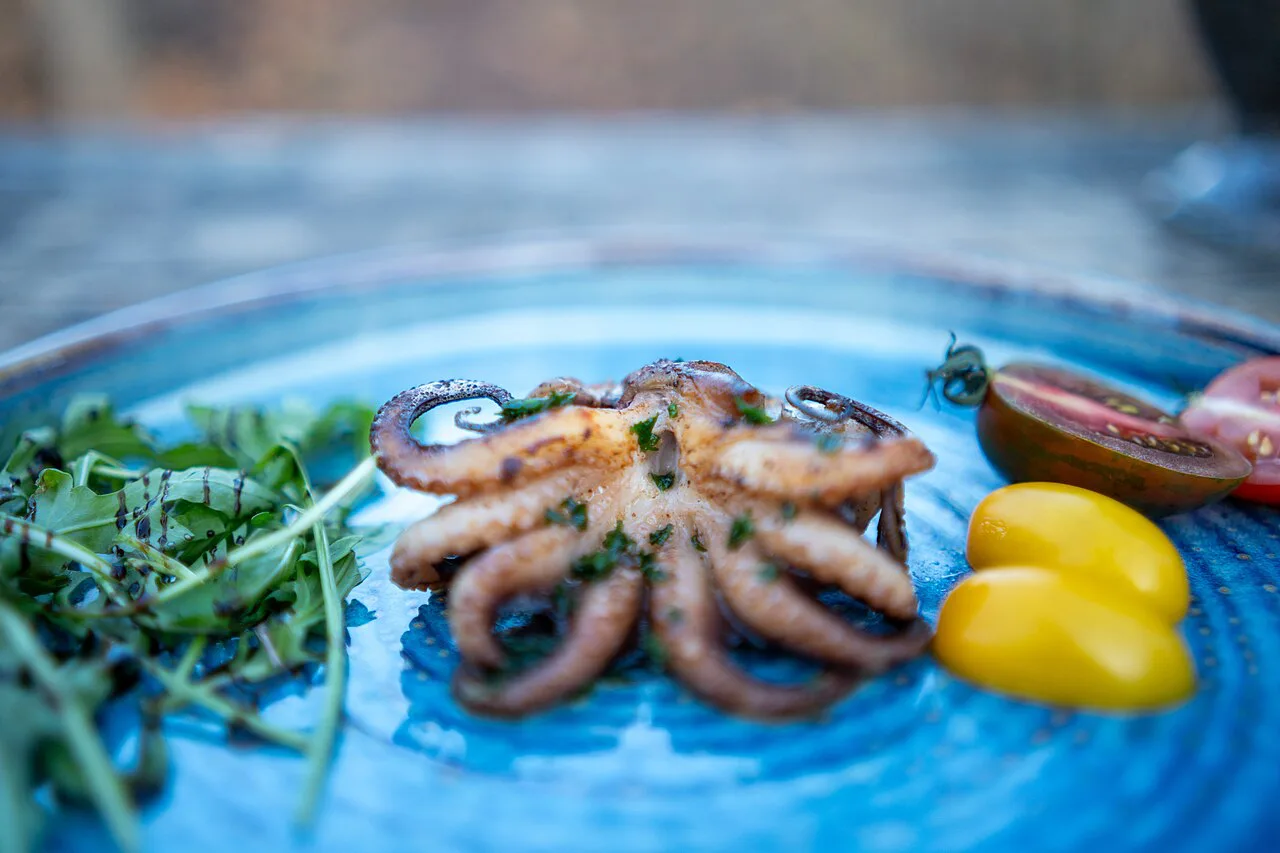
Hobotnica ispod peke: Croatia's Octopus Baked Under a Lid
Hobotnica ispod peke is octopus baked with potatoes, onion and olive oil under a domed metal lid. Here is what the dish is, how it is cooked and how to order it.
On this page
Hobotnica ispod peke is octopus baked under a peka, the domed metal lid that Croatian cooks heap with hot coals. The dish is a shared centrepiece for two or more people, cooked slowly with potatoes, onion, carrot, garlic, olive oil and wine. This guide explains what the peka is, what goes into the tray, why the octopus is frozen first, how long it takes and how to order it along the Dalmatian coast, where it sits among the wider Croatian Seafood repertoire.
What hobotnica ispod peke means
Hobotnica is the Croatian word for octopus, and ispod peke means under the peka, the domed lid used for this style of cooking. In plain English the dish is octopus cooked under a heavy metal lid with hot coals heaped on top and around it, so the octopus and vegetables steam and roast in their own juices. You will also see the phrase hobotnica a la ispod peke on recipe pages, meaning octopus done in the peka style, sometimes approximated in an oven when a real peka is not available, as Coolinarika notes. On menus it is a main course to share, not a starter, and it usually appears alongside other slow-cooked seafood and meat dishes.
What a peka is: the domed lid and the coals
A peka is a rounded metal or ceramic lid shaped like a bell that sits over a shallow tray. The cook builds a fire, spreads embers on the ground, sets the tray down, covers it with the lid and then piles more hot coals on and around the domed top. The result is heat from above and below at once, closer to a wood-fired oven than to a hob. Heritage Croatia describes preparing the žar, the embers, before the tray goes on, and then heaping the peka with coals so the whole thing cooks evenly. When the lid comes off at the table, that is the moment the dish arrives.
Is hobotnica ispod peke the same as octopus salad? No. Hobotnica ispod peke is a hot, shared main course of octopus baked under a domed lid with potatoes and vegetables.
Can you make octopus peka at home without a peka? You can approximate it in a domestic oven. Coolinarika's oven version uses a large oiled pot with a lid, arranges the vegetables and octopus inside, adds oil and wine and bakes at 250°C for about an hour and a half, then about ten minutes uncovered.
Why is the octopus frozen before cooking? Freezing and defrosting tenderises the tentacles. Croatian recipes for hobotnica ispod peke ask for an octopus that has been frozen and then defrosted before cleaning and cooking, and Sašina kuhinja suggests asking at the fish market whether the octopus has already been frozen.
What goes into the dish
The core ingredients are octopus, potatoes, onion, carrot, garlic, olive oil and wine, with parsley added at the end. Coolinarika's version for two larger octopuses lists two carrots, one large red onion, six larger potatoes, four garlic cloves, chopped parsley, a good amount of olive oil, half a glass of red wine, salt and pepper. Heritage Croatia's family version for a larger peka adds peppers, rosemary, bay leaf and a cup of rice, plus a splash of white wine. Sašina kuhinja takes a different route with tomatoes, black olives, capers, a little chilli and optional oyster mushrooms, showing how cooks vary the tray around the same method. The constants are the octopus, the potatoes to soak up the juices and a generous pour of olive oil.
How it cooks: octopus over vegetables, lid closed
The vegetables go into the oiled tray first, seasoned and drizzled with more oil, and the octopus is laid on top with the tentacles spread outwards. The lid goes on, the coals are heaped over and around it, and the whole tray cooks undisturbed for the first stretch. Heritage Croatia bakes for 45 minutes, then opens the peka to add partly cooked rice, pours in white wine, turns the vegetables so the top layer goes to the bottom and closes the lid again for another 30 to 40 minutes. The test for doneness is simple: the tentacles should come away easily when pulled with a fork. Coolinarika gives an oven version at 250°C for about an hour and a half with the lid on, then about ten minutes uncovered, which tells you how much the peka lid does in place of a thermostat.
Why the octopus is frozen and defrosted first
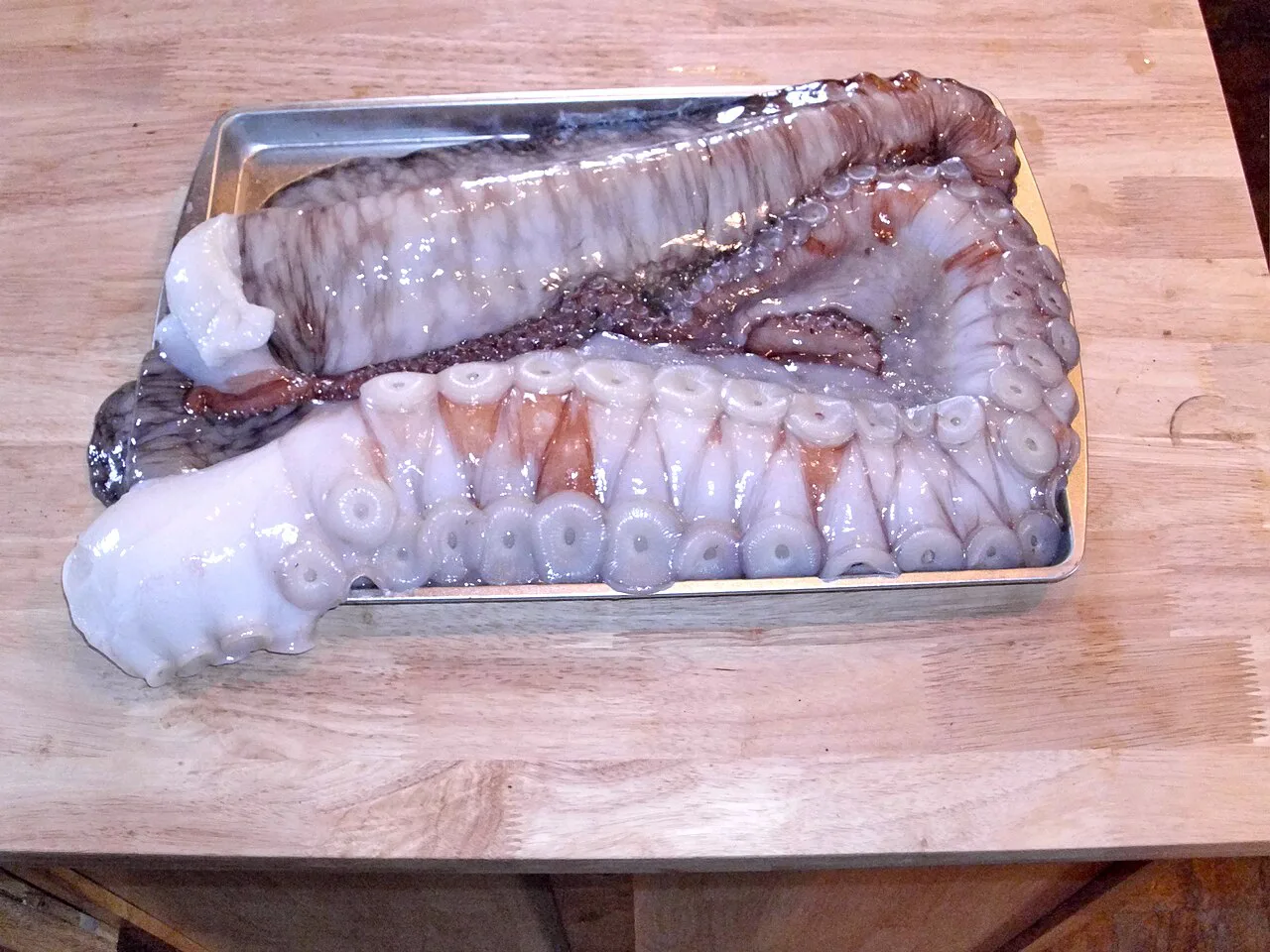
Cooks freeze the octopus before it goes anywhere near the peka, and that is a practical step rather than a shortcut. Coolinarika asks for a domestic octopus that has previously been frozen and then defrosted. Heritage Croatia specifies an octopus of about three kilos that was frozen before being defrosted and cleaned. Sašina kuhinja advises asking at the fish market whether the octopus has already been frozen, since freezing first makes the tentacles more tender. If you buy fresh octopus in Croatia and plan to cook it yourself, freezing it at home before defrosting follows the same logic.
How long it takes and how much to order for a table
Peka cooking is slow by design, and the recipes reflect it: around 45 minutes before the lid is opened, then another 30 to 40 minutes after the rice and wine go in, in Heritage Croatia's version. That is roughly an hour and a quarter of cooking after the embers are ready, before anyone sits down. Coolinarika's oven approximation runs about an hour and a half covered plus ten minutes uncovered at 250°C. For a table, think of hobotnica ispod peke as a dish for two or more: the recipes are written for two larger octopuses or one octopus of about three kilos, which is far more than one appetite. Order one peka to share and add a light starter or a salad rather than a second main each.
How it is served
The tray comes to the table and the lid is lifted, releasing the steam and the smell of olive oil, wine and parsley. Coolinarika serves the octopus with lemon wedges, tartar sauce and a green salad dressed with olive oil and balsamic vinegar, and finishes the dish with chopped garlic and parsley scattered over just before serving. Heritage Croatia's version has the rice cooked in the tray, so the juices are absorbed rather than left behind. Bread is worth having on the table for the liquid at the bottom, as Sašina kuhinja notes. A glass of cold white wine sits naturally alongside, without needing to be anything grand.
What to expect on the plate
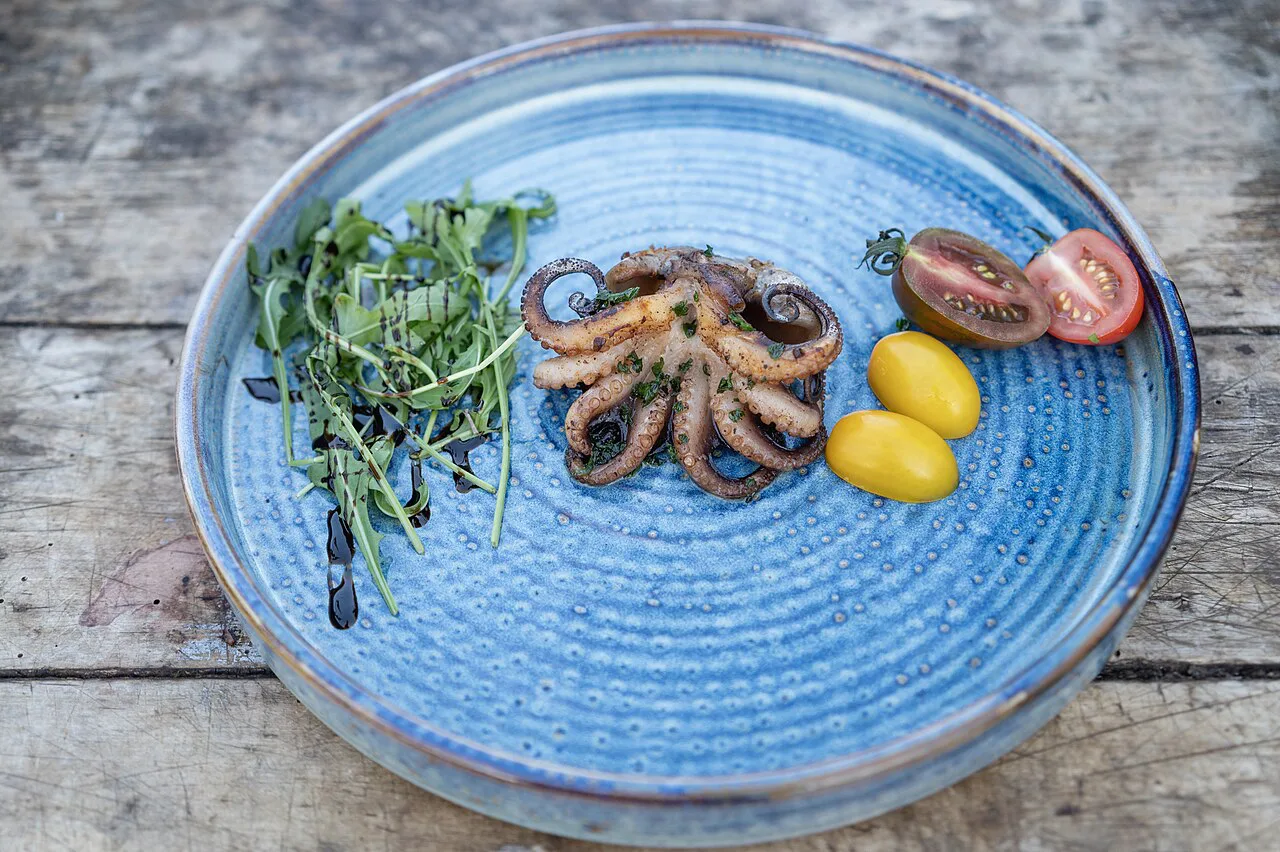
The tentacles should be soft enough to cut with a fork, and they carry the savoury, slightly sweet flavour of the octopus itself rather than a heavy sauce. The potatoes are the quiet star: cut into wedges or boats and cooked under the octopus, they take on the oil, wine and seafood juices until they are almost confit. Heritage Croatia describes the octopus cooked this way as soft as butter, full of fine juices and scented with the herbs of the coast. If rice is in the tray, expect it plump and stained with the cooking liquid, more like a moist pilaf than a separate side.
How octopus peka fits into a Croatian meal
Hobotnica ispod peke is a centrepiece, the kind of dish a table orders once and builds the rest of the meal around. It suits a long lunch rather than a quick bite: the cooking time alone runs past an hour, and the pleasure is in the unhurried uncovering of the lid. It sits among the slow-cooked seafood dishes that anchor a konoba menu, next to brudet, the fish stew, and buzara, the wine-and-garlic treatment for mussels and scampi. Order it when you have time and company, and let the table share.
Where to order it and how to book ahead
Peka dishes are cooked to order in many konobas, which means they are rarely a walk-in plate at peak dinner time. Phone or email ahead, say how many are eating and ask whether the peka needs to be ordered in advance; a restaurant that cooks peka will tell you what notice it needs. Look for hobotnica ispod peke on menus in Dalmatian konobas and on the islands, where octopus is part of the local catch. If you want the wider picture of what to order alongside, the guide to Croatian Seafood covers the main fish and shellfish plates. For a restaurant recommendation, ask your host or the konoba directly rather than relying on a sign outside.
Octopus peka vs octopus salad
Octopus salad and octopus peka come from the same animal but arrive as completely different plates. Octopus salad is served cold, dressed with olive oil, lemon, capers and parsley, and works as a starter or a light lunch. Octopus peka is a hot, shared main course, cooked slowly under the lid with potatoes and vegetables. If you are ordering for a table, the salad is the opener and the peka is the centre; if you are eating alone, the salad is the easier order. The guide to Octopus Salad in Croatia explains the cold version in detail, including how it is dressed and where it fits on a menu. The same logic applies to other seafood: girice, the small fried fish, are a light plate, while orada, the gilt-head bream, is a whole fish for one or two.
Order the peka when you have time and company
Hobotnica ispod peke rewards planning: a table of two or more, a long lunch, and a phone call ahead to the konoba. The dish is simple in its parts, octopus, potatoes, onion, carrot, garlic, olive oil and wine under a hot lid, but it takes over an hour to cook and is not a quick order. If you want the same octopus in a lighter register, the cold octopus salad is the starter version. Otherwise, gather the table, order one peka to share and let the lid come off when it is ready.
Explore more Croatia guides
Frequently Asked Questions
Is hobotnica ispod peke the same as octopus salad?
No. Hobotnica ispod peke is a hot, shared main course of octopus baked under a domed lid with potatoes and vegetables. Octopus salad is served cold with olive oil, lemon and parsley, and is usually a starter or a light lunch.
Can you make octopus peka at home without a peka?
You can approximate it in a domestic oven. Coolinarika's oven version uses a large oiled pot with a lid, arranges the vegetables and octopus inside, adds oil and wine and bakes at 250°C for about an hour and a half, then about ten minutes uncovered. The result is close to the peka method rather than identical, because the real peka cooks with coals above and below.
Why is the octopus frozen before cooking?
Freezing and defrosting tenderises the tentacles. Croatian recipes for hobotnica ispod peke ask for an octopus that has been frozen and then defrosted before cleaning and cooking, and Sašina kuhinja suggests asking at the fish market whether the octopus has already been frozen.
Sources
Notes on eating well in Croatia
Optional updates to our food guides.
You might also like



Continue reading
More guides you'll find useful





