
Octopus Salad in Croatia: What It Is and How to Order It
Octopus salad on a Croatian menu is cold boiled octopus with olive oil, lemon and herbs. Here is what arrives on the plate and how to order it well.
On this page
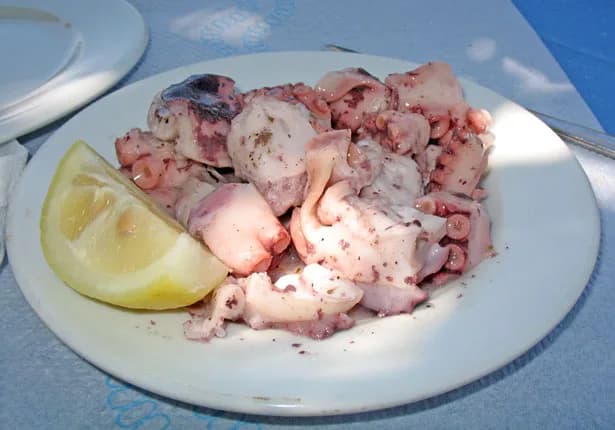
Octopus salad on a Croatian menu is a cold starter: pieces of boiled octopus dressed with olive oil, lemon and herbs, served chilled rather than cooked to order. Order it as the first plate for the table, with bread, before grilled fish or a hot seafood dish arrives. This guide covers what goes into it, how it is served and which Croatian whites suit it.
Treat it as a light opener rather than a main. A portion is rarely large, so it works best as one of several plates shared across the table, and it pairs naturally with the grilled fish, shellfish and lamb that dominate coastal menus.
What octopus salad is on a Croatian menu
The dish is built on octopus that has been simmered until tender, then cooled and sliced or cut into bite-sized pieces. Because it is dressed cold, the texture matters more than the cooking technique: good versions are soft rather than rubbery, and the dressing is added close to serving so the meat does not turn sour. On Dalmatian menus it usually appears among the cold starters, hladna predjela, sometimes listed simply as salata od hobotnice.
That cold treatment is the key difference from hot octopus dishes. The same animal turns up braised, grilled or baked elsewhere on the menu, and those preparations are served warm and often as a main, so ordering both is not a repeat. If the salad is the only octopus dish listed, the kitchen is telling you it treats octopus as a light opener.
What is in it: octopus, olive oil, lemon, herbs, potatoes, olives and capers
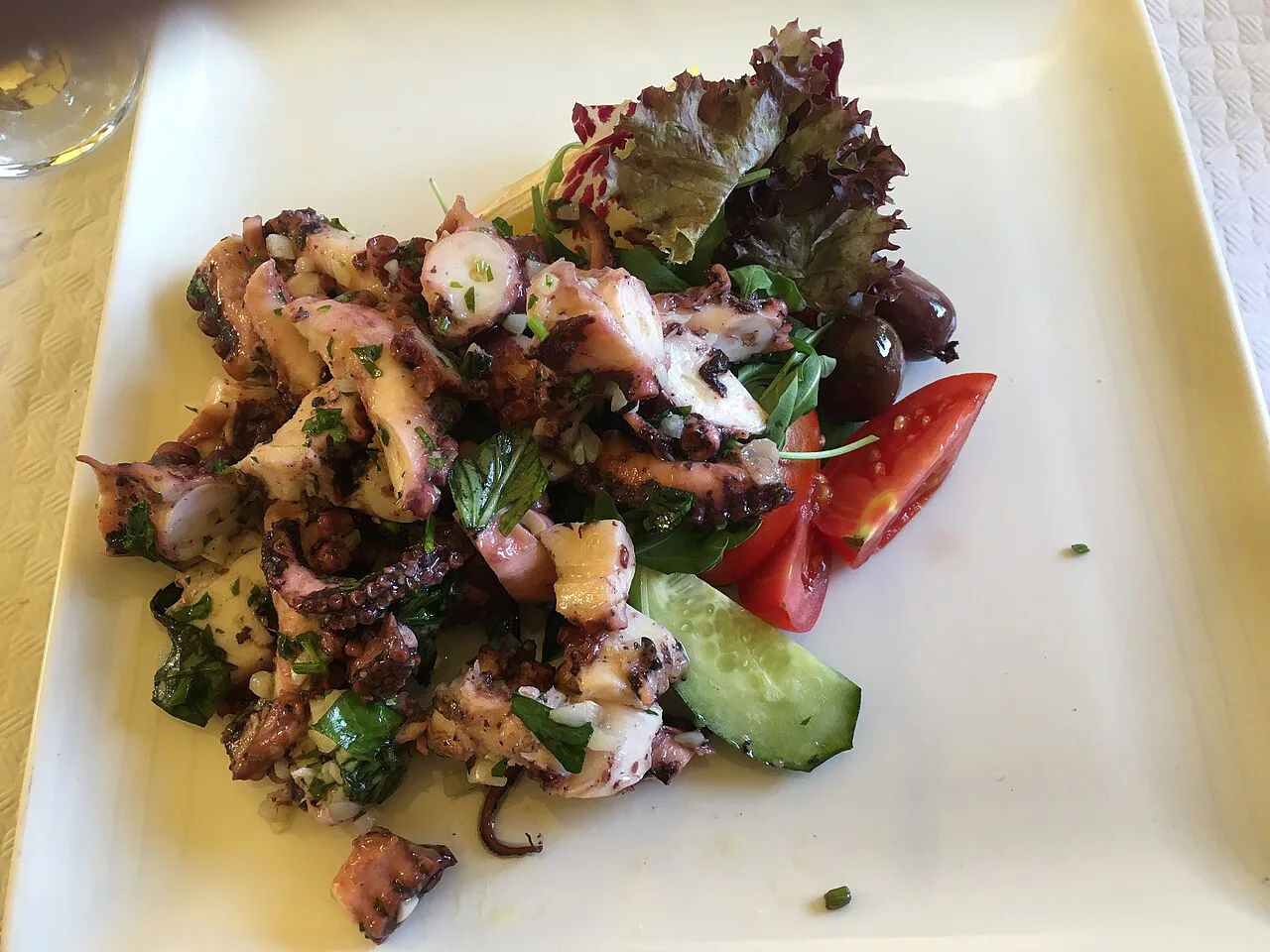
Beyond the octopus itself, the core dressing is olive oil, lemon juice and salt, with parsley, oregano or garlic added to taste. Many versions include boiled potato cut into chunks, which absorbs the dressing and stretches the portion; olives and capers are common additions, and celery or red onion appear in some kitchens. The result is closer to a potato and octopus salad than to a plate of plain seafood.
What does octopus go well with? With olive oil, lemon and herbs, and in the Croatian version usually with boiled potato, olives and capers. At the table it works alongside bread, a dry white wine and grilled fish or shellfish.
Do you eat octopus salad cold? Yes. In Croatia it is served as a cold starter, with the octopus boiled in advance, cooled and dressed before it reaches the table.
Is octopus salad a main course in Croatia? No, it is listed among the cold starters. Portions are small, so order it to share before a main of fish, scampi or meat.
The oil is what carries the dish, so it is worth ordering where the kitchen is proud of its olive oil. In Kvarner, extra virgin olive oil from the island of Krk holds protected designation of origin status and is used across local cooking, which tells you the dressing will not be an afterthought.
How it is served: as a cold starter, often with bread
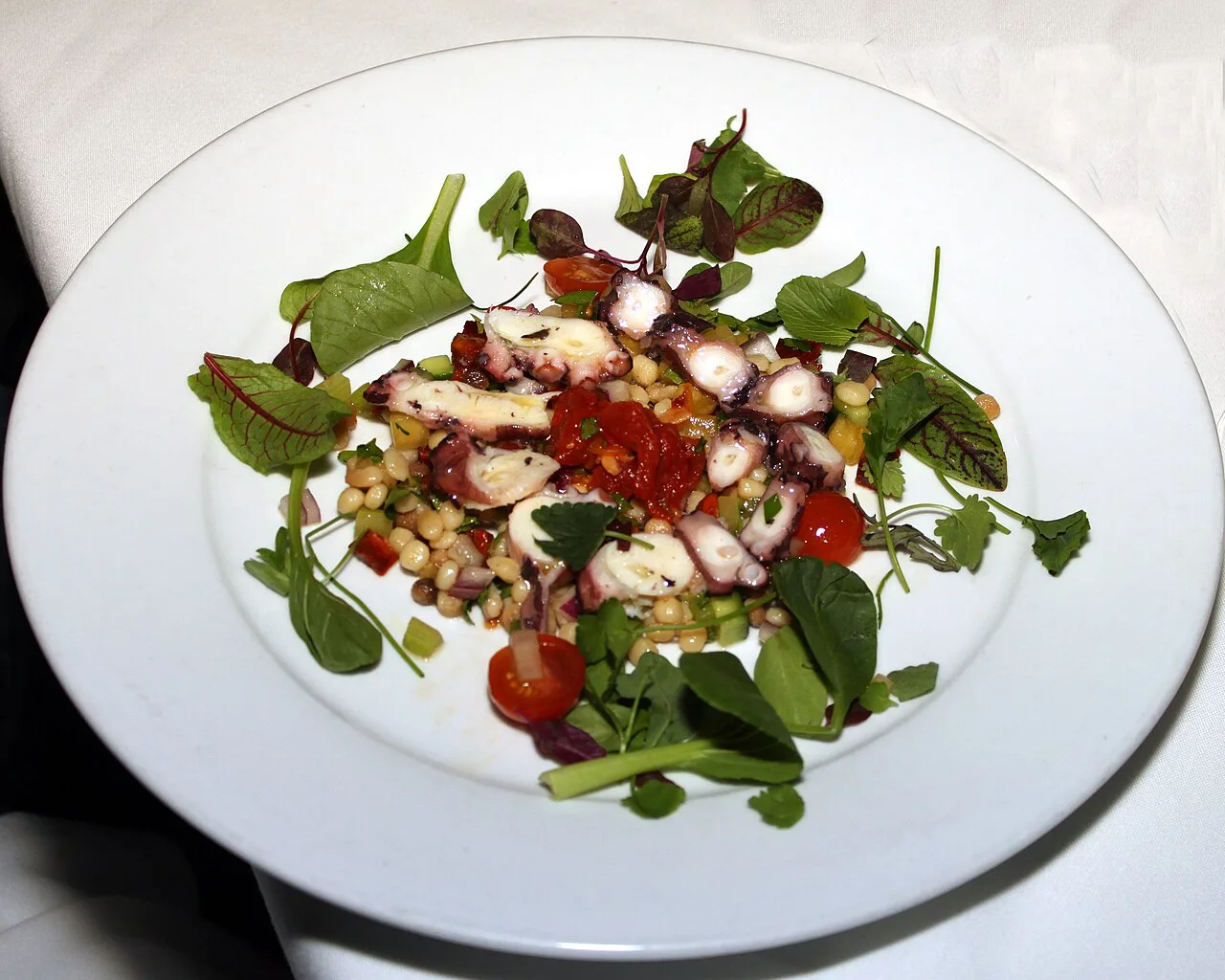
Expect a shallow plate or small bowl, the octopus and potato already dressed, with a basket of bread alongside. The bread is not decoration: it mops up the lemon and oil left at the bottom, and a kitchen that brings it without being asked is usually one that expects you to finish the plate. Portions vary widely, so if the salad is the centrepiece for two people, say so when ordering and ask whether a larger plate is possible.
It arrives quickly because nothing is cooked to order, which makes it a sensible first plate when you are hungry and the rest of the order will take time. Just as useful, it is a low-risk dish in a kitchen you do not know: the ingredients are few and the preparation is simple.
Hot octopus dishes beside the salad, including à la buzara from Kvarner
If you want octopus cooked warm, look for hobotnica ispod peke, baked under a lid with potatoes, or ask for it grilled. On the Kvarner coast the signature treatment is à la buzara, a light sauce of olive oil, garlic, white wine and tomato in which scampi, mussels and other shellfish are cooked. The official Kvarner gastronomy pages describe scampi à la buzara as the best-known and most appreciated way of serving Kvarner scampi, alongside raw marinated scampi and scampi risotto.
Kvarner's seafood menu also leans on oily fish and shellfish, and on the Crikvenica Riviera restaurants carry an Oily Fish Route label for dishes built on those fish. It is a useful signal when you are choosing between a plate of octopus and a plate of fish: both sit in the same local tradition rather than being tourist additions.
How octopus salad is priced and served on the Dalmatian coast
On the coast the salad is priced as a starter, which means it sits well below the price of fish sold by weight and below most main courses of scampi or grilled meat. Menus quote fixed portions rather than weight, so the figure is set before you order; ask to see the menu if the price is not displayed.
The variable to watch is portion size, not the price itself. Two people sharing one plate as an opener is normal; a table of four ordering a single salad as a main will be disappointed. If the menu does not make the size clear, ask how many it serves.
Ordering it alongside fish, scampi or lamb for a shared table
The most satisfying way to eat octopus salad is as one part of a mixed coastal table: the cold salad first, then a whole grilled fish or a plate of scampi, with a vegetable side and bread. This spreads the cost and gives you several textures instead of a single plate of cold seafood. On the coast, whole fish is usually sold by the kilo, so confirm the weight and the price per kilo before the kitchen cooks it.
Inland and in the mountains the same table logic applies with different ingredients. At Plitvice Lakes, Lička kuća, built in 1972, serves dishes based on local Lika produce, and the park's own pages single it out for a menu built on products from the region. Nearer the coast, Istrian pršut, dry-cured ham served thinly sliced with cheese and olives, does the job of a cold opener if you want a break from seafood.
Where the land meets the sea, Cres lamb is the island's best-known dish, raised on free grazing across the island's pastures. Ordering it alongside a seafood starter is common enough, and it gives a shared table a warm main to follow the cold plates.
Croatian white wines that suit octopus salad
The dressing is built on lemon and olive oil, so the wine should be dry, fresh and modest in alcohol. On the Kvarner islands, Vrbnička Žlahtina from Krk is the local white, and it is the natural glass with a seafood starter in that part of the coast. Elsewhere on the Dalmatian coast, ask for a dry local white by the glass rather than choosing blind from a long list.
Keep the pour small if you are moving on to a bigger main. A glass rather than a bottle leaves room for the rest of the meal, and the salad does not need a serious wine to work.
Buying octopus at a Dalmatian market
If you are cooking it yourself, look for octopus at the morning fish market, where it is sold fresh or previously frozen and cleaned. Small specimens are tender enough to simmer; larger ones benefit from being frozen first, which softens the muscle before cooking. Ask the stallholder to clean it if you are not confident doing it at home.
Cook it gently in salted water until a knife slides into the thickest part of a tentacle without resistance, then let it cool in the cooking liquid before dressing. That cooling step is what gives the salad its texture, and rushing it produces a plate that tastes fine but chews badly.
Is octopus salad worth ordering?
Yes, if you treat it as a cold opener rather than a main. It is one of the simplest things on a Croatian seafood menu, it arrives fast and it is a reliable test of whether a kitchen dresses its plates with care. Order one for the table with bread before a grilled fish, and add a hot octopus dish only if you want to compare the two.
If the table would rather start with something warm, a fish soup or a plate of fried small fish does the same job. Otherwise, keep the order simple: salad, bread, a dry local white and a shared main.
Explore more Croatia guides
Frequently Asked Questions
What does octopus go well with?
With olive oil, lemon and herbs, and in the Croatian version usually with boiled potato, olives and capers. At the table it works alongside bread, a dry white wine and grilled fish or shellfish.
Do you eat octopus salad cold?
Yes. In Croatia it is served as a cold starter, with the octopus boiled in advance, cooled and dressed before it reaches the table.
Is octopus salad a main course in Croatia?
No, it is listed among the cold starters. Portions are small, so order it to share before a main of fish, scampi or meat.
Sources
Notes on eating well in Croatia
Optional updates to our food guides.
You might also like



Continue reading
More guides you'll find useful





