
Truffle Hunting in Croatia: Istria Seasons, Forests and What to Expect
Truffle hunting in Croatia centres on Istria's Motovun forest, where dogs find white and black truffles. Here are the seasons, regions and what a hunt involves.
On this page
Truffle hunting in Croatia is an Istrian activity: guided walks with trained dogs through the forests around Motovun, Buzet and Pazin, where white and black truffles grow underground among tree roots. The region treats truffles as part of its food culture rather than a novelty, and hunts are run for visitors alongside the professional work of local hunters. This guide covers where the truffles grow, how the two types differ, when each is hunted, and how to judge what you buy afterwards.
It is a morning outdoors rather than a restaurant booking: you walk, you watch the dogs work, and you eat something truffled at the end. Knowing which truffle is in season decides whether a visit makes sense, because the white and black windows barely overlap.
What Truffle Hunting in Croatia Actually Is
A truffle is an edible fungus that grows underground in a symbiotic relationship with the roots of certain trees, which is why hunting means reading a forest rather than picking from a branch. The truffle stays hidden, so the work depends on an animal nose: trained dogs, and sometimes pigs, sniff out the aroma and lead the handler to the spot. The human contribution is habitat knowledge, the seasons and the digging.
Where Truffles Grow in Istria. Istria is a heart-shaped peninsula in Croatia's north-west, and the dense forests around Buzet and Motovun are known for rich truffle deposits.
White Truffles and Black Truffles: What Each Tastes Like. Istria produces both white and black truffles, and they behave differently in the kitchen.
When to Go: The White and Black Truffle Seasons. Do not treat truffle season in Istria as one period, because the two types run on separate calendars.
For a visitor, the shape of the day is simple. A host and their dog take a small group into the woods, the dog works the ground near likely trees, and anything found is lifted carefully to keep the truffle intact. Because the activity depends on living animals and wild ground, no two hunts follow the same route, and the morning is spent walking and watching rather than following a script.
Expect the walk to end with tasting, which is where the culinary side of Istria comes in. Truffles are shaved raw over eggs, pasta, fuži or risotto, or worked into cheese and sausage, and the point of the tasting is to understand why so little goes so far. If you want to build a wider tasting itinerary after the hunt, see the Olive Oil Tasting guide.
Where Truffles Grow in Istria
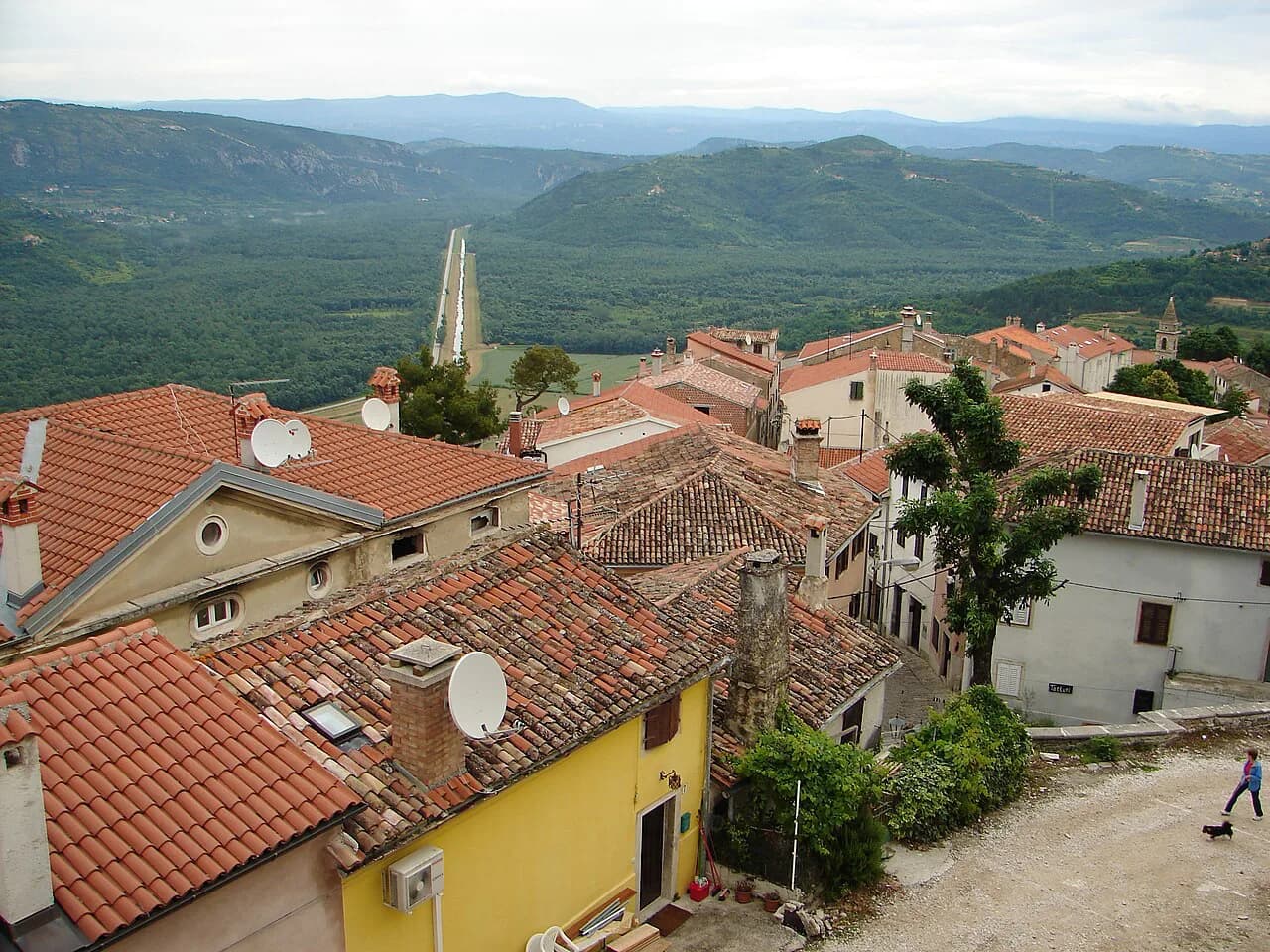
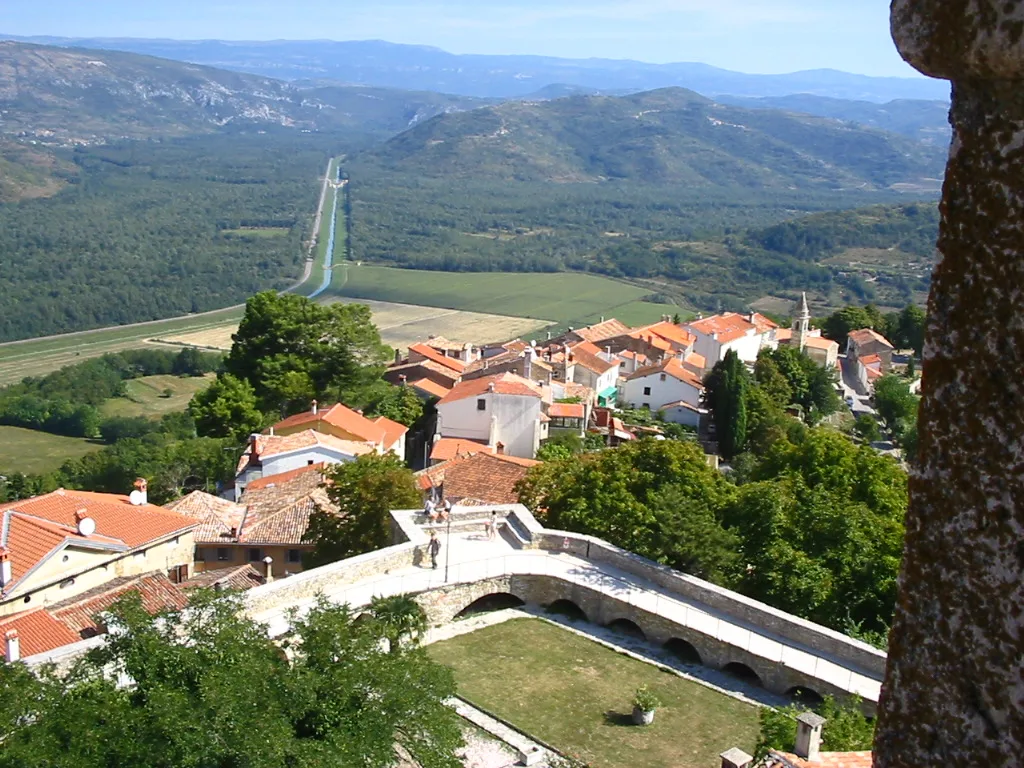
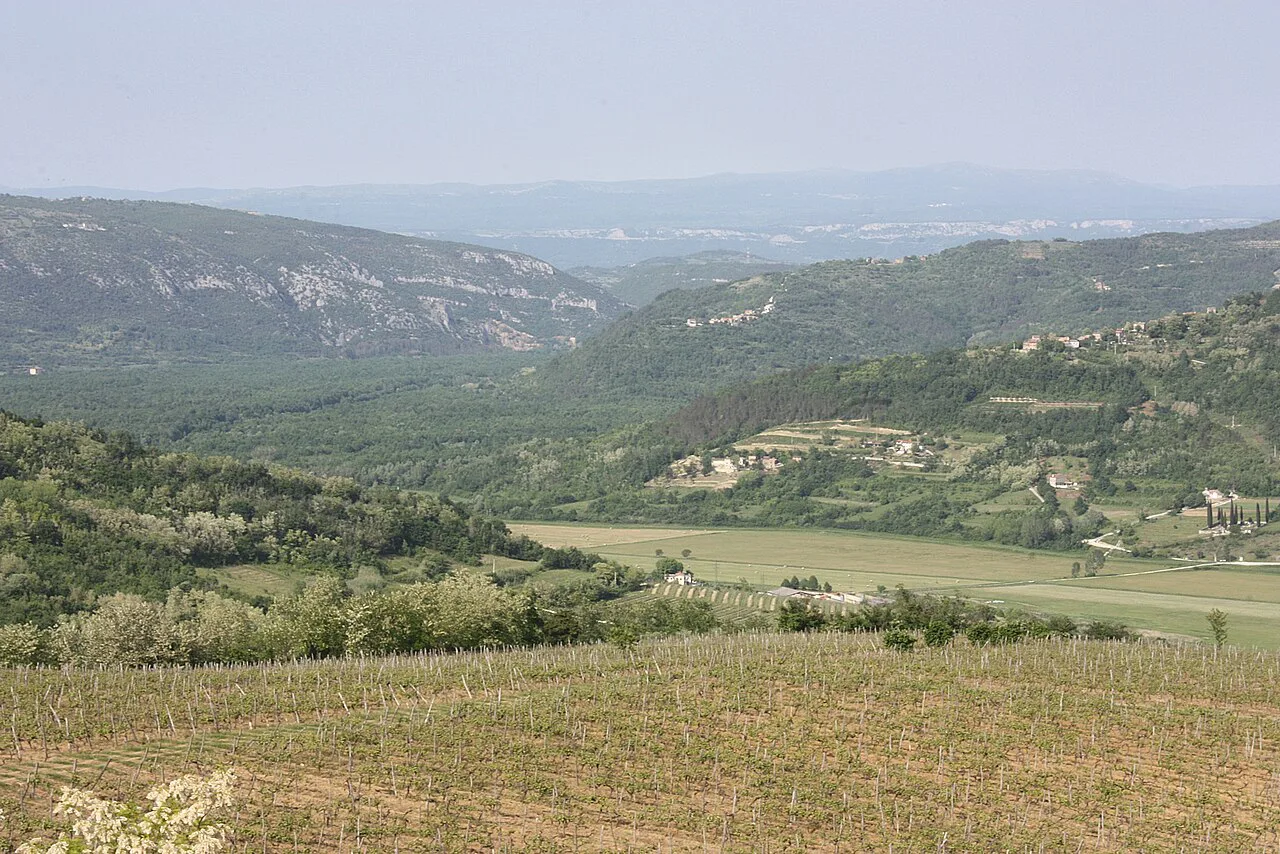
Istria is a heart-shaped peninsula in Croatia's north-west, and the dense forests around Buzet and Motovun are known for rich truffle deposits. The Motovun forest, with the Mirna river flowing past it, is particularly associated with high-quality white truffles and draws both amateur and seasoned hunters. That combination of river valley, damp soil and tree cover is what you are walking through on a hunt.
The truffle ground extends beyond that single wood. Good areas run south-west of Buzet and Lanišće, stretch towards the Raša river near Labin, and continue in the south around Pazin.
If you are based on the coast, the practical base for a hunt is the inland hill country above the Mirna valley rather than the seaside towns. Motovun and Buzet are the names to look for when choosing where to stay or how far to drive, and the hill towns give the day a shape beyond the walk itself.
White Truffles and Black Truffles: What Each Tastes Like
Istria produces both white and black truffles, and they behave differently in the kitchen. The white truffle is the rarer and more valuable of the two, prized for its aroma, and it is found primarily in a handful of regions including Istria, alongside parts of Italy. A record-breaking white truffle has been found in Istria, which tells you something about the scale the local woods can produce.
Treat white truffle as a finishing ingredient. Its perfume is volatile, so the usual approach is to shave it raw over a hot but simple dish at the table, letting the heat release the aroma without cooking the truffle itself. Black truffle is the more robust, everyday option, with a deeper, earthier flavour that stands up to cooking in sauces, stuffings and cured meats.
Both belong to the same regional larder as Istarski pršut, the peninsula's dry-cured ham, and local olive oil, so a tasting can read as a small plate of Istria rather than a truffle alone. Truffle shaved over pasta or folded into cheese is the most direct way to taste the difference between the two types. For local produce more broadly, browse the Croatian Delicacies guide, and if you want to compare the region's oils, see the Olive Oil Tasting guide.
When to Go: The White and Black Truffle Seasons
Do not treat truffle season in Istria as one period, because the two types run on separate calendars. White truffles are hunted from September to January, while black truffles are typically found from May to September. Weather matters too, since truffles thrive in specific conditions and mild, wet weather is what hunters hope for.
For most visitors the practical Split is straightforward. Autumn and early winter are the white truffle window, the expensive one, with hunts running through the back end of the year and into January. Late spring and summer are black truffle territory, and a hunt in June or July is a black truffle hunt, not a white one.
That leaves high summer and late winter as the awkward edges. Before booking, ask the operator which truffle is currently being found, so you know what you are walking for and what will end up on the plate.
What a Hunt with Dogs Involves
The mechanics are consistent whether you join a short outing or a longer one. You meet a host, walk into the woods, and the dog does the searching while the handler reads the behaviour and decides where to dig. When a truffle is located it is lifted out whole, because the value sits in the intact fungus rather than in pieces.
Truffle hunting is described by those who run it as both an art and a science, and the second half is the part you notice on the day. The handler needs to know which trees the truffles partner with, what the ground should smell and feel like, and which time of year suits which species. You are watching specialist knowledge applied to a landscape that looks, to most visitors, like ordinary woodland.
Wear footwear for muddy, uneven ground in the Mirna valley, especially after rain, and expect to be outdoors for the walking part rather than standing around. The reward at the end is the tasting, where the morning's work is turned into a plate of eggs, pasta or cheese with truffle shaved over the top.
Rain, Weather and the Motovun Forest
The Mirna valley does not just provide scenery, it provides the conditions truffles need. Damp, mild weather suits them, which is why the wooded slopes and river corridor around Motovun are so closely associated with the trade. A dry, hot spell changes the odds on any given hunt, so a trip planned around a single fixed date carries more risk than a flexible one.
In practice this means autumn rain is not bad news for truffle hunting, it is part of the reason the season is when it is. Spring and early summer hunts for black truffles happen in leafier, drier woods, and the walk feels different from a late-October morning in the same valley.
Buying Truffles and Truffle Products in Istria
Istria has a truffle market, and the region's shops and stalls sell fresh truffles alongside jars, pastes, cheeses and oils. The market is where the trade meets the visitor, and it is the place to see truffles in the round, weigh them in the hand and understand why they are sold in small quantities.
Fresh truffles are the ones to buy if you plan to cook within days, because their aroma fades quickly once out of the ground. Preserved truffles and truffle products in jars or oils keep far longer and travel better, but the truffle content varies widely between products, so read the label rather than the picture on the front.
Carrying food home from Croatia is a separate question from buying it, and fresh fungi in particular are best treated as something to eat in Istria rather than something to pack in a suitcase.
Why Istrian Truffles Command High Prices
Scarcity does most of the work. Truffles cannot be farmed like a crop, they form underground in partnership with particular trees, and finding them depends on trained animals and people who know the ground. The white truffle is the rarer of the two, sells in small weights, and its aroma is at its best in the first days after lifting, which is why it appears on restaurant plates as a garnish rather than as a main ingredient.
There is also a geographic limit. White truffles are found in specific regions, Istria among them, so supply is tied to a small number of forests and a short autumn-to-winter window. Prices are quoted per kilo and move with the season and the harvest, so ask what the current rate is rather than working from an old figure.
Judging Whether a Truffle Product Is Worth It
Work out first what you are actually buying. A jar of truffle paste or a bottle of truffle oil is a flavoured product, and the amount of real truffle in it can be small; fresh truffle is a different purchase altogether and should smell strongly of the forest when you open it.
For fresh truffle, buy only what you will use within a few days and keep it cool and dry rather than sealed in plastic. For preserved products, compare the truffle percentage and the species named on the label, since black and white truffle are not interchangeable in price or in flavour.
If you want something that captures the region rather than a souvenir, think about how you will use it at home. A small jar of truffle paste stirred into pasta is a more reliable purchase than a large bottle of oil whose aroma will fade after opening. Istrian olive oil, sold alongside truffles in the same shops, is the easier everyday buy.
Which Truffle Hunt to Book
Match the season to the truffle you want to taste. Autumn and early winter mean white truffle country, with hunting from September to January, while late spring and summer are the black truffle months from May to September. Booking outside those windows risks a walk without the truffle you came for.
Choose a base in the inland hill country around Motovun and Buzet rather than on the coast, and treat the hunt as a morning outdoors: sturdy shoes, a flexible date and an appetite for the tasting at the end. If you want a broader picture of what Istria and the rest of the country put on the table, start with the Croatian Delicacies guide and plan the rest of your eating around it.
Explore more Croatia guides
Sources
Notes on eating well in Croatia
Optional updates to our food guides.
You might also like



Continue reading
More guides you'll find useful





