
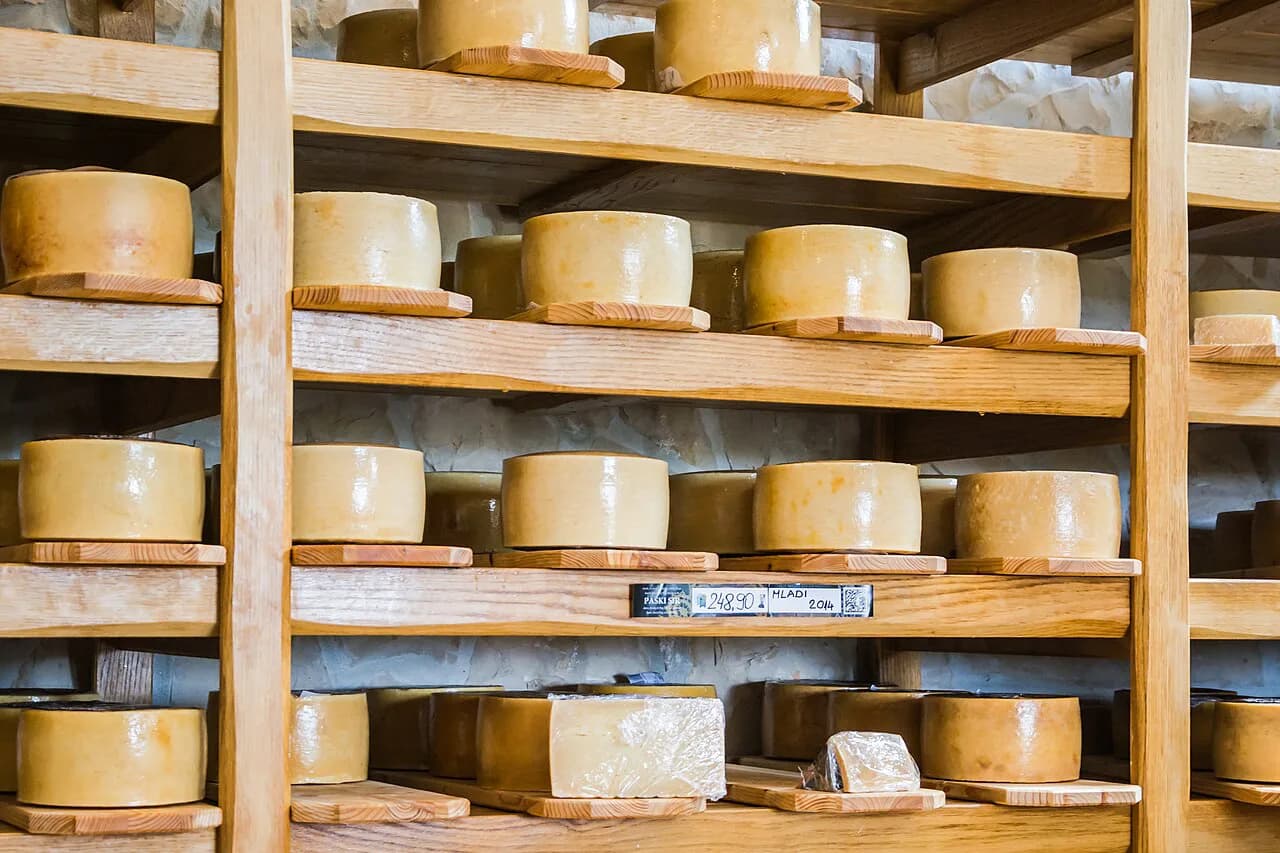
Paški sir: Croatia's Sheep's Cheese from Pag
Paški sir is a hard sheep's milk cheese from Pag, Croatia's best-known artisan cheese. Learn what it tastes like, how it is made and how to eat it.
On this page
Paški sir is a hard sheep's milk cheese made on the Croatian island of Pag and generally regarded as the most famous of Croatian artisan cheeses. It has a firm, crystalline paste, a honey-coloured rind and a flavour that is nuttier and brighter than an aged Parmesan, with hints of melon, spruce and citrus. This guide covers what the cheese is, how the island's wind and salty pastures shape the milk, what to expect on the plate and how to eat it without getting in your own way.
What paški sir actually is
Paški sir is made from the milk of Pag sheep, a small breed that has adapted to the island's harsh winters. The cheese is firm and hard, and it is usually sold in wedges or vacuum-packed pieces rather than as a fresh, spreadable cheese. If you are building a plate of Croatian delicacies, this is the one to put at the centre and slice thinly.
It is a sheep's milk cheese, not a mixed-milk one, which explains its density. Sheep give less milk than cows, so the cheese is a treat rather than an everyday cheese. Buy a modest piece and taste it on its own first before you decide how to serve it.

How the Bura wind and salty pastures shape the milk
Pag is a long, low, rocky island with the Velebit mountain range rising across the water to the east. Hot and cold air masses meet above Velebit and produce the bura, a powerful, cool, dry wind that whips up the sea and carries fine sea salt across the island's pastures. Those salt-laden fields, plus the wild herbs that survive between the rocks, are what the sheep graze on.
Is paški sir vegetarian? The sources here do not state which rennet is used, so read the label or ask the producer. Traditional hard cheeses of this kind are often made with animal rennet; if you need a vegetarian cheese, look for one marked as made with microbial rennet and confirm it at the counter.
How long does paški sir keep? A vacuum-sealed wedge keeps for several weeks unopened in the fridge. Once opened, wrap it tightly in greaseproof paper or foil rather than cling film, and eat it within a week or two; the cut face will dry out and harden first.
Can I take paški sir home from Croatia? Hard cheeses like paški sir are generally allowed in hold luggage for UK and EU arrivals, but check your destination's rules before you fly. Vacuum-sealed pieces travel better than loose wedges, and a cool bag keeps them in good condition on a longer journey.
The herbs matter as much as the salt. Wormwood, rockrose, mint, immortelle, lavender and Dalmatian sage all grow on Pag, and sage in particular carpets parts of the island when it blooms in April and May. The aromatic vegetation passes into the milk, which is the explanation you will see given for the cheese's herbal edge.

What paški sir tastes like
Expect a nutty, bright flavour rather than a heavy, barnyardy one. The cheese has a noticeable saltiness and a faint herbal note, with hints of melon, spruce and citrus. It is rich but not remotely as sharp as a mature pecorino, which makes it an easy cheese to serve to people who usually find sheep's cheese too strong.
The texture is where first-timers are often surprised. Aged paški sir is firm, with small protein crystals that crunch faintly between your teeth, much like an aged Parmesan. That is a sign of age and dryness, not a fault.
What it looks like on the counter
A whole wheel has a thick, honey-coloured rind and a pale interior flecked with those crystals. Cut wedges show a dense, firm texture. If you are buying from a deli counter, ask for a piece from the interior.
Pre-packed pieces are sold in Croatian delis and make a practical choice when you are travelling and cannot get to a counter. Vacuum-sealed pieces also travel more easily than loose wedges.
Pag sheep and the herbs they graze
Pag sheep, known locally as paška ovca, are small and sturdy with thick winter coats that see them through the bura. They forage across the rocky hills and eat the hardy vegetation and aromatic herbs, which is why the milk is so distinctive.
Several producers make the cheese, and it varies with age and maker. Sirana Gligora is one named producer whose paški sir is widely known, but it is not the only one worth trying, and it is not a benchmark for the whole island. Compare two pieces from different makers if you can.
How to eat paški sir
Start with it plain, at room temperature, sliced thinly and nothing else. Cold cheese tastes of very little; twenty minutes out of the fridge is enough to bring out the nuttiness and the herbal notes. Add a drizzle of good Extra virgin olive oil and a grind of pepper only once you have tasted it naked.
On a Croatian table it often appears alongside pršut, the air-dried ham of the Dalmatian coast and hinterland, with bread and olives. The salt of the ham and the salt of the cheese can gang up on you, so balance the plate with something sweet: fresh figs, a fig spread or a slice of melon. Croatian bread, a plain sourdough or a cornmeal loaf, is the right carrier.
It also works grated or shaved over pasta and rižot, though the price makes it an extravagant choice for cooking. A better use for a small piece is to shave it over a simple crni rižot, the dark cuttlefish risotto of the Dalmatian coast, where the salt and nuttiness cut through the richness.
If you are serving it as part of a wider spread, pair it with a dry white or a light red rather than anything sweet. Keep the portions small: a 100–150 g wedge is plenty for four people as part of a mezze-style plate.
Buying paški sir and reading the label
In Croatia, look for the words paški sir on the label and, where given, the name of the producer and the age of the cheese. Older pieces are firmer, saltier and more crystalline; younger ones are milder and easier to eat on their own. Ask the shop assistant to cut a piece from the middle of the wheel if you are buying loose.
Paški sir should be made on Pag from the milk of Pag sheep. If the label is vague about where it was made, treat it as a generic sheep's cheese. For a wider look at Croatian cheese styles, from fresh sir to aged wheels, see the Croatian cheese guide.
Is paški sir worth buying?
Yes, if you want a cheese that tastes of a specific place and holds up in a suitcase. Buy a small wedge rather than a large one, taste it plain first, then build a plate with pršut, bread and something sweet to balance the salt. On Pag itself, and in good delis along the Dalmatian coast, it is the cheese most worth carrying home.
Explore more Croatia guides
Frequently Asked Questions
Is paški sir vegetarian?
The sources here do not state which rennet is used, so read the label or ask the producer. Traditional hard cheeses of this kind are often made with animal rennet; if you need a vegetarian cheese, look for one marked as made with microbial rennet and confirm it at the counter.
How long does paški sir keep?
A vacuum-sealed wedge keeps for several weeks unopened in the fridge. Once opened, wrap it tightly in greaseproof paper or foil rather than cling film, and eat it within a week or two; the cut face will dry out and harden first.
Can I take paški sir home from Croatia?
Hard cheeses like paški sir are generally allowed in hold luggage for UK and EU arrivals, but check your destination's rules before you fly. Vacuum-sealed pieces travel better than loose wedges, and a cool bag keeps them in good condition on a longer journey.
What is the difference between paški sir and ordinary sheep's cheese?
Paški sir is a hard, aged cheese with a crystalline texture and a saline, herbal flavour from the island's pastures. Many sheep's cheeses sold in the Balkans are younger, softer and milder; paški sir is drier and more intense, and it is eaten in thin slices rather than spread.
Sources
Notes on eating well in Croatia
Optional updates to our food guides.
You might also like



Continue reading
More guides you'll find useful





