
Sinjski Arambašići: What They Are and How They're Made
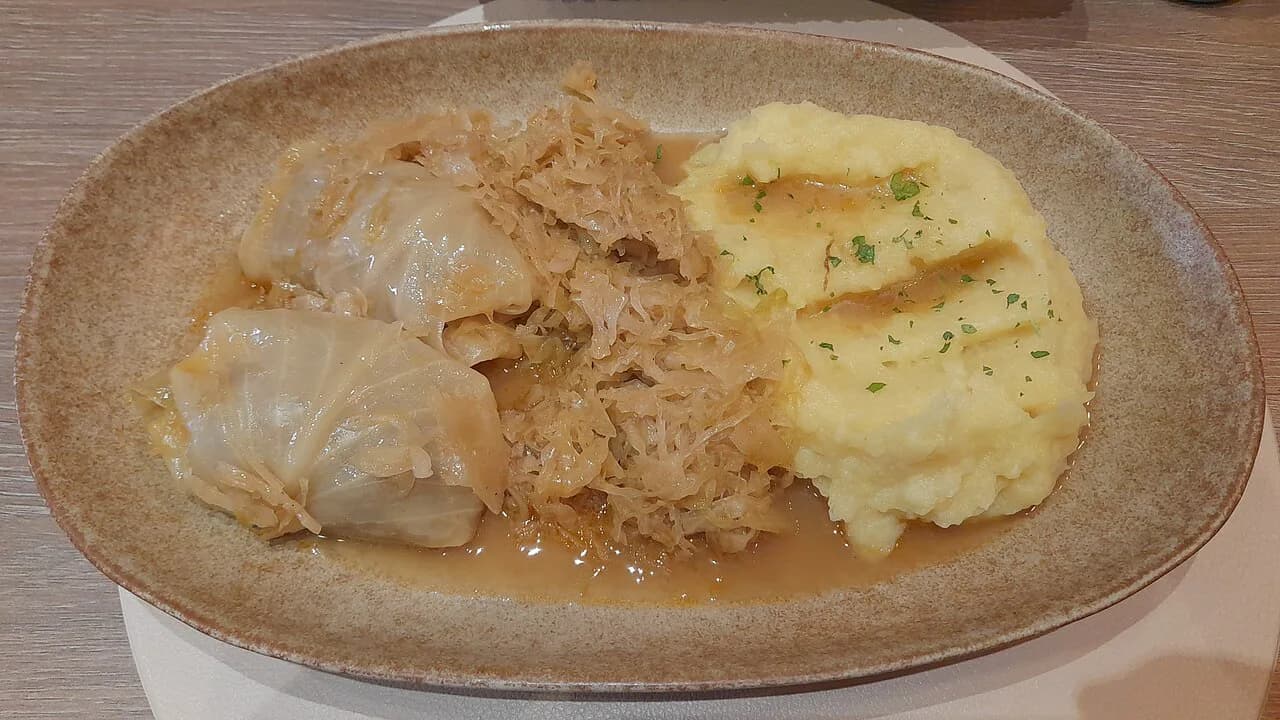
Sinjski arambašići are sour-cabbage rolls stuffed with minced meat and smoked bacon, slow-cooked with dried meat and served with mashed potato.
On this page
Sinjski arambašići are sour-cabbage rolls packed with minced meat, onion and smoked bacon, simmered slowly in a pot layered with dried meat and served with mashed potato. They are the best-known dish of the Sinj and Cetina hinterland, cooked for Easter, Christmas, Velika Gospa and the Sinjska alka.
This guide covers what goes into the rolls, why the pot is built in layers, where the name comes from and what to call the dish when you are in Sinj. It closes with the other Cetina-region dishes worth ordering in the same sitting.
What sinjski arambašići are
Think of a cabbage roll that has been given more meat, more smoke and more time than the everyday version. Minced beef or a beef-and-pork mix is worked with onion, garlic, smoked bacon or pancetta, parsley, egg and seasoning, then wrapped in fermented sour-cabbage leaves. The rolls go into a deep pot with dried meat and cook gently until the leaf softens and the filling takes on the sour, savoury liquid around it.
The dish belongs to the wider stuffed-cabbage family that runs from the Balkans through Central Europe, and it is the Cetina valley's own branch of it. Order it as a main course, not a side: the portion usually arrives with the dried meat from the pot and a mound of mashed potato, which is enough for a full meal.
The name: from harambaša to arambaš
The word probably traces back to the Turkish harami, meaning sinful or forbidden, and başi, meaning chief, which together give harambaša, the leader of a band of hajduk outlaws. In the Sinjska alka, the jousting tournament held in Sinj each August, the same title is used for the leader of the Alkari, the mounted competitors.
Do Croatians call this dish sarma? Not in Sinj. There the dish is arambaš, and it is treated as the town's own specialty rather than as a version of sarma.
What does arambašići mean? It is the diminutive of arambaš, the name used in Sinj for the dish. The word probably derives from the Turkish harambaša, the leader of a band of hajduk outlaws, a title still used in the Sinjska alka for the leader of the Alkari.
What is served with sinjski arambašići? Mashed potato and the dried meat cooked in the pot, whether sausage, pršut or dried beef. The rolls are simmered with shredded sour cabbage, a beef bone and a little tomato concentrate, so the plate is a full meal in itself.
The tourist board for the town sets out that etymology and records that sinjski arambaši are protected as intangible cultural heritage. Treat the protection as recognition of the home method rather than a guarantee about any restaurant version you order.
Arambaš or arambašić?
The town uses both forms: the Sinj tourist board heads its own recipe 'Sinjski arambaši', while the diminutive arambašići is what you will most often see on menus and in writing, and it is the form most English-language searches use. Ordering arambaš in Sinj signals familiarity with the local name; arambašići will be understood anywhere.
Where it sits in the sarma family
Stuffed cabbage travelled into this region along the Ottoman and Byzantine route, and the technique of wrapping a filling in leaves and simmering it in liquid goes back further still, to Roman cooking. The version made with fermented sour cabbage dominates in Dalmatia and the Sinj hinterland, while a sweeter fresh-cabbage style is more common further east.
If you already know sarma, arambaši will feel familiar but richer: the meat mixture is more heavily seasoned, the pot usually carries dried meat as well, and the finish is mashed potato rather than bread. It is a cold-weather dish at heart, which is why it anchors festival tables rather than summer menus.
What goes into the filling
The Sinj tourist board's traditional recipe starts with a kilo of fresh beef chopped into small pieces, though home cooks commonly use mixed minced meat. The flavour base is a paste of onion, garlic, smoked pork bacon and parsley, seasoned with salt, pepper and nutmeg; the same recipe grates in the zest of a lemon. A home-cook version archived on Coolinarika adds egg, sweet paprika, ground clove and a little fat to the mix and lets it rest before wrapping.
Those quantities are a home template, not a rule, and two Sinj kitchens will disagree about nutmeg, clove and lemon zest. What stays constant is the balance: enough smoke from the bacon to cut the sour cabbage, and enough seasoning in the meat to hold up through a long simmer.
How the pot is built
The layered pot is what separates arambaši from a plain cabbage roll. A piece of beef bone goes on the base, covered with shredded sour cabbage; the rolls are packed on top and then covered with more cabbage, a few sausages, a piece of pršut or dried beef, a spoon of tomato concentrate and a little fat. Water is added to about the height of the rolls and the pot simmers, covered, until everything is tender.
Timing differs between sources: the tourist board describes roughly two hours, while the archived home recipe gives about an hour and a half and serves the rolls with mashed potato. Either way, the dish is done when a knife passes through a roll without resistance and the liquid has thickened around the meat. The tourist board notes that, kept in a cold place, the rolls stay good for up to seven days, which is part of why the dish suits festival cooking.
When Sinj cooks them
Arambaši turn up on the table at Easter, Christmas and Velika Gospa, the Assumption feast on 15 August, and around the Sinjska alka. They are celebratory food rather than an everyday lunch, which is why the pot is built to feed a crowd and the dried meat goes in with the rolls.
If you are in the Cetina region around one of those dates, expect the dish to appear on more menus than usual. Outside the festival calendar it is a colder-month plate, and its weight sits better after a morning outdoors than in the heat of August.
What to order alongside in Sinj
The town's own repertoire is worth working through in one meal. Rafioli are the sweet counterpart, small pastry half-moons filled with almonds; uštipci are fried dough pieces dredged in sugar; kotonjada is a firm quince paste set in moulds; and šiša is a rustic braise of lamb offal with vegetables and homemade noodles. Zec na sinjski način, hare braised with rosemary, garlic, bacon and a little vinegar and red wine, is the other dish to look for on a cold day.
Arambaši are substantial enough that a shared plate followed by rafioli makes a sensible order for two. If you want more grilled meat on the table, the wider picture of Croatian meat dishes covers the roasts, stews and grills that sit around this kind of cooking, and ćevapi are the closest thing to a quick, casual order in the same register.
How to order them well
Ask for arambaš in Sinj, and expect the dish to be described under its festival name rather than as sarma. It is heavy, so Don't build a three-course meal around it; one roll portion with mashed potato and a sharp salad is usually enough before dessert.
Because it is a slow-cooked, cold-weather plate, it is worth checking whether arambaši are on the menu on the day you visit, as the dish is prepared in advance rather than to order. Menus in the Cetinska krajina changes with the season and with the feast calendar, and the pot is not something a kitchen throws together to order. Asking when you book a table costs nothing and saves disappointment, especially outside the feast days — Uskrs, Božić, Velika Gospa and the Sinjska alka — when arambaši are a fixture of celebratory tables.
Is it worth ordering arambaši in Sinj?
Yes, if you are in the Cetina region and want the one dish that most clearly says where you are. It is rich, sour and smoky, closer to a home-cooked celebration than to restaurant cooking, and it comes with its own vocabulary and festival calendar attached.
Order it as a main, ask for arambaš in town, and leave room for rafioli. If the pot is not on that day, the grilled and stewed meat tradition behind it is the next best place to start.
Explore more Croatia guides
Frequently Asked Questions
Do Croatians call this dish sarma?
Not in Sinj. There the dish is arambaš, and it is treated as the town's own specialty rather than as a version of sarma. The two share the stuffed-cabbage technique and the sour-cabbage leaf, but arambaši carry more meat, more smoke and dried meat cooked in the pot, and they are served with mashed potato. Elsewhere in Croatia the everyday stuffed cabbage is called sarma.
What does arambašići mean?
It is the diminutive of arambaš, the name used in Sinj for the dish. The word probably derives from the Turkish harambaša, the leader of a band of hajduk outlaws, a title still used in the Sinjska alka for the leader of the Alkari. In Sinj itself, arambaš is the expected form.
What is served with sinjski arambašići?
Mashed potato and the dried meat cooked in the pot, whether sausage, pršut or dried beef. The rolls are simmered with shredded sour cabbage, a beef bone and a little tomato concentrate, so the plate is a full meal in itself. Rafioli, uštipci or kotonjada follow if you want the sweet side of the Sinj table.
Sources
Notes on eating well in Croatia
Optional updates to our food guides.
You might also like



Continue reading
More guides you'll find useful





