
Pljeskavica: What It Is and How to Order It in Croatia
Pljeskavica is a large grilled minced meat patty from the Balkans, made with beef, pork or lamb. Here is what to expect and how it is served in Croatia.
On this page
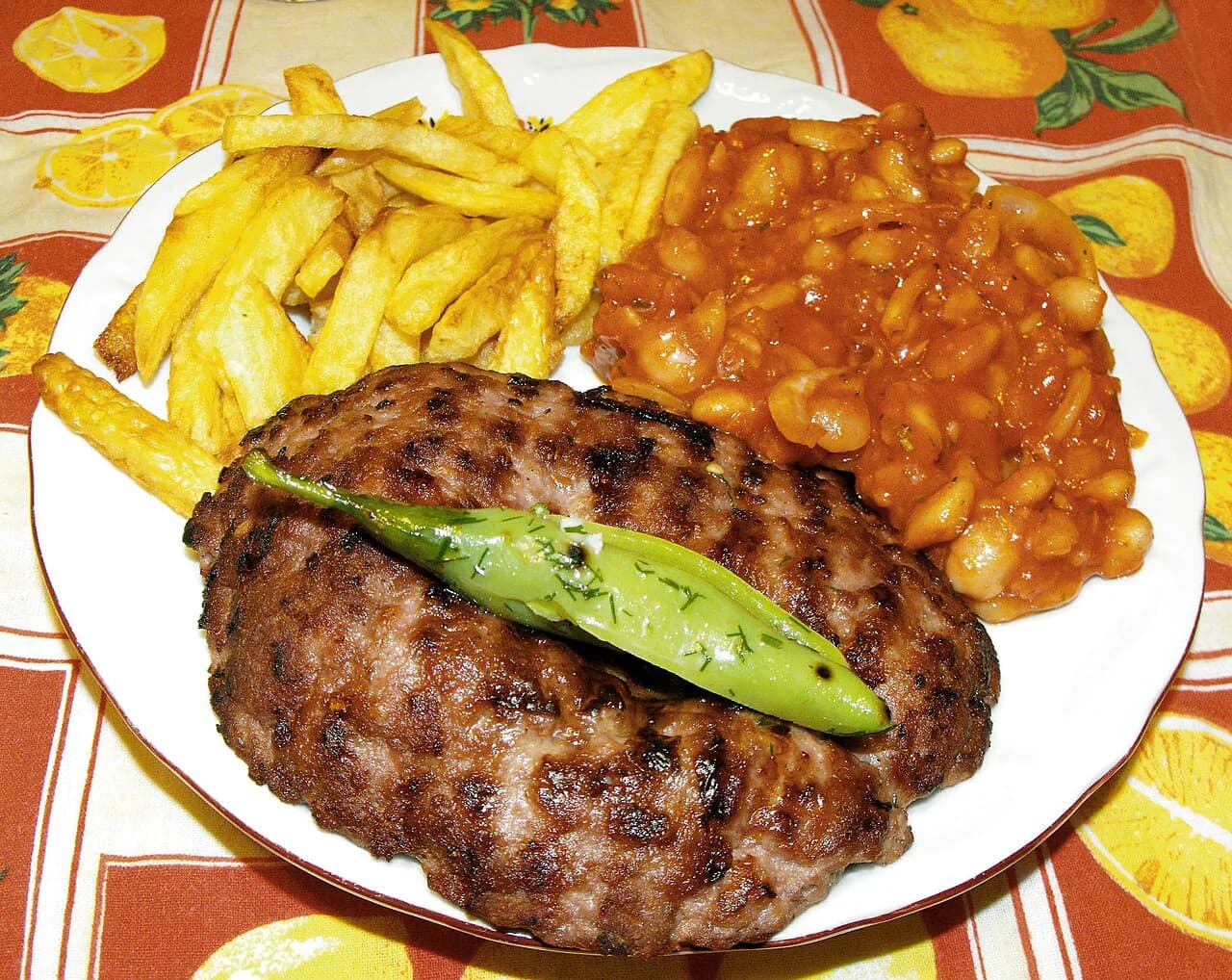
Pljeskavica is a large grilled patty of spiced minced meat, most often beef, pork or lamb, and it belongs to the grill tradition of the former Yugoslavia rather than to Croatia alone. On a Croatian menu it usually sits among the grilled meats, sometimes translated as a hamburger, which gives a misleading picture of what arrives. This guide covers the meat, the regional versions and how it is served.
Expect a broad, flat patty with a charred crust, not a thick stacked burger in a bun. It is a filling, inexpensive sort of meal and sits naturally beside ćevapi, the small cylindrical minced meat rolls served with flatbread. The word is roughly PLYES-kah-vee-tsah, with a soft j and a ts sound for the c.
What pljeskavica is
The word describes a minced meat patty shaped by hand and grilled, and it is a Serbian grilled dish of spiced minced pork, beef and lamb. That Serbian attribution is the honest starting point: it is a Balkan grill staple whose local forms spread well beyond any one country's borders.
Only the name is fixed. The shape, the meat blend and what goes on top vary by town and by kitchen, so the same word can describe quite different plates, and it rewards a bit of reading before you order.
What meat goes into pljeskavica
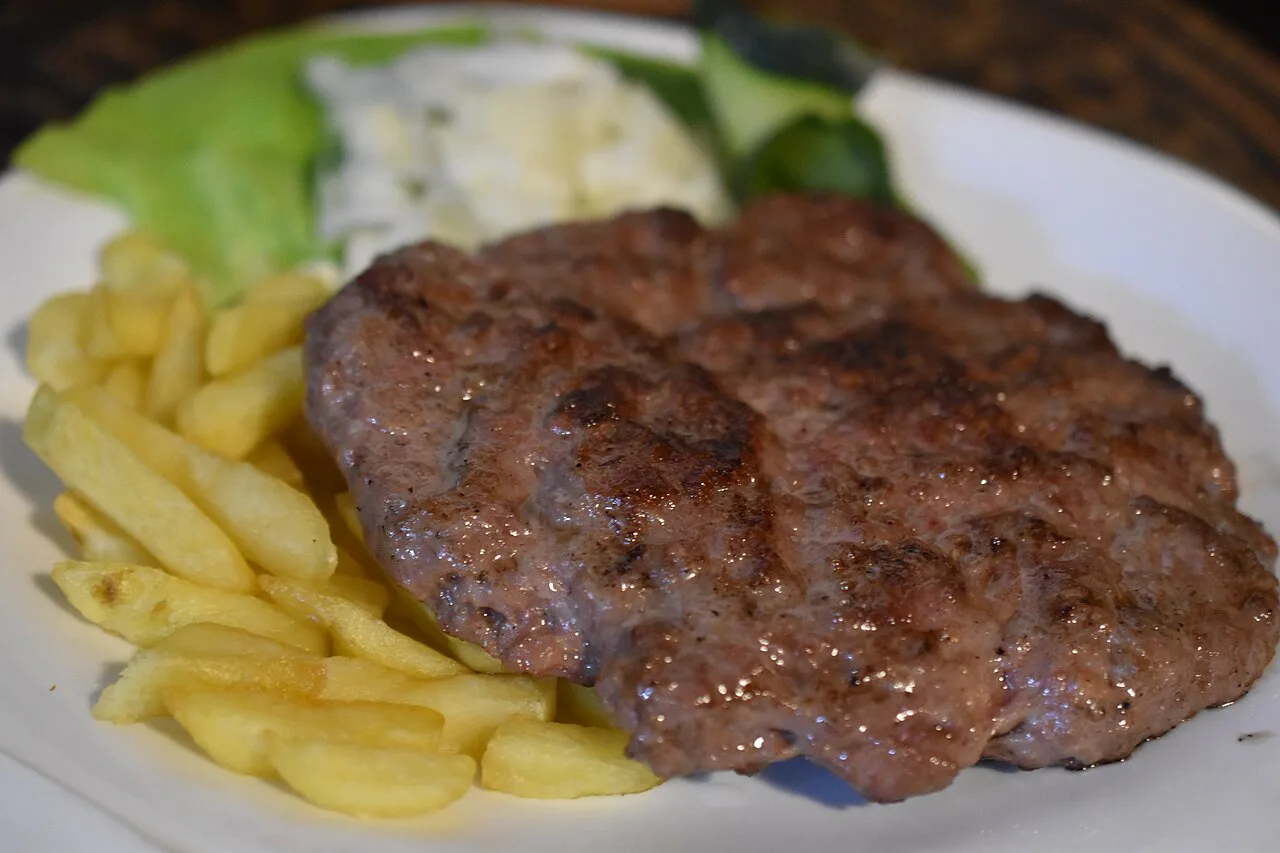
The most common blend is beef with pork, a mixture widely used across the non-Muslim parts of the former Yugoslavia, and lamb is often added. One home cook's working version combines minced beef and pork with lamb mince for a fuller flavour, and Serbian descriptions list all three together.
What is the difference between a burger and a pljeskavica? A pljeskavica is a large, flat grilled patty of spiced minced meat, usually bigger than a burger patty and often served without a bun unless you order flatbread separately. A burger implies a stack in a bun with sauce and salad; pljeskavica usually comes with bread, onion and a creamy dairy spread on the side, so you assemble each bite yourself.
What meat is pljeskavica made from? Most versions mix minced beef and pork, and lamb is often added. Serbian descriptions list pork, beef and lamb together, though single-animal versions exist, so ask what the blend is if you avoid pork or lamb.
Is pljeskavica Croatian or Serbian? It is a Serbian grilled dish, listed as one of Serbia's national dishes, and the many town-named versions spread across the Balkans. Croatia has its own variants, including a lamb-and-chicken Vukovar version, but the dish is a general grill item in Croatia rather than a Croatian speciality.
The meat is usually coarsely ground and generously seasoned, then rested before grilling so the patty holds together. Onion is often grated into the mixture or served alongside, and some versions add paprika or a little carbonated water to keep the meat juicy. If you prefer a single-animal patty, ask what the blend is.
Croatia has other dishes built on the same ingredient, from punjene paprike, peppers stuffed with a rice and meat filling, to the slow-cooked pots that make up Croatian meat dishes more generally. Pljeskavica is the fast, grilled end of that spectrum.
How pljeskavica differs from a hamburger
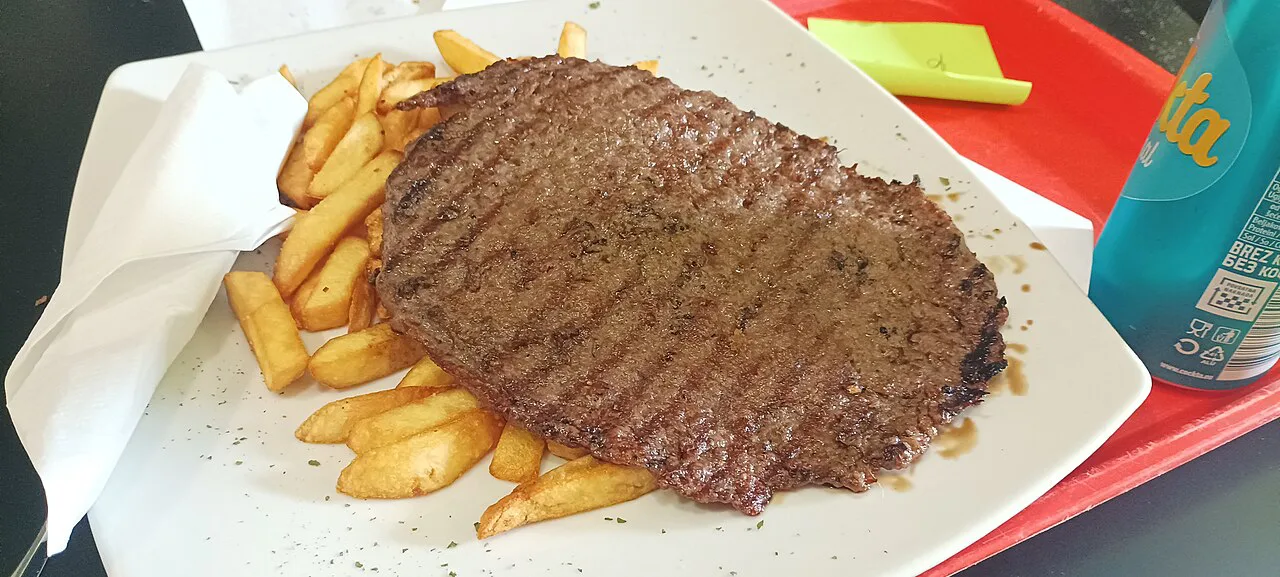
The comparison breaks down on size, bread and toppings. A patty is generally larger than a beef burger patty and can reach remarkable proportions, and it frequently arrives with no bread at all unless you order a flatbread separately.
A burger also implies a stack, with cheese, salad and sauce built into a bun. Pljeskavica arrives flatter and wider, often with the garnishes on the side or the bread open beside it, so you assemble each bite yourself. Treat the menu translation as a rough signal rather than a description.
The closest relative on a Croatian grill menu is ćevapi, the small grilled minced meat rolls that share the same flatbread, raw onion and creamy spread. Ćevapi: What They Are and How to Eat Them in Croatia explains the pairing in detail.
Is pljeskavica Serbian or Bosnian?
Pljeskavica is best understood as Serbian in origin and Balkan in reach. It is one of the national dishes of Serbia, and the versions cooked across the region vary from town to town and kitchen to kitchen as the name and seasoning travel.
Croatia sits on the same grill map, particularly in Dalmatia and the eastern inland towns, but it has no strong claim to the dish. It is a standard grill item you will see across the country rather than a Croatian speciality, which matters when you are deciding whether to spend a meal on it.
The regional variations worth knowing
Town names do a lot of work on Balkan grill menus, and each signals a different filling or garnish. The Leskovac version is very spicy and heavy on onion, the Hajduk version combines beef with smoked pork, and the Šar version is stuffed with kashkaval, a yellow cheese made from sheep's or cow's milk.
Two more repay recognition: the Vranje version is topped with sautéed onions, peppers and tomatoes, which makes it a wetter, vegetable-heavy plate, while the Šumadija version uses lamb and cheese and is finished with sour sheep's milk. If a menu lists one of these names without explanation, that is what it means.
Not every kitchen follows the naming. Many restaurants use one minced meat mixture for all their grilled dishes and vary only the shape, so a pljeskavica and the house ćevapi may be the same meat pressed differently.
How pljeskavica is served: lepinja, kajmak, ajvar, onion and chips
The classic plate has four parts: the patty, a lepinja, kajmak and ajvar. Lepinja is the soft flatbread of the Balkans, served warm and often Split open; kajmak is a rich fresh dairy spread somewhere between clotted cream and soft cheese; ajvar is a relish of roasted red peppers, sometimes with aubergine, that tastes sweet and slightly smoky.
Raw chopped onion and a few salad leaves usually come alongside, and fried potatoes are the standard side. Some cooks go further and put the chips inside the flatbread, where they add crunch, but that is a matter of taste. If you want bread, order it explicitly.
A home kajmak substitute blends cream cheese, butter and crème fraîche, which gives an idea of the texture, but the real thing in a Croatian grill is worth choosing when offered. Ajvar: What It Is and How to Eat It in Croatia goes further on the relish.
What pljeskavica looks like in Croatia
Two Croatian examples show how the dish lands locally. The Vukovar pljeskavica mixes lamb and chicken, a lighter blend than the usual beef-and-pork base and one of the few versions named after a Croatian town; in Zagreb, Baltazar Restaurant lists a pljeskavica with cheese and pancetta, served with marinated red peppers.
Outside those named examples, expect a straightforward grill dish: a large patty, flatbread, onion and something creamy on the side. It is often one of the cheaper ways to eat grilled meat, which makes it a sensible order for a solid lunch. If the menu calls it a hamburger, check whether a bun is included.
In Dalmatia and inland Croatia the mixed grill is usually the better introduction to a kitchen, with pljeskavica a comfortable part of the plate rather than the headline. Beyond the grill sit Slavonian čobanac, a slow-cooked paprika stew of several meats, and wild boar, both suited to cooler weather and a longer table.
If you are working through the minced meat canon, sarma, the stuffed cabbage rolls, and punjene paprike take minced meat in a very different direction and are the sort of dish a Croatian household cooks in quantity for Sunday lunch.
Pljeskavica with cheese and other filled versions
Cheese is the most common filling, either folded into the middle of the patty before grilling or melted over the top at the end. The Šar version stuffs kashkaval into the meat, and the Šumadija version combines lamb with cheese; both are substantial and best eaten with bread to mop up the juices.
Smoked pork is the other classic addition, as in the Hajduk version, and pancetta appears in the Zagreb restaurant take. If cheese is involved, ask whether it is folded into the middle of the patty before grilling or melted over the top at the end, since the two give different results on the plate.
How to order and eat pljeskavica at a Croatian grill
Start by asking what meat is in the blend and whether bread is included, since those two answers decide how much you need to add. If the menu names a town, such as Leskovac or Šar, use the name to pick your seasoning and filling rather than guessing from the photo.
Order it as a main unless the menu says otherwise, because the patty is large. One portion with flatbread and fried potatoes is generous for one person, and sharing one alongside a portion of ćevapi makes a good meal for two.
The wider grill menu rewards range. Janjetina, the Dalmatian spit-roasted lamb, is usually sold by the kilo and is a different experience entirely, while lamb peka, meat cooked under a domed lid with potatoes, needs ordering in advance at many places and is slower and richer.
For something breaded and crisp, Zagrebački odrezak, the Croatian take on a Wiener schnitzel, is the usual fallback, and boškarin, Istrian ox, is the beef to try if you are eating in Istria and want more character on the plate.
Should you order pljeskavica or ćevapi?
Order pljeskavica if you want one large, well-seasoned patty with bread and creamy kajmak alongside, and you are happy to build each bite yourself. The name is Serbian but the dish is at home across the Balkans, and in Croatia it is a dependable grill option rather than a local speciality, best judged by the meat blend and what comes with it.
Order ćevapi instead if you prefer smaller pieces and a serving that fits neatly into a flatbread. Either way, ask about the blend and the bread before you commit, and let the named regional versions guide your choice when a menu offers more than one.
Explore more Croatia guides
Frequently Asked Questions
What is the difference between a burger and a pljeskavica?
A pljeskavica is a large, flat grilled patty of spiced minced meat, usually bigger than a burger patty and often served without a bun unless you order flatbread separately. A burger implies a stack in a bun with sauce and salad; pljeskavica usually comes with bread, onion and a creamy dairy spread on the side, so you assemble each bite yourself.
What meat is pljeskavica made from?
Most versions mix minced beef and pork, and lamb is often added. Serbian descriptions list pork, beef and lamb together, though single-animal versions exist, so ask what the blend is if you avoid pork or lamb.
Is pljeskavica Croatian or Serbian?
It is a Serbian grilled dish, listed as one of Serbia's national dishes, and the many town-named versions spread across the Balkans. Croatia has its own variants, including a lamb-and-chicken Vukovar version, but the dish is a general grill item in Croatia rather than a Croatian speciality.
Sources
Notes on eating well in Croatia
Optional updates to our food guides.
You might also like



Continue reading
More guides you'll find useful





