
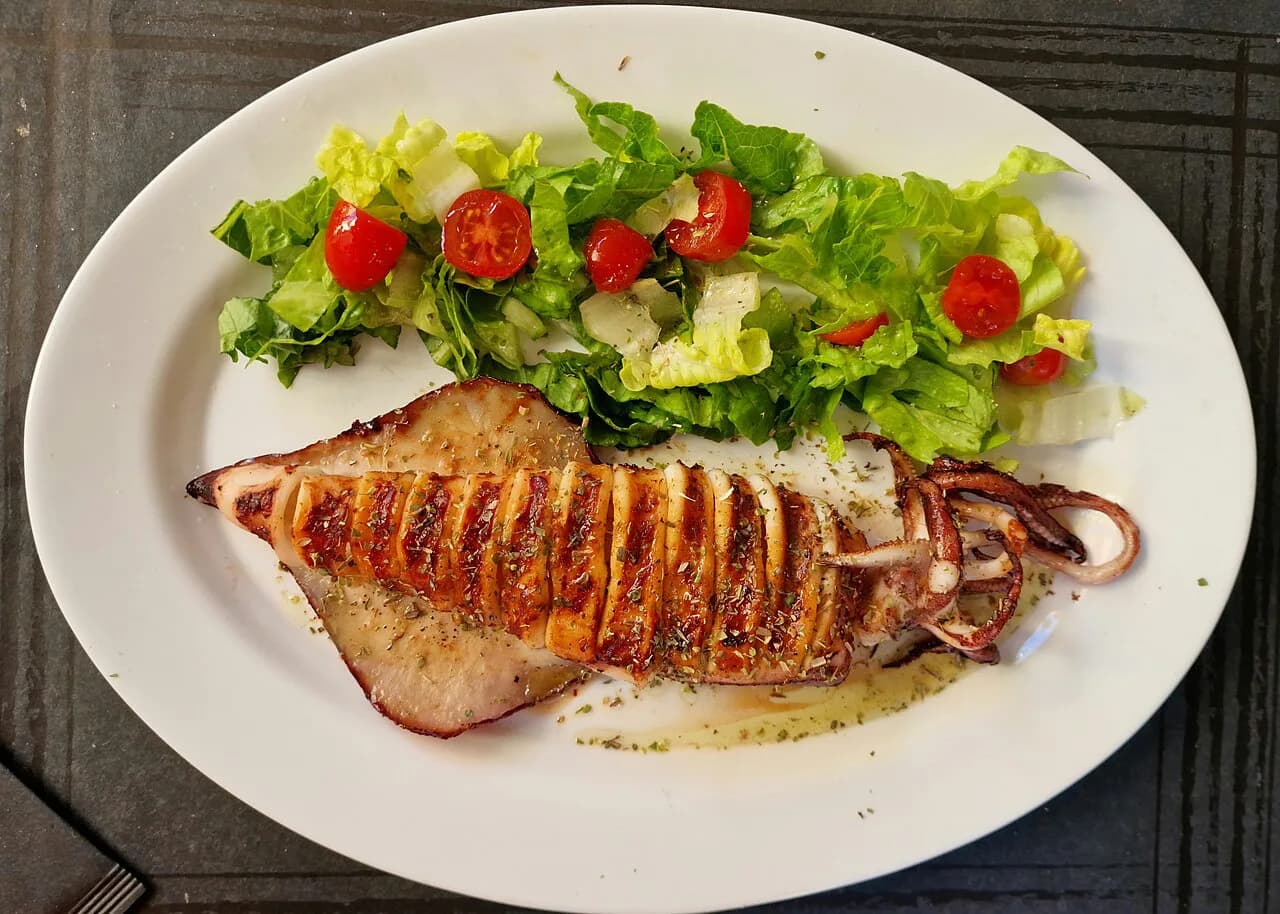
Lignje na zaru: How Grilled Squid Is Cooked in Croatia
Lignje na zaru is Croatian grilled squid, usually marinated in olive oil, garlic and lemon, then cooked fast over high heat so it stays tender.
On this page
Lignje na zaru means grilled squid, and in Croatia it is a deliberately plain dish: cleaned squid, a light marinade of olive oil, garlic and lemon, and a very hot grill. The whole point is speed, because squid left too long over the heat turns tough rather than charred. This guide covers how the squid is prepared, how long it cooks, the stuffed version with its anchovy and pršut filling, and what arrives on the plate with it.
It sits firmly among the grilled and stewed dishes of Croatian seafood, alongside the fried and braised things you will meet on Dalmatian menus. If you want the wider picture of how fish and shellfish are cooked and ordered along the coast, start there and come back to the squid.
What lignje na zaru means
Lignje is the Croatian word for squid, and na zaru means on the grill. So the name describes the cooking method rather than a recipe: squid, high heat, olive oil, lemon, and usually garlic and parsley. It is the lighter alternative to the fried squid rings that turn up on almost every terrace menu.
On a Croatian menu, expect the grilled version to arrive whole or in large pieces rather than as small battered rings. That matters when you order, because a whole grilled squid is a different plate from a bowl of fried rings and is usually eaten with a knife and fork, olive oil and lemon at the table.
It also sits naturally beside the other grilled fish you will see, from orada, gilt-head bream, to brancin, sea bass. Those are priced and ordered differently, so it helps to know what the squid plate looks like before it lands in front of you.
How squid is cleaned and prepared before grilling
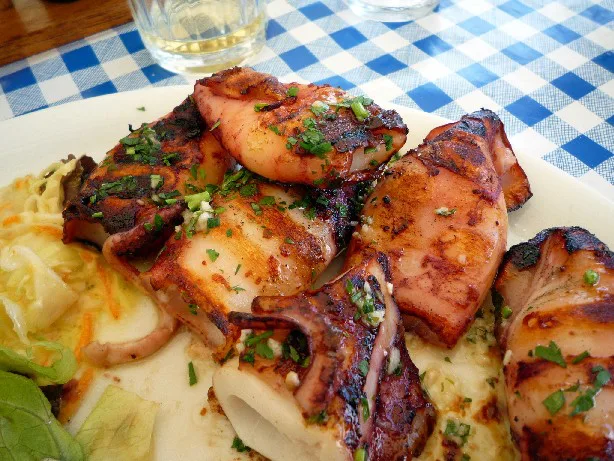
The squid has to be taken apart before it goes anywhere near the heat. The body is separated from the head, the innards, the quill and the beak are removed, and the tentacles are cut off. The tentacles are worth keeping, whether they go on the grill alongside the body or into a stuffing.
What is the difference between lignje na zaru and fried squid? Lignje na zaru is squid cooked whole or in large pieces over high heat with olive oil, garlic and lemon, so the flavour is smoky and the texture firm. Fried squid is cut into rings, coated in batter or flour and deep-fried, which gives a crisp shell and a softer interior.
Why does grilled squid turn rubbery? Squid is lean and cooks very fast, so heat applied for too long drives out moisture and tightens the flesh. Whole squid needs only a couple of minutes per side on a very hot grill, and rings need seconds rather than minutes.
Should you marinate squid before grilling? A short rest in olive oil, garlic, lemon and herbs adds flavour and softens the flesh slightly, but too much acid left on for hours begins to break the texture down. Twenty to thirty minutes is enough for a light marinade, and the squid should be turned once so it is evenly coated.
Cleaning is only half of it: drying is the step that decides whether the squid chars or steams. Pat the inside and outside completely dry with kitchen paper, because wet squid releases water onto the grill and ends up cooked in its own steam. A light salting at this stage helps draw out surface moisture.
Buying squid is straightforward if you check a few things. Fresh squid should have shiny eyes, firm flesh and a faint smell of the sea; cloudy eyes, soft flesh or a strong smell say otherwise. Frozen squid works too, but it needs a slow thaw in the fridge, never under hot water, which wrecks the texture.
The simple marinade: olive oil, garlic, lemon, parsley
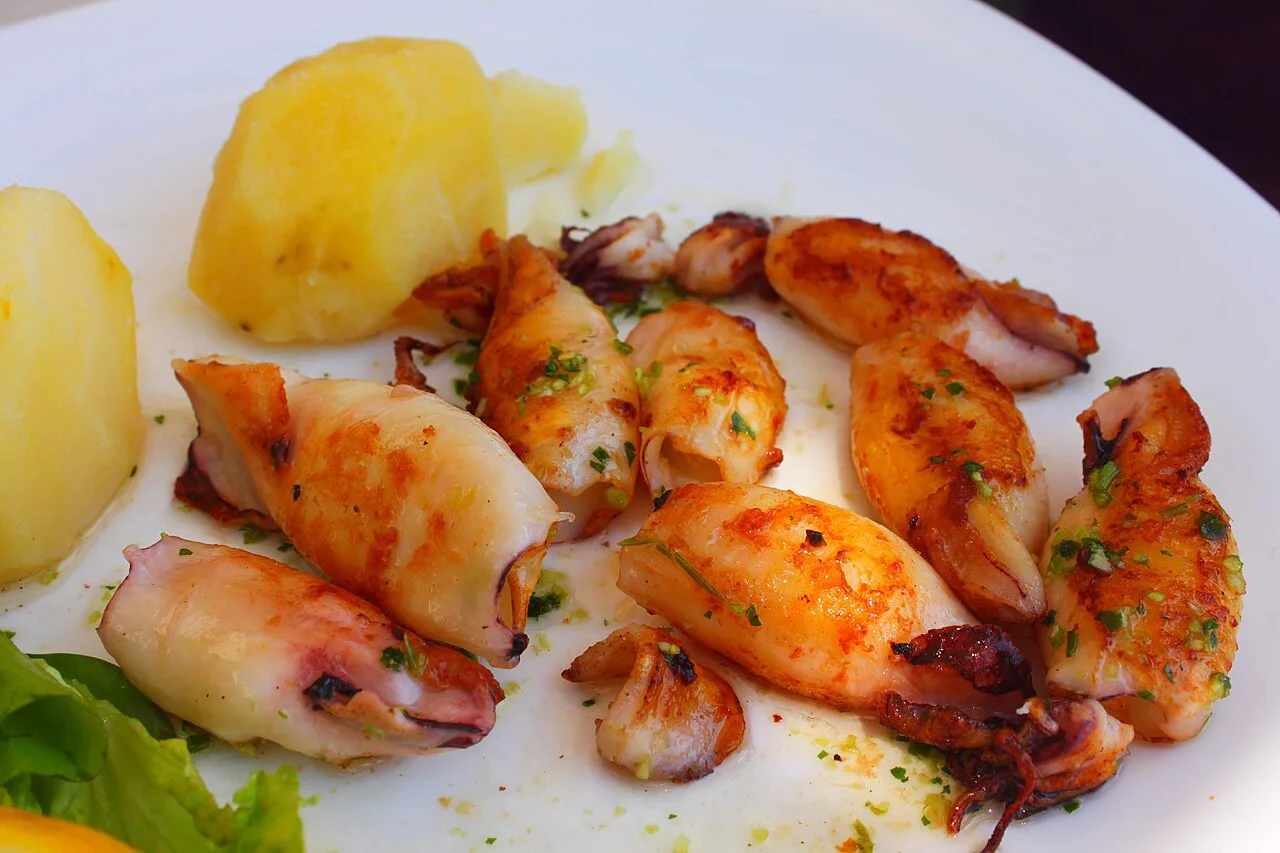
The marinade is where the Croatian version shows its character, and it is barely a marinade at all. Olive oil, crushed garlic, lemon juice or zest, salt, pepper and fresh herbs such as parsley, rosemary or thyme go together, with nothing heavy or tomato-based added at this stage.
How long the squid sits in it is the trade-off. A short rest of twenty to thirty minutes adds flavour and softens the flesh slightly, but too much acid starts to break the texture down before the squid ever reaches the grill. Turn the pieces once so everything gets coated.
A home recipe takes a longer route for the same idea: olive oil, lemon, chopped parsley and crushed garlic, poured over the cleaned squid, then salted, peppered and left to stand for at least two to three hours or overnight. Either approach works, and the shorter one suits a quick supper.
How long squid is grilled and why overcooking makes it tough
Squid wants fierce heat and a short visit. Whole squid cooks in roughly one to two minutes per side on a grill heated as high as it will go, while rings need only about thirty seconds, because long cooking is exactly what turns the flesh rubbery.
Another home method puts whole squid at three to five minutes per side, brushed with the marinade as it cooks and turned once or twice. The difference comes down to squid size and grill heat, so judge by the flesh firming and charring rather than by the clock alone.
A griddle pan or a plain heavy frying pan does the job when there is no barbecue, and an oven works too, with the squid laid on a rack over a tray to catch the drips. In the oven the pieces do not need turning. Whichever route you take, have the lemon, oil and parsley ready, because the squid goes to the table straight off the heat.
Stuffed squid (punjene lignje) as the other way to grill it
Punjene lignje is the stuffed version, and it turns grilled squid into a fuller plate. The filling combines chopped tentacles with anchovy fillets, thin slices of pršut, garlic, parsley and basil, bound with homemade breadcrumbs and a little grated hard cheese such as Parmesan. The mix is already salty from the anchovy and pršut, so taste before adding more.
The stuffing goes into the squid bodies, which are closed at the open end with a toothpick, brushed with olive oil, and then grilled briefly. Because the filling is already cooked and the squid itself needs so little time, the grill stays hot and the cooking stays short.
The other end of the Croatian squid repertoire is the stewed and braised treatment, where squid shares the pot with shellfish, wine and tomatoes. Those dishes are slower and saucier, and they are what you order when you want something to mop up with bread rather than a plate of charred squid.
Side dishes it is served with, from blitva and potato to tomato sauce and bread
Plain grilled squid comes with a short list of companions. The classic Croatian pairing is blitva, Swiss chard, cooked down with garlic in olive oil and mashed through potatoes, which soaks up the lemon and oil left on the plate.
A home recipe serves the grilled squid with boiled rice or with potato and blitva, plus a fresh salad on the side. Stuffed squid goes a different way, with a warm tomato sauce made from chopped ripe tomatoes, olive oil and basil, and focaccia or similar bread for the sauce.
On a restaurant table, squid often turns up alongside the small fried fish and the other plates that get shared along the Dalmatian coast, so an order of grilled squid can be one part of a larger spread. It is worth deciding early whether you want it as a starter or the main event.
If you are building a table around cold seafood first, squid pairs well with chilled octopus dishes served before the grill gets going; Octopus Salad in Croatia is the classic cold opener. Ordering one cold plate and one grilled plate is a sensible way to cover both.
How it is served and eaten at the table
Grilled squid arrives hot, usually dressed with the last of the marinade, a drizzle of olive oil, a squeeze of lemon and a scatter of fresh parsley and garlic. It is not a dish to let sit: the flesh firms up as it cools, and the point of the fast grilling is lost.
Eat it with the oil and lemon on the plate rather than reaching for a heavy sauce, which would bury the char. A simple green salad, bread and a glass of cold white wine are enough alongside, and the blitva and potato do the rest.
Croatian menus group these plates together, so a squid order sits easily next to sardines, mussels or a fish soup, depending on the appetite at the table. Knowing which dish is a starter and which is a main makes ordering along the coast far less guesswork.
Grilled squid or stuffed squid?
For a first order, choose lignje na zaru: the plain grilled squid shows you what the kitchen and the fish are like, with nothing to hide behind. Order punjene lignje when you want the same grill with a richer, saltier filling of anchovy, pršut and breadcrumbs, and expect it to come with tomato sauce and bread rather than blitva.
Whichever you pick, judge it on the flesh, which should be firm and lightly charred rather than rubbery, and on whether the lemon and oil are doing the work instead of a heavy sauce. Those two things tell you more about a kitchen than the length of the menu.
Explore more Croatia guides
Frequently Asked Questions
What is the difference between lignje na zaru and fried squid?
Lignje na zaru is squid cooked whole or in large pieces over high heat with olive oil, garlic and lemon, so the flavour is smoky and the texture firm. Fried squid is cut into rings, coated in batter or flour and deep-fried, which gives a crisp shell and a softer interior. They are different plates rather than variations on one dish.
Why does grilled squid turn rubbery?
Squid is lean and cooks very fast, so heat applied for too long drives out moisture and tightens the flesh. Whole squid needs only a couple of minutes per side on a very hot grill, and rings need seconds rather than minutes. Drying the squid before it goes on also helps it char instead of steaming.
Should you marinate squid before grilling?
A short rest in olive oil, garlic, lemon and herbs adds flavour and softens the flesh slightly, but too much acid left on for hours begins to break the texture down. Twenty to thirty minutes is enough for a light marinade, and the squid should be turned once so it is evenly coated.
Can you cook lignje na zaru without a barbecue?
Yes. A griddle pan or a heavy frying pan heated until very hot gives a similar char, and an oven with the squid on a rack over a tray works too, with no need to turn the pieces. Keep the cooking time short whichever method you use.
Sources
Notes on eating well in Croatia
Optional updates to our food guides.
You might also like



Continue reading
More guides you'll find useful





